The Interfaith “We”

Last week my friend Katie Gordon visited Boston so of course we had to get dinner and catch up. I showed Katie around campus, took her to the LGBTQ Resource Center to see our mutual friend and colleague Lee, and after a quick tour of our Sacred Space, we wandered over to Newbury Street. We stopped in Trident Books and mused over some titles, mainly discussing what had been happening on our respective campuses. We nerded out about a few particular books, mostly related to feminism and/or religion. Finally, we sat down to a delicious South Asian dinner.

samantha-sophia-195012.jpg
PC: Samantha Sophia

Katie is the Program Manager for the Kaufman Interfaith Institute at Grand Valley State University in Grand Valley, Michigan. She identifies as secular, but make no mistake- Katie is one of the most influential interfaith leaders of our time. She trains for the Interfaith Youth Core’s Interfaith Leadership Institutes and has introduced Krista Tippett, creator and host of the radio program On Being, because she’s that cool. I have known Katie for a while through our mutual Interfaith Youth Core affiliations. One thing I really appreciate about Katie is her ability to unapologetically be who she is without inhibiting anyone else from doing the same. She is open about her whiteness and privilege, but not guilty or frozen in working to make change.

At some point in our conversation, we both expressed concern for the interfaith movement as it exists now. What does it mean to train leaders when many people of faith live under real threat for their lives- because of their faith? Can white, secular young people train in the same spaces as black Muslim women? As queer Jews? As Hindu immigrants? As refugees who, despite looking death in the face, have held close to their devotions? How do we expect those who seem to lose power and voice every day to lead others when there is real, imminent danger?

I have been reflecting on this question for some time now. One of the reasons I feel so strongly about activist and filmmaker (among other amazing things) Valarie Kaur’s message and definition of Revolutionary Love is that I feel so strongly about Valarie herself. She represents to me the very type of leader that begins to answer this difficult question of how we as developing interfaith leaders might live into our identity as such. You see, Valarie may have several thousand Facebook friends, a database of over 100,000 subscribers via different projects she has started, and one of her recent speeches has now acquired over 16 million views on social media (that’s remarkable, just FYI), but Valarie never does her work alone. She always thinks, speaks, and acts in community because she recognizes that while her voice is essential- as a woman of color, a Sikh American, an accomplished pioneer in filmmaking and civil rights law- hers is by no means the only voice with one particular set of concerns. We need not look further than the daily news to see how many communities need more voice for dire concerns.

In this way, I think our answer begins not at the “I” that defined the previous era of interfaith leadership, the years I spent building my toolbox and story collection. Interfaith work has always been about bringing communities together, but allowing particular individuals to serve as the face of communities, to represent traditions and belief systems even if inadvertently has in the past been enough- we look around our table to see a Christian, Jew, Muslim, Hindu, Buddhist, and seeker, and we feel good about our group. We can dialogue and serve together. We might not talk at all about the intersections of our own identities, or how unequal access to this table might be.

We have reached a moment in our public landscape in which the “I” interfaith leaders will quickly feel devastatingly alone or completely exhausted, and probably both. The interfaith movement is at a true “we” moment- a time when it needs to be acceptable and encouraged for us to ask each other to do things like march on the front lines, speak publicly against bigotry, or give money to civil rights organizations. Going to prison for disorderly conduct. The reality is, we cannot all risk the same things. We need to know our limits. Focusing on “I” can help us learn these things about ourselves, but will not build networks. Right now, the fact that our different identities afford us unique privileges is an advantage if we use them in community.

As Valarie so beautifully stated recently, “We can practice Revolutionary Love for those who are in prison because they have committed great harm. This does not mean they shouldn’t be in prison. This means we free our hearts to believe they can be greater.” For some of us, practicing Revolutionary Love, just like interfaith leadership, means asking our allies to put their words and bodies on the line. At the same time, for some of us, it means being asked and saying yes.

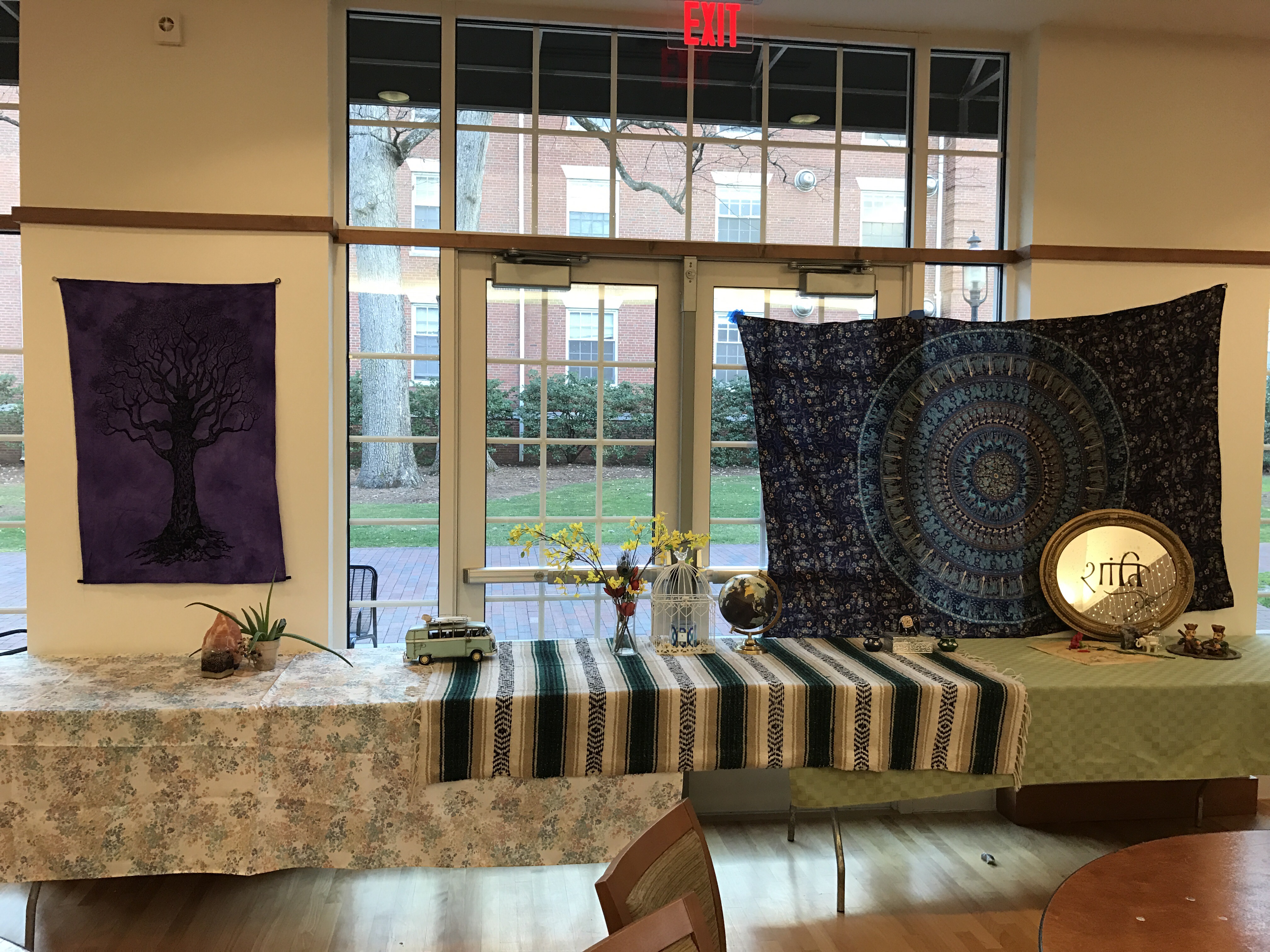


Upaya in Elon, North Carolina


Even though it was 4 am, I felt joy seep through my veins as I quietly tiptoed out of my apartment. On Friday I hopped down to Elon, North Carolina to experience the 2nd Annual Ripple Interfaith Conference at Elon University. My friend Carrie graciously picked me up from the airport at 8 in the morning, coffee at the ready. That was the first of many acts of hospitality I received from everyone involved in the conference.

The theme of the Ripple Conference this year was “mindful plurality,” and I gladly accepted the invitation to share my thoughts on mindfulness, interfaith work, and Buddhism as an accessible set of values. Not because I am an expert (heh, NO) but because I have fallen in love with my faith in the past year and felt encouraged that mindfulness practices have entered the realm of activism and resistance. That’s what this blog is all about- practivism. How we sustain ourselves in the long, arduous haul against oppression, violence, bigotry.


On the opening plenary, five folks of different faiths shared what mindfulness means to them. We heard from a practitioner of Ignatian Spirituality, a Protestant with a regular mindfulness practice, a Tibetan Buddhist, A Rabbi, an Imam, and a Zen/Engaged Buddhist. I felt unworthy to speak after listening to such great wisdom. After we each shared, a member of the audience asked perhaps the most urgent question of the moment: “How do we remain mindful under threat, when I wear this (points to hijab), when people have strong negative assumptions about me just by looking at me? How can I simply work on my inner peace when others are dying without dignity every single day?” Long pause.

A version of this question has plagued me for quite a while- in fact, it has caused me nothing short of a faith crisis in the past year and a half. I do not wear hijab, and I pass easily as a “regular ole’ white woman.” So- isn’t it my job to get my behind out in the streets and be on the front lines? Yes. And how, then, do I work on my inner compassion?

As Zen Buddhism would have it, there are at least two relevant concepts to begin chipping away at this question. First, interconnectedness. We can’t hide from the world and luxuriously put our feet up in the enlightenment hot tub, for our world continues to suffer. We are still in the world. We are responsible for walking with those who suffer. The second concept is one that frankly, I hadn’t thought about in a while. Upaya: expedient means. What works for you in this present moment to walk toward enlightenment? Upaya is about our context: it puts the quest for ultimate truth aside so that we might take a step in the right direction without doing wrong. Simply put, it means we don’t need to feel frozen: try something and see if it works. More importantly, upaya recognizes that the presence of everyone around you at any given moment is necessary. All Bodhisattvas (Buddhas who opt to stay in this world to help the rest of us) offer us different skills and wisdoms- human beings do the same.


As I reconnected with this concept I realized that all of us in the room needed to struggle through this question together, in that moment and moving forward. I fell in love with each of the students and conference planners as I began to see their complex identities. Each moment I was gifted a story and inner desire over coffee, a joyful memory in the Truitt Center kitchen, even a moment of anxiety or uncertainty as is par for the course of any conference, the expedient means of each community member unfolded as the weekend pressed on. It felt so good to witness the success of this group of people, to be reminded of my time in Japan and the opportunity to travel, to talk honestly about how Buddhist communities must work for racial justice, and above all, to laugh uninhibited. Laughter surely is upaya at its best

I am grateful for this weekend as we continue to invest in interfaith leaders as the key to our future. As one of my students often tells me, “the people that needed to be in the room inevitably came to the room, and it was good.”


What Love Teaches Me About Rage: Spending the Day with Valarie Kaur

Snow crunched under my boots as I paced the sidewalk. Valarie was finally here! It had been 8 years since I last met her in person and up close. She gave me a great hug before we trekked back to the Curry Student Center to drop off her bag and begin her Master Class as the opening to the New England Interfaith Student Summit.

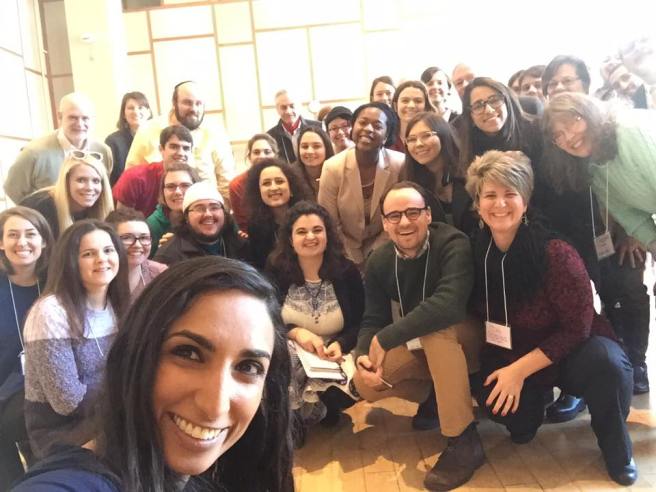
Valarie captivated everyone’s attention immediately. She also helped participants feel like they could be vulnerable in a group of 35 others-as we learned to tell our own stories for movement building, I witnessed several soul-baring moments. Moments of shame, of fear, of knowing acutely how different one felt from everyone around them because of their queer identity. We learned together how these moments blossomed into activists and teachers and interfaith leaders.

16708655_10103495157637871_6060008837786264158_n.jpg
PC: Valarie Kaur

I fell in love with the students I serve all over again. After a snow day that cancelled our planned Keynote Address with Valarie just the day before, they committed to each other to make the day a success. They treated every participant and staff person with kindness and jumped at opportunities to be helpful. A few students ate their lunch with Valarie, and offered some of the most poignant wisdom and relevant questions for leaders and activists at this time. “What is the boundary I am allowed to set when it comes to engaging with people who do not agree that my humanity is sacred?” “How do we actually take time for self-care, and what does it look like?” “Who are the MLK and Gandhi’s of OUR generation- the folx that understand the context in which we struggle?” I scribbled notes furiously.

After lunch Valarie planned to show snippets of her first film, Divided We Falland take questions. “What if instead, we show the Public Radio International video of Rana and me calling Frank Roque?” She asked me. This is a 30-minute video of Valarie and her Uncle Rana calling the man who murdered Rana’s brother Balbir Singh Sodhi four days after 9/11 in Phoenix, Arizona. This man’s act of violence is what broke Valarie’s heart and made her an activist and filmmaker- the first hate crime against Muslims or Sikhs after the towers fell. Balbir was killed because of the turban he wore on his head, and the beard he kept long as a sign of his faith. The murderer’s name is Frank Roque. He has been sentenced to life in prison.

“I want to know the audience’s reactions. I’ve never seen the video in full.”

I loaded up the video in the crowded workshop room. About 20 of us watched Valarie and Uncle Rana sitting in Rana’s kitchen, speaking to Frank. Valarie holds the cellphone so Rana can listen and respond. I hear Frank say he “couldn’t help” what happened, that he had experienced a mental breakdown. I watch Valarie’s frustration but miraculous ability to stay calm. Rana listens politely, and when he does speak, pours love out from his heart into the phone. He tells Frank that he, Rana, already forgave him, that he sends love to Frank’s wife and daughter, that if he had the power- he would release him from prison. I have watched this video three times, and each time my eyes cannot help but respond to this with tears, in awe of the grace Rana bestows on Frank.

About halfway through the video, Frank tells Rana that he never forgot Balbir’s name. But it isn’t until almost the end that Frank addresses Rana using his name instead of “his brother.” “Rana,” he says, “I am sorry.” Finally, I thought. A tiny transformation. Frank has finally started to humanize the person whose life he destroyed, who still lives in pain and suffering yet loves without chains.

One audience member spoke about feeling dissatisfied with the conversation. “Frank isn’t there,” he said. “He didn’t ask you (Valarie) or Rana any questions, and he didn’t seem to fully admit his harm.” We agreed. In my reflecting on NEISS as a whole, I believe it is necessary that we remain deeply dissatisfied AND recognize the tiny transformations. This is Practivism, the ability to believe our work, our suffering, our struggle is working even when we cannot see it.

Don’t tell us to calm down, for we are angry.

Don’t ignore our rage, for we are outraged.

Let us ask one another and ourselves WHERE the outrage comes from, and understand that the root is love.

As I walked with Valarie back to our office so she could prepare for the closing, with tears in her eyes she stopped to hug one of the participants who watched the video. “My grandfather was killed in a hate crime,” he told us all. “Please write me,” she said. “You are not alone.”


“When you let rage fester in isolation, this is when it becomes violence,” Valarie said as she closed her Keynote Address. “Love is a choice, an act of faith and courage.” I knew at that moment that the dissatisfaction we all felt with Frank’s response is rooted in faith- faith that Frank has more to change, more tiny transformations to experience, and much more love to choose to put out in the world. We all have this capacity. And we are not alone.


It’s a Marathon AND a Sprint

indiana-jones-and-the-white-supremacy-p2-feat1
PC: Jose Revuelta, Flea Market Comics. Check out more art here

I left work early on Wednesday, went home, and wept. I just bawled. It was all too much. And it was only Wednesday.

Our campus observed Holocaust Remembrance Week this past week. On Friday, we hosted a dialogue about the future of politics in the United States. I see the exhaustion. I see the fear. I see the overwhelming sense of hopelessness, and I admit: I feel it too.

Not for myself. One of the ickiest thoughts that has floated through my overcrowded brain this week was “if I did nothing, if I had no idea what was happening in our country…I would be blissfully ignorant. I could go about my daily tasks and probably notice nothing. And I heard phrases like, “It’ll be ok, he’s just crazy..” or “Stay strong!” UGH. I understand the desire to deescalate a situation for coping sake, but…I just can’t. This is horrible. So many people are really, really suffering. And as a Buddhist I know, that suffering begets suffering, and it affects us all.

Of course my students feel overwhelmed and in despair. There is no end in sight. It feels as though we are fighting not only an uphill battle, but one behind a giant steel wall! (sorry, that was just too real.) I try to tell myself to keep working, keep putting on a strong face for my students that I love, but on Wednesday I just couldn’t any longer. Recognizing when we need to take a moment to breathe is important, because the situation is both urgent and will be a long haul.

I ran 16 miles today, the most I have ever run. I felt great: there were thousands of people on the course today. Every few miles a group was giving away water and snacks. I ran the last half of the course with a new friend who teaches near my home in Boston. Not bad for a self-care Saturday.

When I got home, I looked at my training schedule. Almost half way through the 18 weeks before the big race day. Suddenly I felt anxious: The mileage only increases. I will need to carve out more time and need more strength to keep to my plan. I have to be efficient, make good food choices, and no matter what, not give up. There is no skipping a day, even in the rain, the snow, after eating too much cake.

Consider this time a marathon AND a sprint: the urgency is NOW, dammit. Shit already hit the fan and is now spreading around the room. I think my marathon training is symbolic of the work cut out for me and the people I look up to, leading the charge. We’ve got to contribute in every way possible and not skip a day. At the same time, we need to suck down that weird GU to stay fueled- take moments of rest to recharge. And there are others among us, at every step. Our paces may be different but we’re running toward the same place. I’m sustaining my energy off the communities I graciously get to find solace in, and take wisdom from. One foot in front of the other.

I don’t have any words of wisdom today, or even a “let’s be hopeful!” message, except that I know some pretty damn amazing people working their asses off and I’m lucky to call myself a fan/supporter/hopeful ally (NOT ally- working toward it). Revolutionary Love today, every day.


Womens’ March: How Art Will Save Us

On Thursday evening, my writing class got real. We talked about self-care through the arduous process. The craft of writing, especially memoir and personal non-fiction, is wrought with danger. We bring our most vulnerable pieces forward, public: here is my brokenness. Of course, we couldn’t help talking about what would happen the next day.

I’ve never considered myself an artist. My sister, yes- at age 10, people asked to buy her paintings. She has that unique ability to make animals (her favorite subject) look real on the canvas. The closest I’ve come to pursuing a career in fine art is my wearing wild clothing in many different colors. Regardless, my appreciation for art has never waned. I find art soothing, a reminder that there are myriad ways to express our pain, joy, and everything in between. Words are my “art,” and sometimes words fall short. Nevertheless, I find myself consumed in books much of the time, looking for inspiration in my own craft.

Running for me has also become an art. Yesterday I joined a marathon running group and headed to Riverside for an 11-mile run. We faced the notorious Newton Hills: miles 17-21 on the Boston Marathon course. The final uphill portion has earned the name “Heartbreak Hill”, on which runners have struggled since the beginning of time (ok, no. But since the beginning of the Boston Marathon, yes) after some intense downhill for the first half of the course. For the last year, I’ve run alone the majority of training, but this time I was transformed by the power of running with others.

Yesterday I learned that running is so personal, of course, but requires the art of community building. Thousands of people climbed the hills yesterday, and as I clomped by Boston College’s campus I marveled at the pleasantries exchanged between strangers, even though we all must have felt exhausted (my knees were screaming at me).

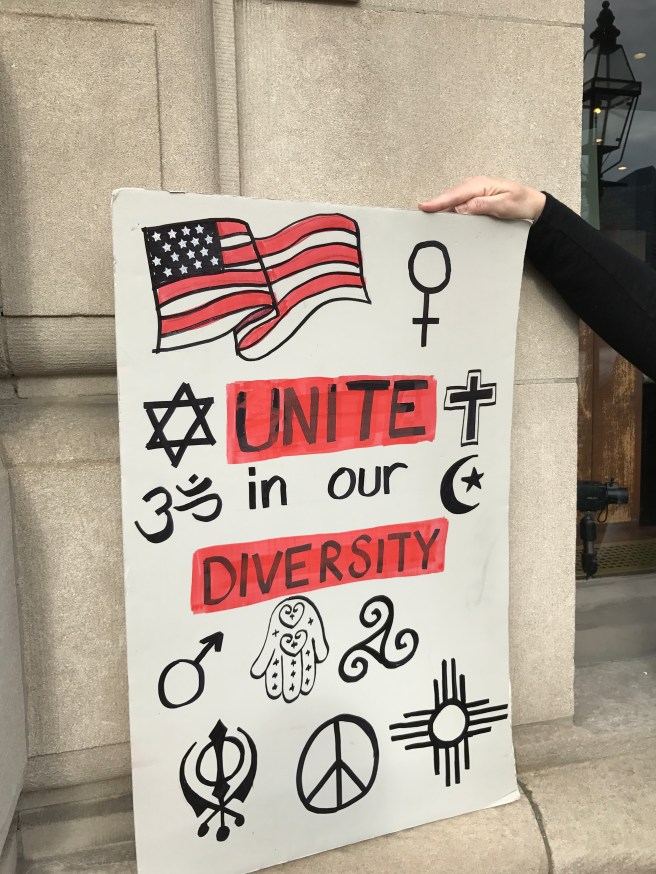
As I neared the end of the run at Fenway Park, I started to see the signs. I mean the actual signs people were carrying to the march. Some were bigger than me! And the sass, oh the sass. It dawned on me: In this time of great divide, Art will save us.

img_0203

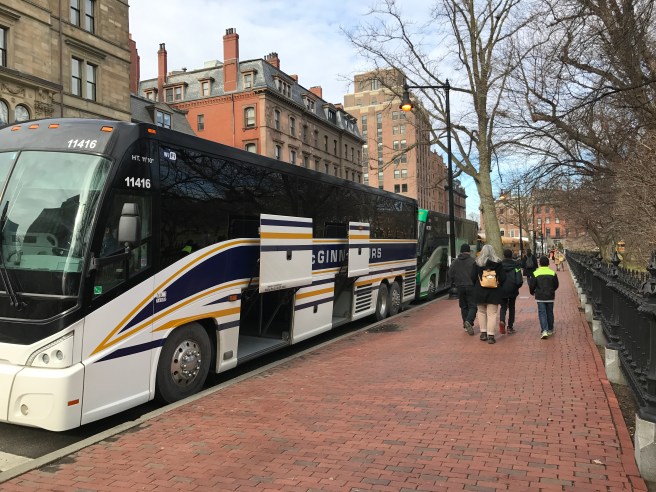
Because the trains were packed, I decided walking another mile and a half wouldn’t kill me. There were more and more signs as the crowd neared Boston Common. Then I saw the buses.

IMG_0199.JPG

Buses and buses and BUSES. And beyond the buses, a sea of pink hats. The entire Boston Common, the same park I had run through only days before, was entirely covered in bodies. I had never seen anything like it.

img_0215

I admit to feeling a bit disappointed the previous day. Many of my students, colleagues, and friends had made the trek to our nation’s capitol to literally March on Washington. Why didn’t I get my act together to witness history? Looking before this very crowd, I knew this was where I was meant to be. Boston: the runner’s city, the home of some of the first abolitionists, the site of the first siege that began the Revolution. Scrolling through Facebook and Twitter my heart leaped again: my beloved Chicago, home for three years, the place I met my love, the city of incredible hospitality, had SHUT DOWN THEIR OWN MARCH BECAUSE SO MANY PEOPLE CAME OUT. BOOM. And THEN- my one and only home, the place my heart stays, the City of Angels, rocked the entirety of downtown with signs in multiple languages. My partner and I exchanged pictures of the best signs and posters around us. Sister marches around the world (yes, the world!) all the way to Antarctica popped up in my newsfeeds.

img_0213


Art will save us. Not the paper, the glitter, or the sass (though the humor really enlivened us) but the creativity. You cannot regulate art, you cannot control the visions of the innovative. And in these days, I believe that the creativity we witnessed this past week gives us fire to keep finding alternative ways of action. I’m claiming myself an artist. I will strive to be creative and think big. I’m so thrilled by the showing up for each other yesterday- it’s one day, and we’ve got quite a few more. Blessings to the artists, you are leading us.

IMG_0212.JPG

img_0200

img_0210


Birthday

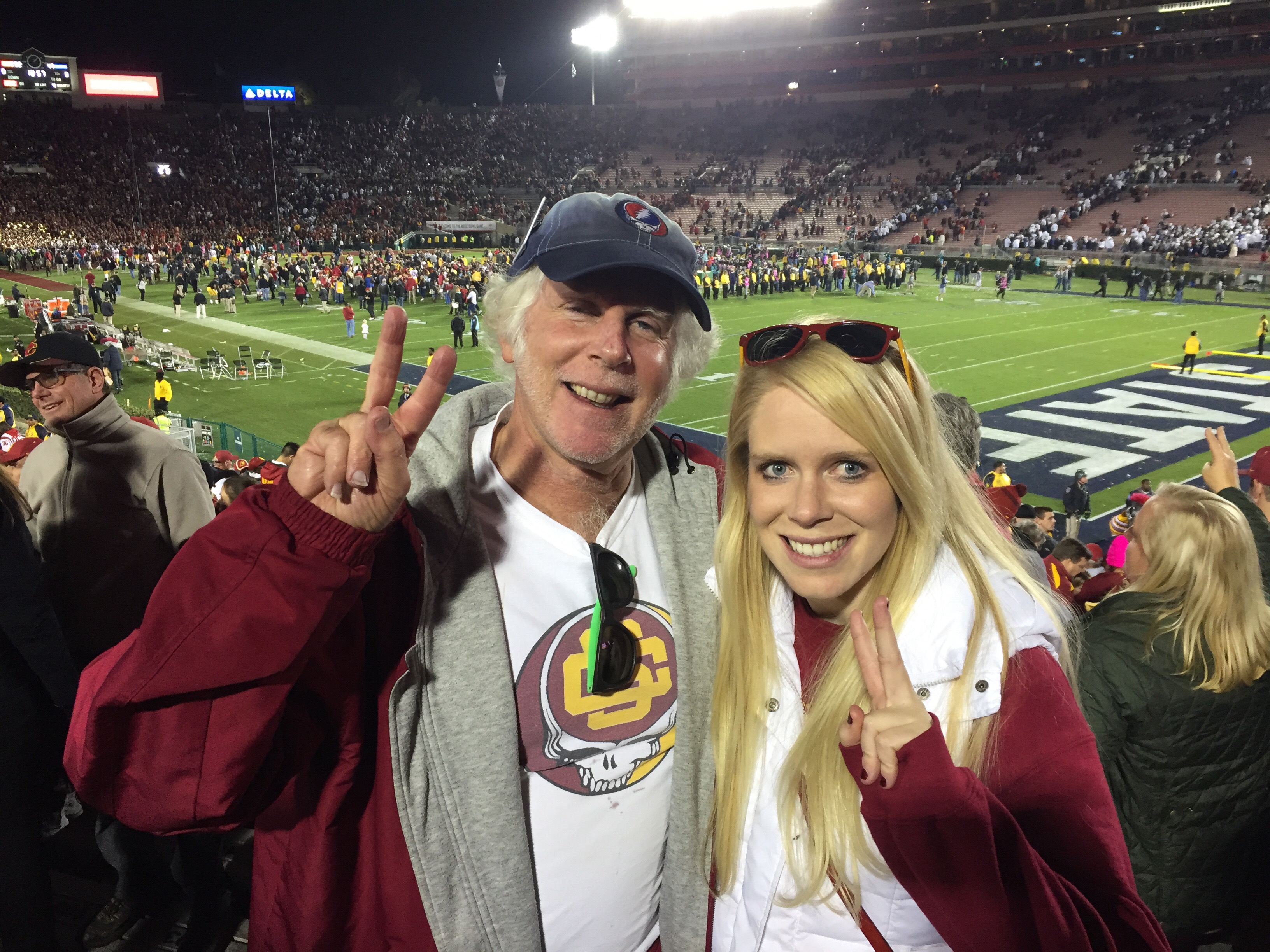
It’s thaaaaaat time of year, again. I definitely understand the shift from getting excited about one’s birthday to really dreading having to say you’re another year older. Anyway, change is inevitable, so here we are. I do feel like my birthday gift came a little early this year, that is on January 2nd, the Trojans battled until the end and came out on top. I hugged my dad so hard and then definitely shed some tears (mostly releasing the pent up stress I carried for 3.98 quarters of the same). After starting out 1-3, I’m so impressed with the coaching, the teamwork, and the unwillingness to give up. Even if it’s only football.


Before the game started, I met my friends Darlene (affectionately Darlo) and Veronica (affectionately Vero) and stayed with Darlo’s family for a while as we counted down until the gates opened to the Rose Bowl (our natural habitat). As my dad and I walked the almost three miles to find them, I noticed some Penn Staters tailgating with a Confederate flag on their pickup truck. Admittedly, my face scrunched up in disapproval before I fully registered what was before my eyes. And I started thinking about how strange and unique this humongous group of people was that came together, at least physically, to watch a sporting event.

My dad likes to be overly friendly to visiting fans. Having traveled to many games, we have witnessed our fair share of mean, rude, drunk and nasty people before and after games, win or lose. No one likes getting trash talked, at least, I certainly hate it. My dad and I walked most of the way from the train station to the stadium with a family from the Jersey Shore, decked out in their blue and white jerseys. After we parted ways eventually and passed that pickup truck, I thought about what the two schools represented in this space- their locations, their atmospheres, their populations. USC lies in the heart of a densely populated uber-metropolis. Penn State is more than an hour away from a midsize city. USC is a medium-sized private institution that brags about their international population, and Penn State is a massive public school, about 3/4 of the students are white. Both schools’ NCAA football programs are considered in the top 5 of all time, and for the most part, both schools respect each other as historic rivals. Statistics aside, frankly, as I looked around I noticed how ethnically diverse the USC fanbase seemed compared to Penn States’. This isn’t a judgement, simply an observation.

I spent my week off reading, because that’s how I veg. Since the election, I have committed to exploring genres and authors who have written notable works in the past few years on identity-based politics. It feels like a tiny step in the right direction when I feel “frozen” in terms of social action. Reading by no means represents direct action to dismantle or tear down, but my thought process was that by sharing my own mistakes and reading about those who share theirs, I could take some small steps to avoid committing microaggressions, or be more thoughtful in my language. On the plane to LA two days before Christmas, I finished Arlie Russell Hochschild’s Strangers in Their Own Land, a sociologist’s reflections and learnings about spending time among working class whites in rural Louisiana. The book has been a conversation piece in my circles lately. I wanted to read it because Hochschild states that her mission with the study was simply to try and understand a group of people who live in a very different world from her, and subsequently, consider politics quite distinctly. I think that’s a solid mission- it echoes goals of some interfaith communities, not to change minds, but to educate and understand, to find some common ground.

Hochschild interjects a few times throughout the book that she vehemently disagrees with her newfound friends on many issues- taxes, welfare, and the “right to choose”, among others. I found myself wondering, “how could this person have spent five years with people whose views make her terribly uncomfortable?” And yet, I believe that’s exactly where I need to push myself. Perhaps it wasn’t appropriate then, and would have led to unnecessary trash talk- but what would it have looked like to start a conversation with the pickup truck driving, Confederate flag touting Nittany Lion?

I’m going to keep reading, but recognize that only through some difficult conversations will I actually begin to educate myself. I think my toolkit as an interfaith dialoguer and someone who strives to sustain a meditation practice is helpful, yet not something to hide behind. Another year older, and hopefully, just a little bit wiser. Fight On!


Preflection.

rdvp7whoibw-niels-weiss
PC: Niels Weiss

HAPPY 2017!!!

Another day turns into another year. Here we are! Today I checked my social media channels frequently to see what friends and family were feeling as the new year approached. I’m so proud of y’all! You achieved an incredible amount this year, despite some serious tragedies amidst every day strife and violence. If we are honest, changing the last two numbers of the date today to 17 don’t wipe any of this away, and surely, as we have already seen in Istanbul, tragedy looms over and over.

I really loved my friend/co-worker/colleague/tea buddy Kaitlin Ho’s reflection questions that she posted a few days ago. They certainly helped me put my own experience in context and focus on the present time. Though so much could be written for my responses to each question, here are my reflections and preflections as we begin a new year:

Where did I see glimmers of hope/light?

My students and co-workers. This past semester was exhausting for everyone, I have never seen so many young people physically show signs of fatigue and anxiety. Yet- the people around me, students and co-workers alike, delved deep and found unrelenting compassion for each other. The day after the election, 45 of our university’s community members gathered to dialogue and share, and I witnessed active listening, people making space for each other, and even strangers hugging. A week after that, a group of students attended a workshop I facilitated for the Global Citizenship Project around storytelling for social change- republicans, democrats, and international students included. Though I felt nervous, the students made themselves vulnerable to each other and shared some heartwarming and heart-wrenching stories about living with depression, experiencing their parents’ divorce, and other touching experiences. For a moment it felt like we had created community across an unbridgeable divide.

Where did I experience darkness?

I witnessed the ugliness of bureaucracy and large corporate institutions. I felt dehumanized and witnessed through my own lens of privilege how deep-seeded oppression is around me.

What did I see in my character that I’m proud of/want to see more of?

I ran 3 half marathons and started training for my first full marathon this past year. I’m gearing up for Boston in April. What I’ve learned in my running journey so far is that health cannot be achieved through only physical well-being, it’s so much more about the mind. I found that attempting to be gentle but encouraging of my body and mental state got me so much farther than beating up myself up for missing a day, or running too slow, or not stretching enough. I felt more motivated to take care of myself when I was merciful. As I start the serious training, I want to see more appreciation of the immense task it is to live, love and breathe on this earth day in and day out- appreciation of my own body, and of others’.

What do I want to change?

I want to engage in more honest, uncomfortable conversations that will continue to educate me in the fight for equity. I learned this year that I can’t expect people to call me out unless I create that norm and culture, demonstrating that holding each other accountable is an act of revolutionary love. I don’t want to feel frozen in my humble social justice work, and staying in motion means finding opportunities to educate myself at every turn.

Who are people I’m grateful for?

I literally start to cry when I think about how many people rooted for me this year, and how I could never repay the kindness and generosity they have shown. People I love donated to the charity I will run for in the Boston Marathon, listened to me complain and express frustration and still stuck by me, read my blog and other writings, gave me meaningful projects to work on, and met with me to give advice or just be in good company. I’m grateful for the interfaith movement, for the Revolutionary Love Fellows, for my students, for my new writing partners, for my family, for my partner, and for the people who were not afraid to ask for favors.

Who are friends with whom I need to reconcile?

I struggled with forgiveness, mercy and reconciliation this year. It took almost all year for me to realize that forgiveness and mercy are truly divine, but cannot be hurried. Rather than thinking about specific individuals, I’m going to continue challenging myself to hash out these concepts as they relate to healing and how I can be a better friend and family member to others.

What are my greatest desires and needs in my relationships, my faith, my work, my health?

This is such a good and difficult question. I like being needed and feeling important, but I think what I actually need is the opposite- a chance to be in communities where I don’t play a leadership role and simply exist among others. I need to continue struggling in my faith and what I believe about ambition and justice. I need to keep writing, focusing on meaningful writing rather than quantity. I need to be my own best advocate for my health and in doing so, learn to be a fierce advocate for others.

And finally…here’s to reading 100 books this year 😀 mostly for pleasure.

New Year’s Resolution

Wow, there are 19 days left in December. 19 days left in 2016. The “Me in 2016” memes have been keeping me going- though truthfully, the passage of 2016 to 2017 is merely night into day, a rotation of the earth, nothing more. Hope is important, and so is integrity. Lots of work and struggle ahead.

Have you started thinking about your New Year’s Resolution? I’ve thumbed through the usual: drink more water, go to the gym more, lose weight, eat more vegetables. All good ideas and things to work on, speaking for myself. I see a pattern in the popular resolutions: they all identify a deficit. They all require discipline and motivation. Time and again, I have made resolutions like this, and I can’t remember a year in which I successfully went more than a month in keeping the habit. Something is missing in our resolutions, and that is mercy.

9ztafgvsv-c-jay-ruzesky.jpg
PC: Jay Ruzesky

The reason I’ve been thinking about mercy is because I hoard books and two of the books on my nightstand have the word “mercy” in the title. Traveling Mercies, by Ann Lamott, and Just Mercy: A Story of Justice and Redemption, by Bryan Stevenson. I actually had to look up the definition of mercy, and according to google, means something between forgiveness and compassion. When we practice mercy, we actively harness our power to condone those who have harmed, rather than punish them. Action, power. Mercy requires agency, it’s a choice. The way I see it, forgiveness is self-practice primarily. I can forgive someone without their knowledge. I let go of anger and resentment not for the purpose of forgetting, but for the purpose of freeing myself from the suffering. Mercy changes the plan- it’s active compassion in the face of pain. Teasing out these differences, I remember something my writing professor said to us the first day of class: “To be a successful memoir, the narrator (you) must be compassionate toward the younger self.” I thought to myself, “Uh, why? I was the worst back then. I deserved to be thrown in jail and rot.”

And there it was, my New Year’s Resolution: Be Merciful. First and foremost to MYSELF! How can one understand the freedom from resentment, anger, disappointment, failure and actively change behavior toward it when we are not merciful toward our own selves? Pfffft. That’s a rhetorical question, but an important one nonetheless. Maybe mercy is about mindfulness. Everything is about mindfulness. But let me explain.

Thinking back on my 2016, it was a hard year. That’s an understatement: it was an excruciating year for me and so many of my friends, my students, and my colleagues. Some days getting to work on public transportation felt like the final battle in Lord of the Rings. But if I’m really honest with myself and what I accomplished, it was not nothing. I ran two half marathons and made a decision to run a full one. I wrote over 70,000 words for a memoir in progress- it’s no where near done, but I’m not giving up on it. Beginning in June I published an average of a blog post a week on this site and some others. I started therapy, took charge of my health, and spoke up about being a white woman. None of these processes has been perfect- there were days I didn’t run because I wanted to sit on the couch and eat pizza instead. There were days I didn’t write because my mind was uninspired. I gained some weight, skipped some therapy sessions, and missed a SHIT ton of opportunities to speak up about oppression. What does it all mean?

One of my students highly suggested (borderline demanded) that I try Forrest Yoga recently. Truth time: yoga freaks me out. It’s boring and slow and I have to sit with myself and my terrible flexibility for far too long. But I did it, and as our instructor repeated several times, I noticed where the struggle was. My mind really wanted to yell at my stiff body for using a block in pigeon pose. Mercy itself is the block- it’s an act of mindfulness as the world hurls crap at you over and over. it’s acknowledging that imperfection is better than not doing something at all- the end justifies the means. No, wait- the means get messed up sometimes, but you can still get to the end. That’s mercy: finding compassion and changing course. It’s acting on love that has been buried but not extinguished.

I don’t mean to pat myself on the back. That action is extremely dangerous- congratulating ourselves too often lulls us into complacency. The reason I started this blog was to think about how we sustain ourselves as activists when justice fatigue is real. Though I don’t practice in the Pure Land tradition, the Boddhisatva Kannon has always inspired me. She’s known as the Goddess of Mercy, the one who listens when we cry out in suffering. As a Boddhisatva she has embodied the ultimate mercy by forgoing her ultimate attainment to help us out. In the journey rife with suffering mercy is about taking our power we could use to get even with others or ourselves who have caused harm, and instead applying it to change course, focusing on the goal and being mindful that we can still find a way to get there.


The Feast

I have been feasting for two weeks. It started with Thanksgiving, understandably, but since then I have been enjoying time with my family, and quite often that includes food. What I mean by feasting; however, is not solely about a buffet of delectable dishes from various cuisines. My time in LA has been a cornucopia of meetings and greetings with friends and mentors, and even new colleagues. I visited five campuses this week across California for a few reasons. First, when would I not take a chance to go back to USC’s campus? I also wanted to get a pulse for interfaith efforts around the election and the #NoDAPL movement at Standing Rock. Visiting these campuses also gave me the chance to road trip up the coast listening to tapes of Grateful Dead shows all the way up (another post on that coming up). A feast for the belly, the eyes, and the ears, yes. This week I also enjoyed a feast for the heart.

On Tuesday I drove to Claremont to have lunch with an esteemed and beloved professor, someone who has mentored me since college. She consistently bridges the scholarly study of religion with spiritual practices with activism, which we desperately need right now. We caught up on projects and our families and the latest American Academy of Religion Annual Meeting. After lunch, I got to sit in on a class with one of her closest colleagues, Dr. Frank Rogers, who studies narrative pedagogies, religious education and engaged compassion practices. In class we discussed several paradigms of religious education and even played a riveting game akin to “Who Wants to Be a Millionaire,” a popular game show. The students welcomed me warmly, and we laughed about our struggle to put historical events in order. At the end of class, Dr. Rogers sent us with a sending question: What metaphor would you use to describe education? At first consideration, my mind thought “prism,” but after reflecting on this week, I think “feast,” and perhaps more accurately, “potluck.” Mmmm, potato salad.

fw6noteso4c-sweet-ice-cream-photography.jpg
PC: Sweet Ice Cream Photography

On Saturday, two Revolutionary Love Fellows Meha and Simran and I met up for brunch and to finally see each other in person after working closely together for months having never done so (technology is great, but so strange sometimes). As we shared updates on our personal lives and then planned for our upcoming retreat, we commented on the remarkability of the unique gifts each fellow possesses. On our team, we’ve got doctors with facilitation skills. We’ve got lawyers who also do graphic design, and writers who are expert marketers. You could say our group is “stacked.” Meha noted something I’ve been thinking for a while. “I get excited to come home and do RevLove stuff,” she said. “Not only is it so important, but the fact that we all get it, there’s 15 other people who are giving their time for something they feel passionate about is really motivating.” Returning to the question of a metaphor for education, let me explain my choice in “potluck.”

I never would have met Meha and Simran had I not joined this team- Meha has a background in health care and is working toward an MBA, and Simran works at UCLA as a Project Manager. Their background alone brings a different kind of dish to the potluck, and no one likes a potluck with the same dish. Education for me is about bringing great minds with distinct experiences and beliefs, unique ingredients, together to learn from each other at a common table. If too many people with the same identity crowd the gathering, we lose other important perspectives. We need appetizers, main dishes, desserts, and drinks. At the same time, we’ve got to be prepared for the unexpected. The potlucks I remember from the Japanese Community Center where we played basketball often included pizza, spam musubi, and chocolate milk. While this might not represent a conventional meal, educational spaces are enriched by new epistemologies, new ways of learning. On the #RevolutionaryLove Team, I especially see how this happens. My understanding of the legal field and even what motivates teams has increased dramatically. Most of all, a potluck is never successful without a vibrant community committed to maintaining the space, and education is definitely most especially about community. As social creatures, we learn most effectively among others.

My sending question then, is: what will you bring to the potluck? What ingredients and textures will set your dish apart for others to enjoy? Are we hungry yet?


Keep it Simple, Silly.

hdnslau35ky-jeffrey-wegrzyn
PC: Jeffrey Wegrzyn
Ever heard of the k.i.s.s. principle? Keep it simple, stupid, is how it’s usually read. I’m trying to avoid words that degrade or demean people. Ask me how that’s working out later. Anyway, simplicity. Sometimes it’s nice, and sometimes it’s annoying. I want to make a case for it because right now, there are many things in the world that are so far from simple that everyone feels exhausted. So here’s a story I love that I’ve used often in writings and speeches that is simple, yet meaningful.

There is an ancient Chinese parable about an old man who knew he would die soon. He wanted to know what Heaven and hell were like. He visited a wise man in his village to ask “Can you tell me what Heaven and hell are like?” The wise man led him down a strange path, deep into the countryside. Finally they came upon a large house with many rooms and went inside. Inside they found lots of people and many enormous tables with an incredible array of food. Then the old man noticed a strange thing, the people, all thin and hungry were holding chopsticks 12 feet long. They tried to feed themselves, but of course could not get the food to their mouths with such long chopsticks. The old man then said to the wise man “Now I know what hell looks like, will you please show me what Heaven looks like?” The wise man led him down the same path a little further until they came upon another large house similar to the first. They went inside and saw many people well fed and happy, they too had chopsticks 12 feet long. This puzzled the old man and he asked, “I see all of these people have 12 feet chopsticks too, yet they are well fed and happy, please explain this to me.The wise man replied, “in Heaven we feed each other.”

From wisdomcommons.org

The message is clear, paradise cannot be achieved or maintained alone. We remember parables like this from many different sources of wisdom, including sacred texts because they are simple, yet speak to our humanity in powerful ways.

Last week I admitted something to some of my colleagues: I was not giving interfaith circles enough credit. I lambasted a conference I attended around interreligious dialogue for being too simple, too naive, for patting ourselves on the back when we’ve barely scratched the surface of what needs to be done. I feel silly for saying that today, for not lifting up the everyday miracles that we need now in this time of darkness and uncertainty.

As a scholar it’s my job to complicate concepts and ideas, to dig deeper into beliefs and convictions that many times we accept without further consideration. Yet- the story above reminds me that living in tension and accepting that the world is a complicated place can be a cop-out. How many times have I responded to someone calling me out with, “well, it’s complicated?” Simplicity is powerful and gives us footing. Does that mean we can congratulate ourselves and stop working for justice? Absolutely not. Witnessing milestones along the way pushes us further and allows us to build our teams. As the story shows us so clearly, Heaven and Hell don’t look so different. The difference is simple: in Heaven, we live in the exigency of others, just as we are needed.

PS: Shameless plug. I’m so honored to be part of the Trinity Foundation’s Boston Marathon Team and am asking for support from friends, family, and anyone who digs the mission. Check it out here: https://www.crowdrise.com/TrinityBoston2017/fundraiser/jemjebbia