The Ideal is Possible

Today I did something really cool- I spoke on air about my work with the Revolutionary Love Project for L2O, a platform that organizes online communities. We talked about what Revolutionary Love means from a Buddhist perspective, how we practice in our own contexts, and most importantly, what it means to stand in love with our opponents.

jeremy-bishop-34880.jpg
PC: Jeremy Bishop

I really enjoyed thinking critically about these questions, especially when it came to calling on wisdom from faith traditions and sacred texts. I realized as I was talking that much of my faith comes from stories and written wisdom- stories take us from a place of wonder or discomfort to a new idea. They often involve learning. I feel most connected to my own practice when I think about stories of the Buddha, and the stories tucked away in the Zhuangzi and Laozi. Whether or not they are factually true, I think these stories reveal the essence of what kind of people we hope to be. They hint at values and ethics. We walk with the protagonists to learn lessons.

At the end of the interview, Sara from L2O asked, “What does an ideal world with Revolutionary Love look like?” I admit I was rolling along through the other questions, having practiced my elevator pitch several times before. The Fourth Precept of Engaged Buddhism tells us not to turn a blind eye to suffering. We must practice knowing our own innate goodness in order to know that of others. I have a sizable story bank that allows me to illustrate what I believe quite often.

This question forced me to think about my end goal in this work. What is it all about? I know that writing and reading and dialoguing give me life, especially on the topics of faith and social justice, but to what end? I admit: I don’t know what “the ideal” is.

Pause for a second. One of the ways I ground myself in love is recognizing that everyone suffers. My job is to help alleviate that suffering- but not the reality that suffering is the way of this world. I think it’s important to acknowledge that everyone holds pain and fear. I believe further that it’s important for us to sit with it for a while. Running away only further embeds these harmful emotions into our bodies and minds. So an ideal world is not one free from suffering necessarily, but one in which the suffering translates to discomfort. When we sit in a place of tension and discomfort, we are learning. When others share with us that we contribute to their discomfort, we learn how to alleviate that. I found myself saying out loud that a world grounded in Revolutionary Love isn’t one that is absent of sadness. Instead, it is one where every emotion has a purpose, and every person sees relationship as divine. It is one in which fear drives us to build bridges, not retreat.

And finally, I turned to my old friend gratitude. Gratitude for me is the acceptance that we may not have fully realized a goal or gotten exactly what we wanted, but we acknowledge that we are better off having met someone, experienced something, learned something. A world grounded in Revolutionary Love is one in which gratitude abounds. I must say, I feel very grateful to have gotten this opportunity today.

Starting Fresh

When I was 14, I moved across the country to go to boarding school. There were a few reasons for this, none of which involved discipline (what many assumed). Attending this school was a huge privilege for me, it meant studying with classmates who also wanted to immerse themselves in learning, meeting friends from around the world, and most especially spending a big chunk of my junior year studying on exchange in Japan. I even got to study two languages all four years.

margot-pandone-5628.jpg
PC: Margot Pandone

There was another reason I was excited about going to school 3000 miles away. Since kindergarten, I had attended the same small Catholic school. That’s 9 years with the same 45 people. I wasn’t popular or cool in my class, I often felt invisible. This was mostly my own fault- I spent most of my time pursuing interests that my classmates didn’t find interesting. Like learning Japanese, or reading about religion. Middle school is hard, period. I don’t know anyone that didn’t have a hard time. For me, boarding school not only meant opportunity for rich study, it meant leaving my life behind. It meant a fresh start.

Moving at 14 was hard. I actually almost didn’t make it. I called my mom every hour the first week at school, most of the time choking through tears, “I don’t think I can do this, I want to come home.” My mom listened with endless patience. “What’s next on your schedule?” she would ask, and I would tell her the next class, or sports, or dinner. “Try that, and see how you feel after.” After a while, it became, try it for a day. Try it for a week. Look- you’ve almost made it half way through the semester. And suddenly, it was time for finals, and I was flying home for winter break.

I believe a large reason why those first few months- the first year, really- were so difficult was because I had a false perception about what this experience would be like. I could be anyone I wanted, I thought. In some ways, I had no idea what to expect. But I was so sure-and wrong- about one thing: starting fresh. Starting fresh is a farce. Sure, this experience was new and unique, and I certainly changed and grew at this school. But starting fresh in place and people doesn’t mean starting fresh by forgetting who I was proved impossible. I carried with me the same pain, fear, curiosity, and love to this new place. I still carry it today.

Instead of forgetting the unpleasantness, I have learned that new experiences- entering a new community, starting a new school, a new job, leaving a life behind- actually teaches me more about who I am at the core. Interestingly, one of my most firm convictions comes from the Buddhist tenet that change is constant and inevitable. Nothing is permanent. Yet, just because change occurs does not mean we let go of the impressions made upon us. Outwardly, we can withhold anything we want and no one may have any idea what we’ve been through. The most permanence in the world is our internal truth.

A student very dear to me gave me a book, called The Shack (it’s now a movie). I don’t normally choose novels, but this one intrigued me because it’s a story of struggles with pain and faith and the image of the divine. The beginning of each chapter is marked with a quote or two. The second chapter starts with one by Paul Tournier, a Swiss physician who is well known for pastoral counseling. “Nothing makes us so lonely as our secrets.” I paused after reading that. Of course, we feel most alone when our inward truth feels dissonance with our outward environment. This is why starting fresh only really teaches us what we are already carrying.

My first year at boarding school I tried hard to re-imagine who I was by convincing others that jem was not Mary Ellen. I don’t believe I lied explicitly- but I hid the pain of being away from my family and the struggle to do well enough and be enough for this highly talented and hardworking community. I felt so lonely, even when I was surrounded by classmates who perhaps were feeling exactly the same as I was. As I slowly started to realize that my inner truths were not only accepted but embraced, my presence at this school began to feel legitimate. To be sure, I always struggled with questions of self-worth and being enough, but I found people who could walk with me. To this day I can call my best friend that I met in our freshman dorm and talk to her as if we’ve lived next door our entire lives.

As I transition to a new experience (more on that later), I’m bringing some baggage that’s tough to carry. I’m also bringing a ton of love and memories of joy. The freshness of this beginning isn’t about erasing what I’ve been through, but opening to the possibility of learning more about who I am.


Upaya in Elon, North Carolina


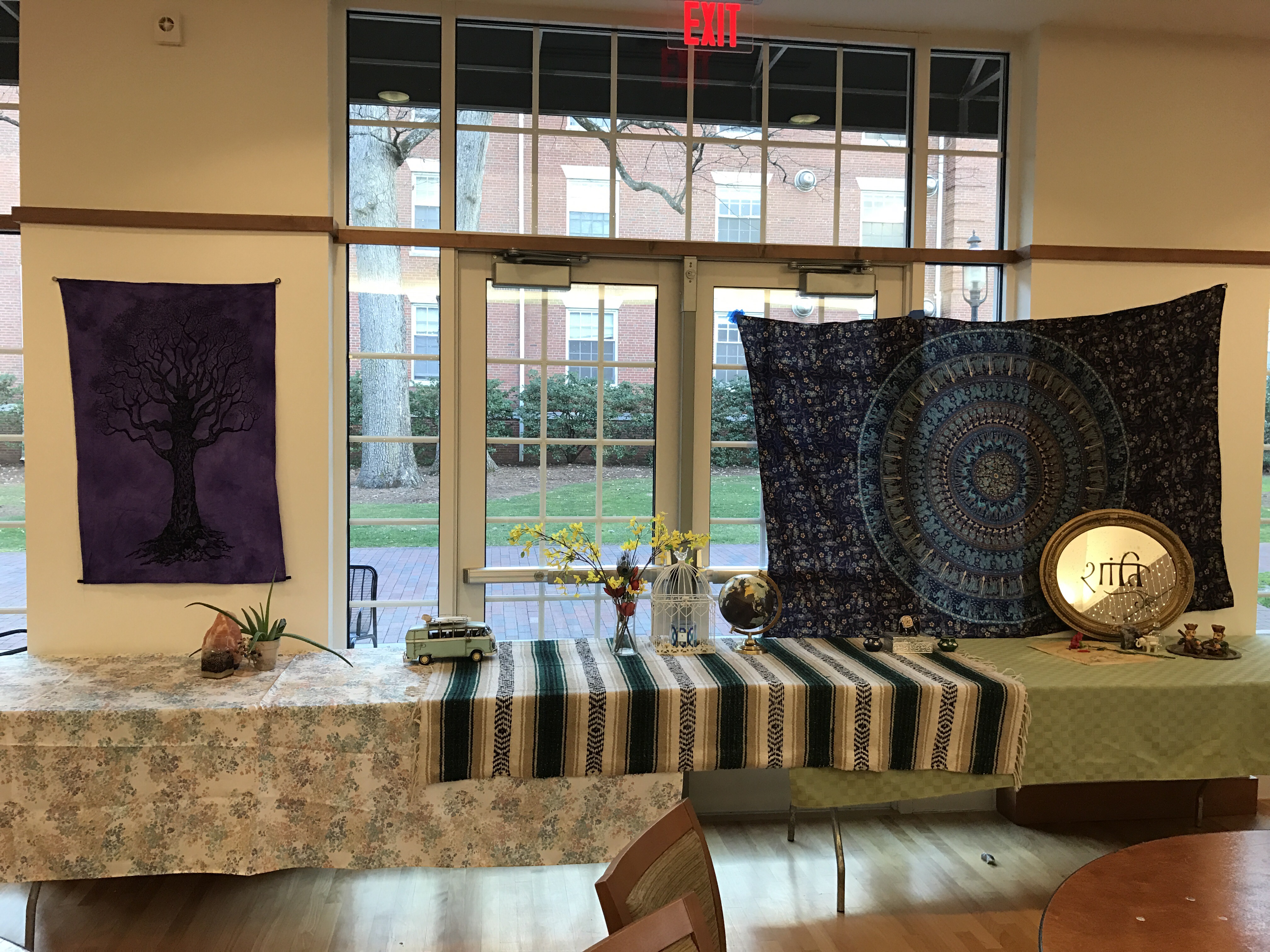
Even though it was 4 am, I felt joy seep through my veins as I quietly tiptoed out of my apartment. On Friday I hopped down to Elon, North Carolina to experience the 2nd Annual Ripple Interfaith Conference at Elon University. My friend Carrie graciously picked me up from the airport at 8 in the morning, coffee at the ready. That was the first of many acts of hospitality I received from everyone involved in the conference.

The theme of the Ripple Conference this year was “mindful plurality,” and I gladly accepted the invitation to share my thoughts on mindfulness, interfaith work, and Buddhism as an accessible set of values. Not because I am an expert (heh, NO) but because I have fallen in love with my faith in the past year and felt encouraged that mindfulness practices have entered the realm of activism and resistance. That’s what this blog is all about- practivism. How we sustain ourselves in the long, arduous haul against oppression, violence, bigotry.


On the opening plenary, five folks of different faiths shared what mindfulness means to them. We heard from a practitioner of Ignatian Spirituality, a Protestant with a regular mindfulness practice, a Tibetan Buddhist, A Rabbi, an Imam, and a Zen/Engaged Buddhist. I felt unworthy to speak after listening to such great wisdom. After we each shared, a member of the audience asked perhaps the most urgent question of the moment: “How do we remain mindful under threat, when I wear this (points to hijab), when people have strong negative assumptions about me just by looking at me? How can I simply work on my inner peace when others are dying without dignity every single day?” Long pause.

A version of this question has plagued me for quite a while- in fact, it has caused me nothing short of a faith crisis in the past year and a half. I do not wear hijab, and I pass easily as a “regular ole’ white woman.” So- isn’t it my job to get my behind out in the streets and be on the front lines? Yes. And how, then, do I work on my inner compassion?

As Zen Buddhism would have it, there are at least two relevant concepts to begin chipping away at this question. First, interconnectedness. We can’t hide from the world and luxuriously put our feet up in the enlightenment hot tub, for our world continues to suffer. We are still in the world. We are responsible for walking with those who suffer. The second concept is one that frankly, I hadn’t thought about in a while. Upaya: expedient means. What works for you in this present moment to walk toward enlightenment? Upaya is about our context: it puts the quest for ultimate truth aside so that we might take a step in the right direction without doing wrong. Simply put, it means we don’t need to feel frozen: try something and see if it works. More importantly, upaya recognizes that the presence of everyone around you at any given moment is necessary. All Bodhisattvas (Buddhas who opt to stay in this world to help the rest of us) offer us different skills and wisdoms- human beings do the same.


As I reconnected with this concept I realized that all of us in the room needed to struggle through this question together, in that moment and moving forward. I fell in love with each of the students and conference planners as I began to see their complex identities. Each moment I was gifted a story and inner desire over coffee, a joyful memory in the Truitt Center kitchen, even a moment of anxiety or uncertainty as is par for the course of any conference, the expedient means of each community member unfolded as the weekend pressed on. It felt so good to witness the success of this group of people, to be reminded of my time in Japan and the opportunity to travel, to talk honestly about how Buddhist communities must work for racial justice, and above all, to laugh uninhibited. Laughter surely is upaya at its best

I am grateful for this weekend as we continue to invest in interfaith leaders as the key to our future. As one of my students often tells me, “the people that needed to be in the room inevitably came to the room, and it was good.”