When Someone Asks You About the Bible

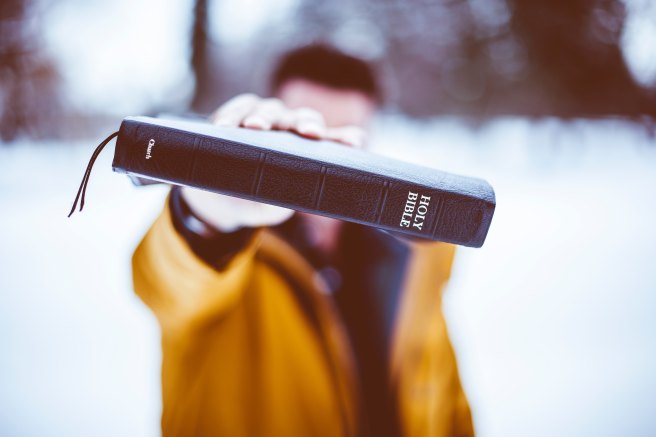
So today, I did something magnificent- I led my first section as a TA! The class is called Exploring the New Testament. You can probably guess what it’s about. Let me preface this by noting that I laughed way too loud exactly twice in class because the professor made jokes that were hilarious to any religious studies graduate student. Perhaps no one else. So much for keeping my cool.
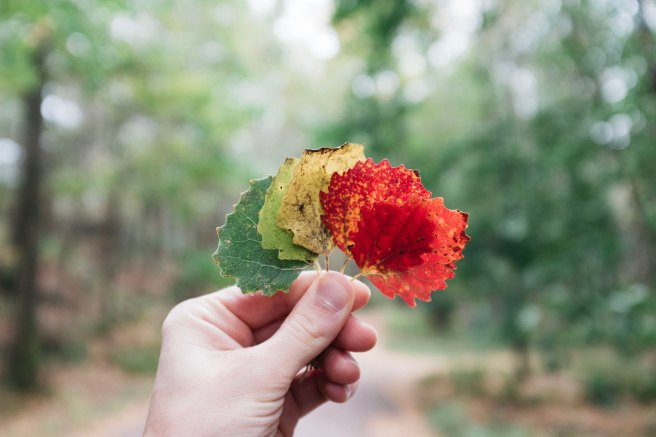
ben-white-181034-unsplash
Photo by Ben White on Unsplash

Teaching felt similar to starting a half marathon. When I looked around the room at 35 faces, I started to feel nervous. Then we divided up into our groups and I felt SO nervous. In my mind, I babbled on like a broken fountain. Hyper-awareness of who spoke and what they said and was it smart and what did they say again swirled around me. At one point I did challenge a student to define what he meant by “sacred” and he finally came to the conclusion that the term was ambiguous. Silent high five! It was a fascinating experience.

Our purpose in class today was to problematize how we “know” what we do about the New Testament. We talked about textual criticism, issues with linguistics and language, and the evidence we have- manuscripts don’t match. What do we do with all of the conflicting information? More importantly, what do we do with silences? Our professor passed around papyrus and animal hyde so we could understand how manuscripts survived. We talked about garbage. Not a dull moment occurred in the hour and twenty minutes of class.

The discussion went fairly well, I think. The students seem eager to learn and talk to each other, even argue their points in productive ways. After we wrapped up, a student asked me a question I failed to answer well. In essence, she asked, “How can I treat the Bible as a moral compass when I haven’t spent years learning Greek and Hebrew and studying texts- basically, when we don’t know?”

This is a question we could apply to any text that exegetes truth claims. How can we use a text as an ethical guide when what we believe about it is upended? I sent the student off with some reading suggestions and an enthusiastic “you’re a budding religious studies scholar!” However, I don’t know if I really answered her question because there isn’t an answer. The answer is that maybe we derive morals from asking questions, not listening to what one text says.

I think I’ll enjoy teaching and probably be exhausted by it in no time at all. For all the theory and strategies and activities to implement in each class, ultimately the material masks what students really need, which is to find their voices and feel uncomfortable. I have a feeling more questions that have no answers are coming my way. What is awesome is how it makes me reflect on why I love this subject. The stakes can be high. It’s cool to be a curator of conversations that matter.

Build While Burning

I’ve been missing something.

The students have had enough. They’re marching. They’re Tweeting. They’re on MSNBC. It took students fearing for their own lives to tear apart myths about freedom, protection, and rights to own weapons.

The students aren’t just tearing down, though. They’re building a movement. This is not something I have thought about enough in the thick of feeling angry and bitter and sometimes, really frozen. The conversations in articles and news reports and even face to face has focused so much on what is wrong and what needs to end, alternative processes and even visions feel overwhelming and inaccessible. Dismantling is necessary, but so is constructing. At least starting the process of creating something different in order to believe it can be done.

Building a movement is messy. People disagree and we learn every single day what needs to change. In December, I received a small grant to build a traveling museum exhibit that narrates stories of interfaith relationships and religious diversity in California. Building this exhibit is the biggest and yet perhaps the most important thing I have ever done. With my curating power, I have to choose objects that get to speak. I have to dictate what these objects should make us consider in learning about traditions or communities we may never have seen or heard. I feel so anxious that I will fail to balance or tell truth or even be blunt about oppression and violence through this history that had inevitably occured, and continues today. And yet, something calls me to keep working instead of giving up because I feel reverence to these stories.

I’m back at the National Association of College and University Chaplains conference at Howard University in Washington, D.C. this year. We came together to think about “voices on the margin” and our practices in caring for students who live on the margins for many reasons. We are wondering how sometimes we exist on the margins, and how we fail to welcome others when we have the power to change. I feel a different sense this year. Last year, 45 had been in office for less than a month. I sensed despair and anxiety. This year, despair is no excuse to hide. Our undocumented students are sitting in congress people’s offices demanding a Clean Dream Act. No one in the administration can support them the way chaplains can and should, if we keep building spaces for the mess.

I read something in a class a few weeks ago that put my real passion in perspective. Care is the common perogative of both chaplains and curators. Care for stories, care for identities, care for the complexity and messiness that is learning to be in the world, and how we see it as other might see it. This is the reason I continue to build, despite not recognizing that creation needs to be my theme this year. We don’t need to wait until the entire city burns to the ground before laying the foundations for new community resources.

IDK

Every time I travel somewhere, two Yelp searches happen. The first is for donuts. The second is for used book stores.

glen-noble-18012
PC: Glen Noble

I have a pretty significant habit of collecting books on my shelves that go unread. For a while, I started feeling guilty about this habit. What a waste! Sometimes, ultimatums get thrown around. “No more buying until you finish this shelf.” That works approximately .2% of the time because lo and behold, another trip comes up, another bookstore appears only blocks from where I stay, and my suitcase fills up with volumes. Especially if the bookstores have a religion section. Or a cookbook section. Or memoir.

I read a delicious article the other day that demanded I stop feeling guilty about acquiring unread books (within limits). It suggested that seeing unread books on shelves makes us eager to keep learning each day, because we know that our knowledge is limited and we can keep expanding it. The unread books serve as a reminder that we don’t know everything.

As a PhD student, this attitude of “not knowing” often translates to poor work. It can be difficult to admit when we don’t know a particular fact, or an entire body of literature. There have been moments in class, in a workshop, even in a meeting when I feel silly asking a question that “I should know the answer to.” But not asking the question breeds further imposter syndrome, no matter how many Google searches one can do to alleviate the feeling of not belonging due to a lack of awareness.

It almost feels comical sometimes, the way we pivot conversations to disguise not knowing for what we do know. Think of the typical politician who somehow always gets their talking points in an interview, without being asked. One of my professors assured me that the longer I do this work, the more I will realize I actually don’t know.

Reframing my work brings some comfort to this awkward admission. Maybe my job isn’t “to know,” but actually to recognize what I don’t know, and to strategize ways to find out. Moreover, maybe it’s about the questions we ask. Why are we fascinated by people of the past? What do their lives mean for us? If I interview 50 chaplains about their work, will they give me similar answers?

Academia’s most exciting aspects rest in the unread section of the bookshelf. In fact, I believe life’s most virtuous moments appear in the form of the unread. Often, the stories we tell deal with surprise and an unexpected turn of events. How we react to our surprises dictates the kind of memory it is.

Perhaps the biggest question we will never know how to answer is what our purpose is, and I think it right that we never cease wondering. We can continue asking, and continue seeking, but in this case, not knowing is the one thing that connects us beyond our towns and counties and states. If only we could celebrate not knowing.

Forgetting to Remember

76 years and two days ago*, Japanese fighter planes bombed Pearl Harbor on the Island of Oahu. Just two days ago I went about a normal graduate student day, writing fiercely about saints and early Christian monastics and interfaith dialogue using storytelling as a model for transformation. I took breaks and went on Facebook. On the right side of the news feed, the subjects trending included the college football playoff, more heartbreaking news about assaults on young women (this time in academia, very close to home), the terrifying fires in my city of birth, and something about bitcoin.

F6DB593E-0AC8-4E09-91A6-9BD1048DACEC
Photo by Jordy Meow on Unsplash

I don’t remember seeing anything at length about what happened 76 years ago. 76 isn’t a particularly meaningful anniversary- we tend to recognize milestones in fives and tens and fifties. The next day, more news appeared about Baker Mayfield as the Heisman trophy favorite despite his controversial behavior on and off the field. I went to my last day of classes for the quarter with a small feeling of triumph- I made it! Only five papers and an oral presentation to go. I looked forward to baking as motivation to get my writing done. After my last class I sat and chatted with some religious studies undergraduates and laughed about the sassy monks we read about this week. I went to my professor’s office hours and discussed my thesis for the paper. In passing, he used the phrase “I forgot to remember” to describe the woes of historians’ work. I kept repeating the phrase in my mind over and over.

What we forget is much more than what we remember, due to limitations of human memory. What we forget to remember is due to something else- pain, trauma, events we don’t want to relive. A recent article detailed why victims of sexual assault often describe the assault inaccurately- trauma often forces them to push the events out of their minds simply to go on living. They subconsciously forget to remember- though there is no such thing as erasing.

A couple years ago I was watching Archer with my divinity school classmates. The crude yet intelligent humor appealed to us amidst the brutal winter night. Archer, the brash but charming hero, finds himself in a situation involving a Japanese gang. Archer’s mother saves the day- she prevents the gang from wreaking havoc and at the end shouts, “that’s for Pearl Harbor!” The line is meant to be funny because as we say, it’s not “too soon.” Time passes and heals. Except that last part isn’t really true. Pain passes down through generations. We forget to remember atrocities because history is often about what we’ve forgotten. What about the two atomic bombs that killed over 300,000 people instantly and left years of radiation illness lingering for generations to suffer? It can be hard to connect with places and times far away, but progress is a dangerous assumption. We can’t forget to remember those before us suffered as many suffer today, from oppression and supremacy. Time can heal, but healing isn’t forgetting.


*Note: this post has been published retroactively

Myth

As the quarter closes this week, the writing process continues at full speed, with half-finished thoughts and some consolation. There is never enough time, but perfectionism impedes creativity and progress. I’m realizing that my three classes all revolve around narrative this quarter, so making sense of how stories dictate values is on my mind.

jonas-jacobsson-411041
Photo by Jonas Jacobsson on Unsplash

One of the projects I am working to finish is an essay about myth and interfaith dialogue. In my circles, I don’t need to stress the importance of dialogue (preaching to the choir) but I do think it’s important to complicate what actually happens when people are vulnerable and share how their own experiences lead them to convictions. More wisdom is better than less, but what if that wisdom promotes conflicting values? This seems a necessary question as not a day goes by without someone noting “how divided our country is.” We are living by irreconcilable myths, and we cannot deny that a selection of these myths intentionally ignores or legitimizes pain and dehumanization.

Northrop Frye, a literary critic, and Wendy Doniger, a professor at the University of Chicago, both deal with myth in their work. Both stress myth as narratives that deal with human crises, especially finitude. Comparing myth across cultures and traditions is dangerous if we are not careful to acknowledge context and particularity. What I find compelling about myth, especially as a process for dialogue, is how we pull meaning from stories that have no historical or logical basis. I think our ability to do this speaks to creative expression as one of the highest forms of spirituality. I also think this process of meaning making is the closest we can get to a universal human experience, which is living with inevitable change. We are constantly attempting to make sense of “why things happen.”

This quarter has been tough, not just because of the rigor and caliber of work required, but because moving to a new place heightens the knowledge that meaning is obscured. I always enjoy learning through a variety of channels- reading interesting texts, lively discussions, and especially making connections to my own work in the field of interfaith studies. But as a person who enjoys nerding out about baseball statistics and marveling at bright, obnoxious fashion trends as much as writing papers and discussing medieval saints’ lives, finding wholeness has been a real challenge. I think the process of living by a new story takes time and struggle before the narrative truly emerges. Communities are struggling to incorporate old stories into new problems. When the stories generate no meaning, it’s time to start telling new ones.

One thing all the stories have taught me this quarter is that crisis never leaves the human experience. It’s false to believe we will ever live without the apprehension of some kind of challenge, and there is plenty of wisdom from various times and places to aid us in remaining present and to let go of attachment to a particular outcome. Still, there is something comforting in the fact that a benchmark of the human experience is grappling with narrative and meaning-making. I think this is important to remember, especially when we need to reflect on how we participate in narratives that cause harm.

!

Today I rode my bike to church on campus for a special multifaith celebration. During the service, 24 students were officially commissioned as Fellows for Religious Encounter. This year, they will meet every Wednesday over dinner for dialogue and to hear from engaging speakers. They will visit sacred sites and experience rituals and practices they may have never seen before. As they recited the commissioning prayer before the congregation this morning, I couldn’t help noticing two things: time FLIES, and how necessary this kind of intentional learning is as religion either brings us wisdom to seek justice or violent division.

chris-ensey-87456
Photo by Chris Ensey on Unsplash

I remember stumbling upon a Buddhist Temple in my neighborhood when I was little. It was a temple dedicated to Kwan Yin, a beloved bodhisattva in the Mahayana tradition known for her mercy and compassion for human beings. Inside the temple, there was a wood floor with black square cushions lined along the edges of the walls, and at the end of the long hall there was a statue of Kwan Yin sitting on a lotus flower. My entire understanding of God and faith shattered as I scoured the public library, trying to find books about this way of life called Buddhism. My grandmother told me whatever she knew, and encouraged me to keep looking. I didn’t know any Buddhists, though, so all I could do was take my reading at face value.

Seeing these bright young faces this morning made me want so many things for the fellows. I hope they don’t shy away from noting disagreement, especially when it is harmful. I hope they are forced to wrestle with a misconception dispelled in conversation. I hope they feel a range of emotions: anger, confusion, sadness, and joy when wonder strikes. I hope they listen and learn, and talk openly and teach. I hope they are confronted with not just questions about religion and privilege, but constantly engage in self-reflection.I hope they enjoy each other’s company. Of course if all these wishes are fulfilled, these students will inevitably be transformed.

Meeting someone who practiced Buddhism proved quite different than reading about the life of the Buddha and the Four Noble Truths. My teammate’s grandmother didn’t talk about her beliefs in an organized, bullet-point style lecture (she didn’t draw me a chart), she told me about her father and his father going to temple on New Year’s Day, and contacting monks for funeral services, and living life with compassion at the forefront of her mind. Every Sunday I sat in church and learned about the life of another man who preached compassion, who died so that we could go to heaven. I was confused and upset, scared to talk to my parents about these discoveries but excited about my findings, and bouncing from deep discomfort to honest wonder.

I think about walking in to that temple more and more these days. It seems like if everyone could walk into an unfamiliar place, ask some open questions, and struggle through some necessary discomfort to learn an alternative worldview, we could feel this wonder more often. Of course this is not so simple, but interfaith work is not simple at all. Feeling vulnerable to both share one’s own beliefs and subsequently hear views that thwart them takes courage and patience, and not the least of all trust. It is a worthy exercise for anyone to be faced with doubt. Often, confronting this leads us to an even wiser truth that we don’t take for granted.

I hope they learn. I hope they laugh. !

First Day

The first day of a doctoral program feels just like the first day of third grade. It’s been three years since I had a first day of school, so I felt particularly nervous. Starting a new routine is always both stressful and empowering. This morning I woke up before dawn and went to yoga, except it wasn’t already intense Vinyasa, it was this workout that I can’t even begin to explain. I don’t think I stood on both feet for more than 5 minutes. After surviving that, I came home and indulged in delicious pumpkin pie flavored coffee and a gluten free bagel that Jose made, smothered in onion and chive cream cheese. Finally, I rode my bike without harming anyone to the main quad on campus, found my classroom with minimal issue, and made it through Arabic. After lunch and more coffee, my Theories and Methods in Religious Studies class met for less than two hours, in which we discussed antics of philosophers and psychologists. I came home and made some delicious enchiladas and read for tomorrow’s class.

bryce-evans-202178.jpg
Photo by Bryce Evans on Unsplash

The thing about first days, besides being exhausting, is that heighten my awareness of what changes are to come. Have you ever looked back on a semester, or even a year, and realized how much transformation has taken place? You have several new relationships- classmates, teachers, teammates, fellow organization members. As each day brings the familiar back, we grow more and more complacent, forgetting that first day and all it’s intricacies. Now that I know where my classes are, I won’t experience the few moments of tense searching for the right building, realizing there was a much closer place to park my bike, or that forgetting cough drops was a giant mistake. This isn’t a negative, it means we can begin to thrive in our environment because the “housekeeping” is finished.

First days have never been a good experience for me. Overwhelmed and without a confident routine, my first days have consisted of spilled coffee mugs in a new backpack, waiting way too long in line at the bookstore only to realize I am one notebook shy, or missing a key line on the syllabus and thus already slacking on the homework. I once sat through an entire Advanced Mandarin class on a first day because I was too embarrassed to leave. Not to mention, I feel lost without solidifying the communities that are some of the most important to me- the classrooms. Part of the reason I love living in an academic environment so much is the ability it gives me to meet fellow linguists and theologians and historians and ethicists. First days remind us to trust the process that these dynamic communities will build themselves as we learn together.

Today was the best first day I remember. Perhaps that it because I have missed this environment so much. After three years, the search for the classrooms, finding a parking space, even learning I bought the wrong book didn’t overwhelm me as much as it made me feel joy at the notion that this will be my routine for a long time. Many days from today, I may look back and feel silly about this, but for now, I’ll enjoy the unknown.


Risk

anatoliy-gromov-282242
Photo by Anatoliy Gromov on Unsplash

I have officially touched down in Palo Alto. Let me brag for a second about how epic my summer was, thanks to my family, friends from all over the country, mentors, and teachers. By the numbers:

-19 states visited

-84 hours of yoga

-3 thrilling USC football games

-72, 000 words written

-11 Dodger games, including one day when it was 100 degrees on the ravine

-52 books read

-95 days of French study (Duolingo FTW)

-9 doctor/dentist visits (and my first cavity!)

-3 Incubus concerts (also a pretty sweet country show with two of my best friends)

-100 morning walks with my wonderful mom

-An absolutely amazing writing retreat with 23 goddesses

-1 epic road trip that taught me so much about my country and its people

-A productive and much needed meeting with 12 of the coolest college chaplains

I finished the Revolutionary Love fellowship as a writing fellow and started a new position as a researcher for the project. I traveled to New Mexico twice, each time falling deeper in love with the vivid desert colors and even surprise lightning storms. I hung out with former classmates and other IFYC alumni. I visited the Ice Cream Museum.

I also struggled quite a bit with my weight, an exercise obsession, and feeling like “enough.” I sent in several writing pitches and got well-worded rejections. I experienced loneliness and growth from it. I am shattered and grateful. So grateful.

And now the next part of my life begins. I took a risk moving to Stanford because frankly, I’ve always struggled to feel like part of the academic community. Am I smart enough, well read enough, capable of learning to be an “expert?”

My family and friends have been teasing me about becoming a tree (Stanford’s mascot- or is it the Cardinal? More on that…) because we bleed cardinal and gold as die-hard Trojan fans. I responded by promising to maintain my loyalty. It’s all in good fun, but as I considered moving and beginning my life here, I began to think about this risk and what “risk” means.

Place is important to me. I have been so lucky to travel around the world and the country, experiencing a plethora of ideas and beliefs that clash with my own. But home is home for me, and that will probably never change. Though I’m now closer to home than I have been in five years, braving snow and long plane flights with turbulence that makes my heart pound, this place is still not quite home. And that’s fine. Risk for me is believing I can make this new campus and city home, that I can find meaning and purpose by listening and finding ways to be helpful.

Home has changed since I’ve been away. My sister started her first job as a surgical resident. One of my best friends left a very well-paying job to get closer to her dream of working at USC. My colleagues got married, divorced, had kids. Two left this earth way too soon and I felt crushed that I never got to say a proper goodbye, or tell them how gorgeous of a human being they were. Home will continue to shift and move still, and I will return to see and feel shocked.

Taking this risk means trusting that change is not only inevitable but necessary. Trusting that new jobs and family members and even losing some will test me. I have to learn to trust myself, especially in failure.

My adventures will not soon be forgotten. One of the women in my small group on our writing retreat spoke about writing in a joyful time in her life. She said in some ways, writing about pain is easy. Recognizing when we are full and when our lives feel fruitful is difficult. Of course we experience cycles and every day gives us both. Our people lift us up and celebrate with us, and when we find these loving communities we are indeed home.

I cannot say I feel ready, but this risk feels like a good challenge for my mind and soul. Just like the lightning storm on a sweaty Phoenix evening that both terrified me and gave me a new sense of beauty, this new place scares me and tests my ability to find home.


Happy Birthday!

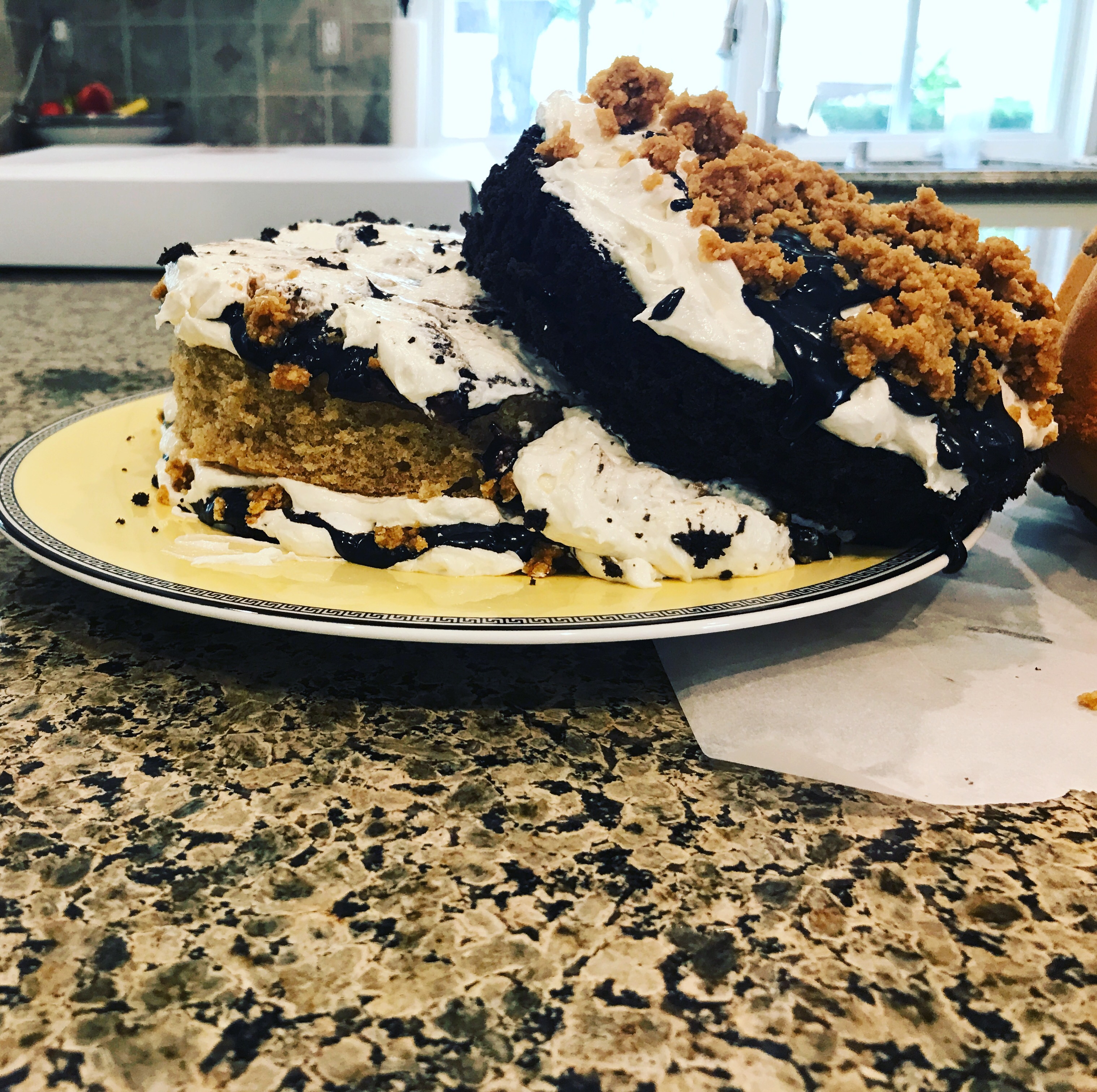
The Practivist is two this week, so I had grand plans to make a cake to celebrate. I also got donuts and baked cookies, because go big or go home. Well, this is how the cake turned out:

S’mores cake with graham cracker and chocolate cake layers, fudge sauce, marshmallow icing and graham cracker crumble

My mom saw it first. I got a text saying “emergency” while reading in my room, and rushed downstairs to find her laughing. “What!” I looked at her expecting something terrible, but she pointed to the cake. The marshmallow frosting was too slippery. “Geez, you scared me!” We both laughed very hard. That’s exactly what this blog is about, I realized. Finding joy in the imperfect, the disastrous. The cake tasted great, by the way. Appearances aren’t everything.

A year ago, I attended the Beyond Walls Spiritual Writing retreat in Gambier, Ohio. 100 religious leaders (of sorts) stayed in the Kenyon College dorms and wrote op-eds, essays, religious commentaries, and stories. It was at that retreat that I committed to posting a blog every week, and I’m happy to share that I made it! 52 posts later, my writing feels more natural. Every week offered an opportunity to reflect on this idea of staying grounded in the daily struggle, whether it was personal or worldly (often both). Since last July, I joined a memoir writing group, started working for an amazing project (the Revolutionary Love Project, founded by Sikh-American activist and filmmaker Valarie Kaur- also a personal hero), and ran a marathon. I quit my job. I got accepted to my dream PhD program in religious studies at Stanford and moved back to California. I finished cataloguing my blessed collection of books, many of which came from my grandmother’s house when she passed away. My sister graduated from medical school and started her residency at home. For the first time in over six years, my family is all in one place.

Though my writing has certainly rambled down different paths, I believe this blog remains true to my original idea of exploring how we, as human beings, demand resilience in ourselves. Suffering grounds me in my religious beliefs because all humans experience it. Yet, we are capable of countering it, and even ending it in certain circumstances. This year I often found that joy presented itself in a form of self-allowance. When we realize we are deserving of the life we are given, the gifts of said life present themselves. I’ll never forget when Valarie spoke to our group of fellows on the phone after the election and she told us we deserved joy especially in a time such as this. “We will never let them take it away,” she said.

My students often gifted me opportunities to learn, which I loved and cherished. I had no idea that my job involved so much learning, often in times I was supposed to be the teacher or coach. I feel much better about admitting my mistakes, even when they have caused someone I love to hurt. Guilt still plagues me, but I am able to name it and even let it go more easily sometimes.

Not every blog post was easy to write, and definitely not all of them turned out the way I envisioned. Some of them make me cringe reading them back, but I’ve decided to leave them as they are to trace the journey and accept the imperfection of where I was when I completed them. Authors speak often about the trajectory of their work and how much their earlier writing influences their current projects because the necessity of reflection and knowing oneself through process makes us better writers.

It’s difficult to imagine a year from now because as life has taught me, plans often meander or even take a sharp turn away from an original intention. That’s why this blog has been so important to me, because the friends and others who have read even one posting and commented or messaged me saying, “I identity with this” have made it worth it to stay up late or carve out time (when I really didn’t have it) to keep going. I plan to keep writing and learning and making mistakes. Here’s to another year and maybe even another cake that resembles the leaning tower of frosting.

Dining Alone

I’m in New Mexico (!) which is probably my favorite place besides LA and Tucson. The National Association of College and University Chaplains (NACUC) Board meets once a year to plan for the upcoming school term, and this year we chose Albuquerque. I was elated. The desert is definitely my home spiritually. I took advantage of my downtime and drove in a day early to stay overnight in Santa Fe. The city is small but full of absolutely stunning colors and art everywhere you turn. In my experience, people quickly warm to you, offer hospitality and just generally want to know your story. I’ve been meeting folks from Texas, Arizona, and even Ohio.


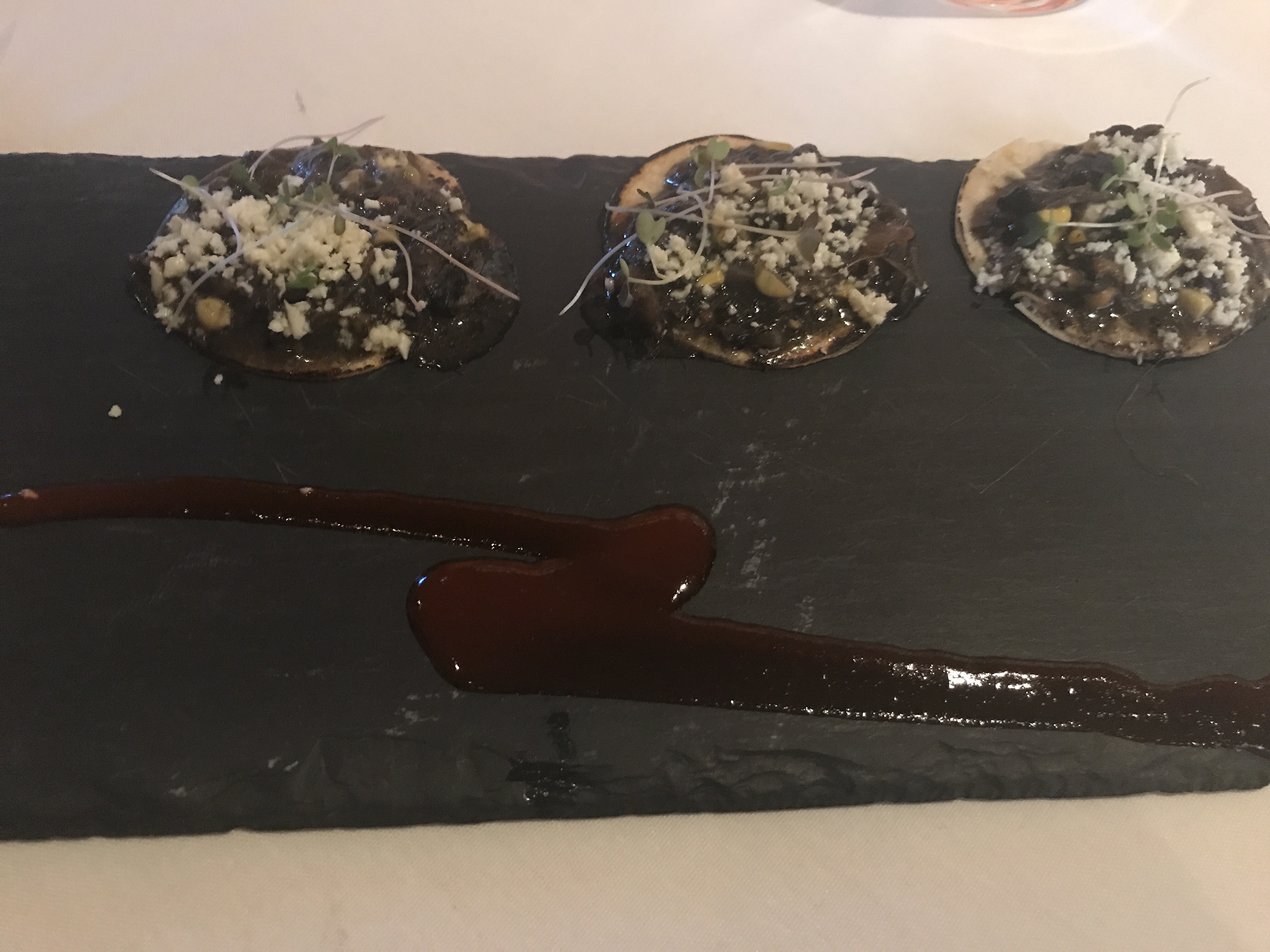
As a foodie, of course I did my research. Santa Fe boasts some of the best chefs in the world who specialize in Southwestern fare, which involves lots of corn and spices. My favorite dish is called Chile Rellenos, which is stuffed poblano peppers and fried in an egg batter. In New Mexico, it’s essential that you choose a side on the sauce front: red or green? Of course, if you really can’t decided, you can order “Christmas”, which means half of each. I certainly love both, but tend toward team green. I had been waiting for years to try a restaurant called Sazon, a romantic Mexican cafe with several moles. And since I came by myself, I made a reservation for one- just me.


To be truthful, I googled what dining alone is like. As an introvert, being by myself is energizing. However, the self-consciousness surfaced when I considered bringing a book or just my phone. In airports it seems quite normative to eat by yourself, but this restaurant is a popular date night spot. Several bloggers offered great advice- most importantly, do it! Don’t worry about what other people think. I worked up my courage and arrived right on time.


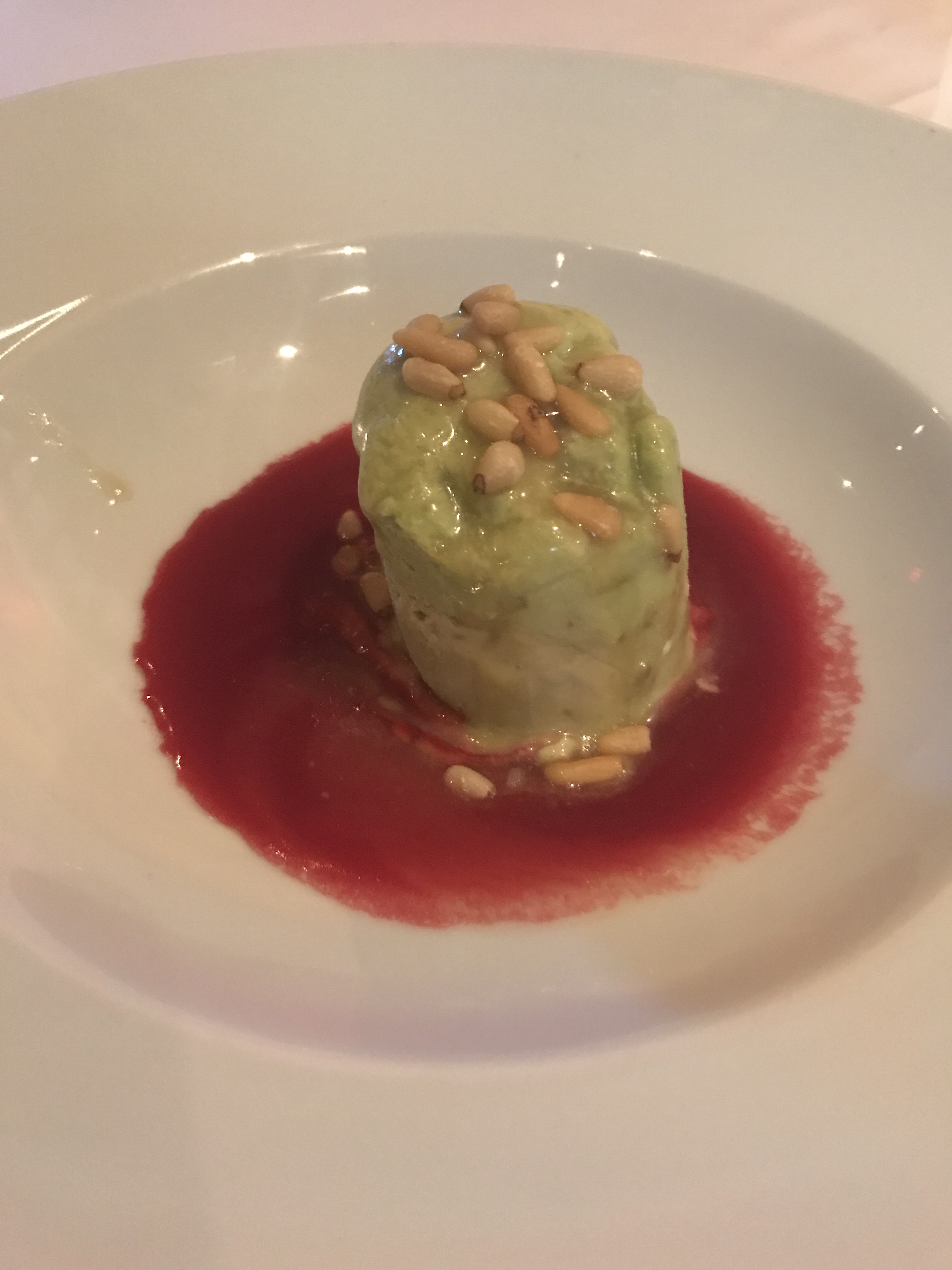
Despite the slight awkwardness of people watching while they gabbed with their dinner dates, dining alone was a learning experience and surprisingly, a communal one. Both servers and diners were more willing to talk to me. The couple to my left had come from North East Texas to take a short vacation after their daughter graduated from college. This was their first time at Sazon. The couple to my right, two women, wanted drinks stat. They drove in from Arizona for a bachelorette party. The server, Miguel, came from Mexico City to work at Sazon because of the chef’s renown. He demanded I try the special dessert, because it was that good.


Of course, without distraction from a dining partner, I noticed more around me. Servers watched their tables like hawks so they could whisk dishes on and off the table to quickly move courses. The diners at the tables next to me talked to me at length- though on both sides, they began the conversation with “I’m sorry, this is so rude but…what did you order?” What surprised me the most was the silence at most tables for long lengths of time. A relaxed silence, the kind you know isn’t stemming from not having anything to say. It comes from feeling so comfortable with someone you don’t need to speak for hours at a time.

I’m grateful for the experience. Spending time alone in a public place made me aware of an important contrast we often don’t consider, the loneliness some feel even in large groups. Yet there is an importance to experiencing things without anyone else because we receive no influence to judge except our own thoughts. And for the record: that dessert was more than worth it. You’d never guess the ingredients.