Saying Thanks to My Parents

It’s been a jetset weekend. On Thursday, I flew to Philly to watch my sister graduate from Drexel School of Medicine (THAT WENT FAST). On Saturday My parents and I jetted all the way back to LA to attend the Honoree Mass at my elementary school, Mayfield Junior School in Pasadena. I was very humbled to receive an award along with two of my favorite teachers- both women that played a significant role in making me stop messing around, and start taking school seriously. Honestly, they don’t look a year older than I remember. 
The mass began at 4 pm on Sunday in the gymnasium- the same gym where we won the 7th grade basketball finals, played tag and graduated. What an experience coming back after 15 years. As the mass closed, the headmaster called me up and offered me a beautiful bouquet of flowers. I knew what I wanted to say. Below is a version of my very brief remarks, and is especially dedicated to my parents. They’ve been the real jet setters and deserve a vacation. 

A photo my science teacher handed me (of me)

Thank you, what an incredible honor to return to MJS after quite a while!. It seems like yesterday I was in Mrs. D’Argenio’s second grade class making my first communion, or Mrs. Hermanson’s fourth grade class building my California mission project. As an avid baker, I built Mission Santa Cruz out of sugar cubes, but didn’t have the foresight to not leave it outside overnight. The next morning, it was clear that raccoons had promptly feasted upon the structure. I remember finishing the eighth grade with Mrs Holtsneider, studying what has come to be the work I love and will devote my life to- bringing people of all and no faiths together to know each other, learn from one another, and most importantly, to find common values and ways to work together. 
I need to address my parents because Mayfield is a school rooted in faith and family as the foundation to education, and they have been my and my sister Mallory’s foundation from the very beginning. Mallory just graduated from medical school, so if anyone needs surgery, she starts her surgical residency at Huntington hospital in less than a month. My parents, Liz and Dennis, taught me two things in the last 29 years, one of which I believe created a monster. You see even when Mallory and I experienced failure or roadblocks which we all do, they wouldn’t stand for it- they never told us “you’re not smart enough, you’re tall enough, you’re not fast enough…you can’t do that.” They asked what we needed, and how they could help. From this, we learned that in our work we should always be asking what we can provide and how we can help. 
My parents believed education would better us and help us achieve our goals, but that if we didn’t acknowledge our deep privilege in receiving an education and attempt to give others the same opportunities, that life would not be full of meaning and thus not worth living. When Mallory wanted to be an actress, my mom drove her to auditions. When I wanted to be a professional basketball player, my dad came to every game with me- all five foot four of me- to watch me play. When we both wanted to live in our education, to attend boarding schools, they found a way. They have read admissions essays and scholarship applications and listened to practice interviews, and helped us pick what to wear- all because they believed in us even if we felt unsure. 
They chose Mayfield because as we know, education is perhaps the greatest gift and right we have as human beings, and they wanted it to intersect with the other values in our family. I’m so honored for this award, and it is dedicated both to the steadfast teachers here at mayfield and everywhere, and to my parents for saying yes to any sentence that began with, “what if I tried…”
Thank you mom and dad. I love you.
Graduations are the Worst

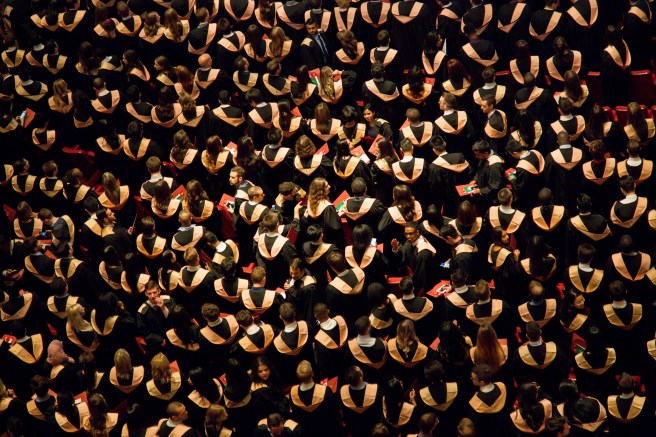
It’s that time of year again. Early May- when the rain is simply unbearable because it’s supposed to be April showers May FLOWERS, but it’s 55 degrees every day and the clouds just can’t seem to leave the party. It’s the time I should be starting my summer plan- to read 300 books, write 500 pages, workout every day (twice), hang out with friends, and “relax”, because somehow the ideal summer schedule includes eight extra hours in a day. And, in these weeks of caps and gowns, honor cords and club sashes, gifts and moving dates and yearbooks and parents, everything feels like chaos.

faustin-tuyambaze-135473.jpg
PC: Faustin Tuyambaze

I’ve been through a few graduations. At the end of eighth grade, my class sat on bleachers in our school gym facing the audience in a commencement mass. We were instructed to keep our knees locked together, because the white nurse-like pinafores we wore would reveal much too much if our legs flared out. Every picture of that day portrays me in deep concentration- I had gotten my makeup done for the first time ever, and I’d be damned if I let my knees separate. In high school, my classmates were forced to travel to our own graduation, because a flood had forced the school to end the Spring Term three weeks early. We wore white rain boots with our dresses for fun. I remember spending the last night before graduation in my dorm room, which I hadn’t occupied for three weeks. That night, tradition dictated that the seniors participated in one final chapel service while the rest of the students waited for us outside to say goodbye. Students stay on the chapel lawn until well past midnight, usually. I admit- my instinct was to silently sneak through the crowd and back to my room, safe from the tears and awkward exchanges. College and graduate school certainly offered their own rights of passage- black gowns, caps that made me fuss with my hair endlessly. Everything must look perfect for the pictures!

After several rounds of this pomp and circumstance, I cannot help but admit that I simply hate graduations. The word “commencement” obviously brings up cliches of new beginnings and opportunity, but I experience these ceremonies as downright anxiety inducing. No one says what is actually true. “See you in a very, very long time…perhaps never!” After each grandiose ceremony, complete with advice and rituals, I feel as though a place I’ve inevitably worked to call home, to build relationships, to find my place within the place, is kicking me out without a second glance. “Welcome to the alumni network, you can donate here and here and here.”

This post probably sounds like a rant, because it’s masking how I really feel at graduation ceremonies, which is so incredibly proud of every single person who has achieved this magnificent goal and yet, so undeniably sad. Graduations mark a transformation of your place in the community- namely, that you’re moving on from it. Even after four of my own and several of friends and family, I will never get used to these ceremonies. They break my heart as much as they make it fly.

I do feel immensely proud of everyone graduating at this time. You deserve every bit of congratulations for working your behind off for one, two, four, six, or maybe thirteen years! I hope you throw your cap in the air with everyone. I hope you wave at your friends when you receive your diploma (even if it’s really a blank tube- you’ll get it in the mail six weeks later). I hope you cry a little- because this moment is bittersweet and you deserve the difficult goodbyes too. Congratulations, classes of 2017! All my love to you ❤


We Never Should Have Met

Facebook has been reminding me of memories recently (this must be a new feature- unless I’m only now realizing it. Or old enough to get memories?) and I have been feeling nostalgic. How much has changed in five years- and yet, how much really hasn’t.

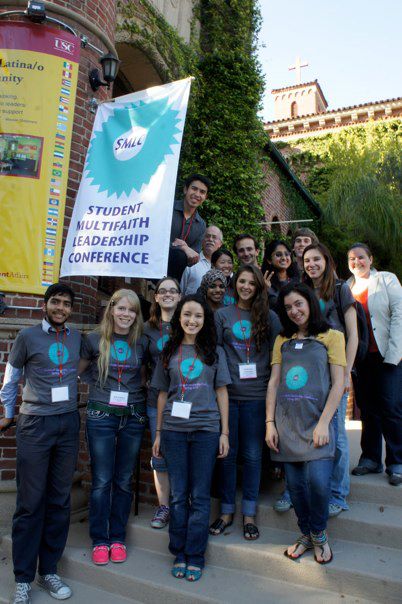
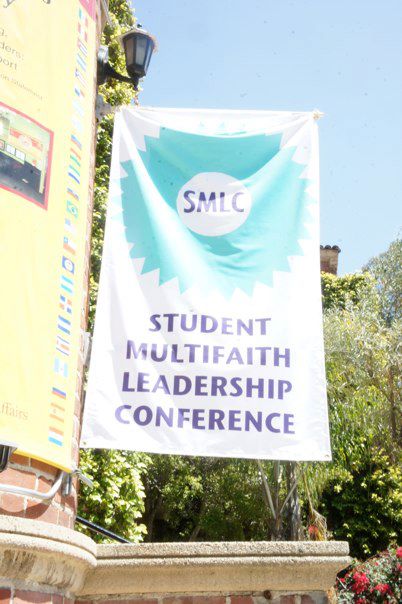
This morning, Facebook informed me that five years ago today, the USC Interfaith Council hosted the first ever Student Multifaith Leadership Conference (SMLC) on campus. I remember planning that conference with the other IFC members. We spent many nights crammed in one of our apartments, working tirelessly to get spread the word and get our logistics in place. It was my last semester at USC, and I recall a distinct feeling of being busy beyond imagination- writing two theses, taking twenty units, still fulfilling my role as IFC president, and finding time to make the most of LA with my friends- and yet experiencing pure joy despite the stress. The IFC really bonded as a team.

580220_3031658753644_1409522558_n

Reflecting on myself five years ago, I can’t help but feel proud of the students I served at Northeastern, and the amazing interfaith leaders I have met around the country since the SMLC. The world is in a different place, sort of- on the whole, these students are much more aware of the role interfaith communities must play in dismantling systems of oppression and including various identities at the table. I see a great success and opportunity in partnership- beyond dialoguing and learning, the young people are showing up for each other to seek racial justice, gender equity, rights for immigrants and the undocumented.

My Senior Ministry Project at UChicago focused on interfaith dialogue as a model for building identity awareness. I think it’s no secret that when we seek to hear convictions that conflict or sometimes even threaten our own, we learn more about ourselves. We are forced to contemplate our own beliefs. One afternoon on the fourth floor of Swift Hall (the home of the Divinity School), I presented my thesis to the Dean of the Divinity School. He asked me to dig deeper on a couple points, and finally, he said, “Tell me honestly- how many students do you really think would participate in this kind of thing? It seems like such a specialized program.” “All of them should,” I responded. He laughed. “You really believe that?”

The idealist in me says yes, I do believe that. I think everyone should participate in interfaith dialogue- even the vehement atheists. Education is about confronting ideas that bring us discomfort. Interfaith dialogue at it’s height is deeply uncomfortable. I have learned over several years of doing this work that humans are pretty particular when it comes to our worldviews. And yet, voicing our particularities is exactly what makes the work together so meaningful.

521979_3031662113728_838276500_n

I remember the day of the SMLC donning my purple and turquoise shirt proudly. There was a typo on it, but that made it our own. At the closing panel, I sat next to my friend Antonia, a pagan writer and anthropologist, feeling a little sad that the experience was over. We had all put such heart into the work. And we never should have met, that group of people. We studied different fields, traveled to different places, called several nations home. The intentionality of the group is what gave me so much life, so much joy. As I continue to reflect on my journey at Northeastern, I believe the days I felt the most joy were the days I saw that intentionality in my students.

529956_3031667153854_1864528299_n.jpg

When there is no reason for us to meet, we are faced with our own truths. We can’t fall back on assumptions that we are friends because we find the same things interesting. Discomfort brings learning. It also helps us build deeper relationships because it helps us dismantle the systemic urge to stay safe in our bubbles. If every person we encounter is meant to teach us, we learn most from those who are most distinct from us. We never should have met. And yet, here we are, finding joy in the world together.

The Interfaith “We”

Last week my friend Katie Gordon visited Boston so of course we had to get dinner and catch up. I showed Katie around campus, took her to the LGBTQ Resource Center to see our mutual friend and colleague Lee, and after a quick tour of our Sacred Space, we wandered over to Newbury Street. We stopped in Trident Books and mused over some titles, mainly discussing what had been happening on our respective campuses. We nerded out about a few particular books, mostly related to feminism and/or religion. Finally, we sat down to a delicious South Asian dinner.

samantha-sophia-195012.jpg
PC: Samantha Sophia

Katie is the Program Manager for the Kaufman Interfaith Institute at Grand Valley State University in Grand Valley, Michigan. She identifies as secular, but make no mistake- Katie is one of the most influential interfaith leaders of our time. She trains for the Interfaith Youth Core’s Interfaith Leadership Institutes and has introduced Krista Tippett, creator and host of the radio program On Being, because she’s that cool. I have known Katie for a while through our mutual Interfaith Youth Core affiliations. One thing I really appreciate about Katie is her ability to unapologetically be who she is without inhibiting anyone else from doing the same. She is open about her whiteness and privilege, but not guilty or frozen in working to make change.

At some point in our conversation, we both expressed concern for the interfaith movement as it exists now. What does it mean to train leaders when many people of faith live under real threat for their lives- because of their faith? Can white, secular young people train in the same spaces as black Muslim women? As queer Jews? As Hindu immigrants? As refugees who, despite looking death in the face, have held close to their devotions? How do we expect those who seem to lose power and voice every day to lead others when there is real, imminent danger?

I have been reflecting on this question for some time now. One of the reasons I feel so strongly about activist and filmmaker (among other amazing things) Valarie Kaur’s message and definition of Revolutionary Love is that I feel so strongly about Valarie herself. She represents to me the very type of leader that begins to answer this difficult question of how we as developing interfaith leaders might live into our identity as such. You see, Valarie may have several thousand Facebook friends, a database of over 100,000 subscribers via different projects she has started, and one of her recent speeches has now acquired over 16 million views on social media (that’s remarkable, just FYI), but Valarie never does her work alone. She always thinks, speaks, and acts in community because she recognizes that while her voice is essential- as a woman of color, a Sikh American, an accomplished pioneer in filmmaking and civil rights law- hers is by no means the only voice with one particular set of concerns. We need not look further than the daily news to see how many communities need more voice for dire concerns.

In this way, I think our answer begins not at the “I” that defined the previous era of interfaith leadership, the years I spent building my toolbox and story collection. Interfaith work has always been about bringing communities together, but allowing particular individuals to serve as the face of communities, to represent traditions and belief systems even if inadvertently has in the past been enough- we look around our table to see a Christian, Jew, Muslim, Hindu, Buddhist, and seeker, and we feel good about our group. We can dialogue and serve together. We might not talk at all about the intersections of our own identities, or how unequal access to this table might be.

We have reached a moment in our public landscape in which the “I” interfaith leaders will quickly feel devastatingly alone or completely exhausted, and probably both. The interfaith movement is at a true “we” moment- a time when it needs to be acceptable and encouraged for us to ask each other to do things like march on the front lines, speak publicly against bigotry, or give money to civil rights organizations. Going to prison for disorderly conduct. The reality is, we cannot all risk the same things. We need to know our limits. Focusing on “I” can help us learn these things about ourselves, but will not build networks. Right now, the fact that our different identities afford us unique privileges is an advantage if we use them in community.

As Valarie so beautifully stated recently, “We can practice Revolutionary Love for those who are in prison because they have committed great harm. This does not mean they shouldn’t be in prison. This means we free our hearts to believe they can be greater.” For some of us, practicing Revolutionary Love, just like interfaith leadership, means asking our allies to put their words and bodies on the line. At the same time, for some of us, it means being asked and saying yes.


Preflection.

rdvp7whoibw-niels-weiss
PC: Niels Weiss

HAPPY 2017!!!

Another day turns into another year. Here we are! Today I checked my social media channels frequently to see what friends and family were feeling as the new year approached. I’m so proud of y’all! You achieved an incredible amount this year, despite some serious tragedies amidst every day strife and violence. If we are honest, changing the last two numbers of the date today to 17 don’t wipe any of this away, and surely, as we have already seen in Istanbul, tragedy looms over and over.

I really loved my friend/co-worker/colleague/tea buddy Kaitlin Ho’s reflection questions that she posted a few days ago. They certainly helped me put my own experience in context and focus on the present time. Though so much could be written for my responses to each question, here are my reflections and preflections as we begin a new year:

Where did I see glimmers of hope/light?

My students and co-workers. This past semester was exhausting for everyone, I have never seen so many young people physically show signs of fatigue and anxiety. Yet- the people around me, students and co-workers alike, delved deep and found unrelenting compassion for each other. The day after the election, 45 of our university’s community members gathered to dialogue and share, and I witnessed active listening, people making space for each other, and even strangers hugging. A week after that, a group of students attended a workshop I facilitated for the Global Citizenship Project around storytelling for social change- republicans, democrats, and international students included. Though I felt nervous, the students made themselves vulnerable to each other and shared some heartwarming and heart-wrenching stories about living with depression, experiencing their parents’ divorce, and other touching experiences. For a moment it felt like we had created community across an unbridgeable divide.

Where did I experience darkness?

I witnessed the ugliness of bureaucracy and large corporate institutions. I felt dehumanized and witnessed through my own lens of privilege how deep-seeded oppression is around me.

What did I see in my character that I’m proud of/want to see more of?

I ran 3 half marathons and started training for my first full marathon this past year. I’m gearing up for Boston in April. What I’ve learned in my running journey so far is that health cannot be achieved through only physical well-being, it’s so much more about the mind. I found that attempting to be gentle but encouraging of my body and mental state got me so much farther than beating up myself up for missing a day, or running too slow, or not stretching enough. I felt more motivated to take care of myself when I was merciful. As I start the serious training, I want to see more appreciation of the immense task it is to live, love and breathe on this earth day in and day out- appreciation of my own body, and of others’.

What do I want to change?

I want to engage in more honest, uncomfortable conversations that will continue to educate me in the fight for equity. I learned this year that I can’t expect people to call me out unless I create that norm and culture, demonstrating that holding each other accountable is an act of revolutionary love. I don’t want to feel frozen in my humble social justice work, and staying in motion means finding opportunities to educate myself at every turn.

Who are people I’m grateful for?

I literally start to cry when I think about how many people rooted for me this year, and how I could never repay the kindness and generosity they have shown. People I love donated to the charity I will run for in the Boston Marathon, listened to me complain and express frustration and still stuck by me, read my blog and other writings, gave me meaningful projects to work on, and met with me to give advice or just be in good company. I’m grateful for the interfaith movement, for the Revolutionary Love Fellows, for my students, for my new writing partners, for my family, for my partner, and for the people who were not afraid to ask for favors.

Who are friends with whom I need to reconcile?

I struggled with forgiveness, mercy and reconciliation this year. It took almost all year for me to realize that forgiveness and mercy are truly divine, but cannot be hurried. Rather than thinking about specific individuals, I’m going to continue challenging myself to hash out these concepts as they relate to healing and how I can be a better friend and family member to others.

What are my greatest desires and needs in my relationships, my faith, my work, my health?

This is such a good and difficult question. I like being needed and feeling important, but I think what I actually need is the opposite- a chance to be in communities where I don’t play a leadership role and simply exist among others. I need to continue struggling in my faith and what I believe about ambition and justice. I need to keep writing, focusing on meaningful writing rather than quantity. I need to be my own best advocate for my health and in doing so, learn to be a fierce advocate for others.

And finally…here’s to reading 100 books this year 😀 mostly for pleasure.

Jesus the Teacher

As traditions abound this time of year, my family hastily put up a tree, wrapped gifts, and cooked all kinds of complex dishes, culminating last night with Christmas Dinner. My dad and I always attend Midnight Mass on Christmas Eve, and this year was no different. I could see my breathe walking up the hill in Sierra Madre to St. Rita’s Parish, perhaps the greatest sign of winter that will come to Southern California. My dad and I found a seat in a pew almost in the very last row, off to the side. Normally, my dad sits front and center. As we sat down, he muttered something about the people who only come on Christmas and Easter. “But they’re here,” he corrected himself. “That’s good.”

Midnight Mass at St. Rita’s looks the same every year. I mean, exactly the same. The same carols welcome everyone to their seats. About 15 minutes late, we all stand as the procession of altar servers, deacon, and priest come down the center aisle to the altar, where they bow and take their places. The priest and deacon “visit” the nativity scene off to the left side, sprinkling the scene with incense. The first and second readings remain: Isiah (the people who walked in darkness have seen a great light) and the letter of Paul to Titus (the grace of God has appeared). The gospel rotates from Luke to Matthew to John each year. In elementary school I learned to remember: Luke= shepherds, Matthew= wise men, John= The Word. Everything else, down to the beginning of the priest’s homily, remains the same. Tradition, ritual. Sometimes, we find relief in the expected. Truthfully, I fought sleepiness the whole time.

There was one essential difference that woke me up. During the homily, the time when the one who says mass teaches the congregation about the readings and offers lessons, the priest acknowledged that our brothers and sisters of another faith were also celebrating: our Jewish neighbors were celebrating Chanukah, the festival of light and rededication. “We must pray for them, and for people of all faiths that they experience peace, enjoy relaxation, and welcome a new year just as we hope to,” he said. 1000 people heard that message, a message of interfaith cooperation in the form of prayer. The priest, our teacher, offered us an important lesson. I believe one of the most important teachers, Jesus, taught that lesson over and over.

9hsvmg6nshe-ben-white
PC: Ben White

Yesterday among the cinnamon rolls and piles of gift wrap scattered around the family room, I reflected on the importance of teachers and the gift of learning. Teachers come in many forms: people, sacred texts, books, stories, experiences…anything can be a teacher if our persons are open to learning. One of the most powerful things about Jesus as I see is that his teachings transcended a particular time and place, and often related to the divine potential of each human being as a steward of resources. Many of the prophets and founders of great traditions of wisdom were also first and foremost teachers, and they were concerned with the flourishing of humanity. The Buddha traveled across Southeast Asia, teaching crowds of hundreds about suffering and liberation. I concluded that teaching is one of the highest forms serving human kind, especially because in teaching, we learn continuously.

Many of us will admit to spending too much money on something in particular: fancy food, clothes, alcohol, sporting events, you name it. I have much to work on in this regard. In particular, books are my downfall. The last time I walked in to a bookstore, there was a table with a “sale” sign, and I walked out with four new paperbacks. In this moment in time, memoirs and books dealing with race, gender, and religion are stacked in my “to read” pile. Besides my students who always prove to be my best teachers, books offer me a constant window into learning, the process that makes me feel most alive. Over my lifetime, the people who have most impacted me have been teachers: they have challenged me, believed in me, journeyed with me.

I closed my eyes with everyone else as we prayed for our neighbors celebrating Chanukah. I remembered something my friend Steven, an Orthodox Jew, taught me while we were on the Interfaith Council at USC: “When we light the Menorah, we take the first candle and light the others with it. Lighting one candle with another does not diminish the light in either.” Such is the case with great teachers, the more we learn from one another does not diminish the vast capacity we have to continue.

The Feast

I have been feasting for two weeks. It started with Thanksgiving, understandably, but since then I have been enjoying time with my family, and quite often that includes food. What I mean by feasting; however, is not solely about a buffet of delectable dishes from various cuisines. My time in LA has been a cornucopia of meetings and greetings with friends and mentors, and even new colleagues. I visited five campuses this week across California for a few reasons. First, when would I not take a chance to go back to USC’s campus? I also wanted to get a pulse for interfaith efforts around the election and the #NoDAPL movement at Standing Rock. Visiting these campuses also gave me the chance to road trip up the coast listening to tapes of Grateful Dead shows all the way up (another post on that coming up). A feast for the belly, the eyes, and the ears, yes. This week I also enjoyed a feast for the heart.

On Tuesday I drove to Claremont to have lunch with an esteemed and beloved professor, someone who has mentored me since college. She consistently bridges the scholarly study of religion with spiritual practices with activism, which we desperately need right now. We caught up on projects and our families and the latest American Academy of Religion Annual Meeting. After lunch, I got to sit in on a class with one of her closest colleagues, Dr. Frank Rogers, who studies narrative pedagogies, religious education and engaged compassion practices. In class we discussed several paradigms of religious education and even played a riveting game akin to “Who Wants to Be a Millionaire,” a popular game show. The students welcomed me warmly, and we laughed about our struggle to put historical events in order. At the end of class, Dr. Rogers sent us with a sending question: What metaphor would you use to describe education? At first consideration, my mind thought “prism,” but after reflecting on this week, I think “feast,” and perhaps more accurately, “potluck.” Mmmm, potato salad.

fw6noteso4c-sweet-ice-cream-photography.jpg
PC: Sweet Ice Cream Photography

On Saturday, two Revolutionary Love Fellows Meha and Simran and I met up for brunch and to finally see each other in person after working closely together for months having never done so (technology is great, but so strange sometimes). As we shared updates on our personal lives and then planned for our upcoming retreat, we commented on the remarkability of the unique gifts each fellow possesses. On our team, we’ve got doctors with facilitation skills. We’ve got lawyers who also do graphic design, and writers who are expert marketers. You could say our group is “stacked.” Meha noted something I’ve been thinking for a while. “I get excited to come home and do RevLove stuff,” she said. “Not only is it so important, but the fact that we all get it, there’s 15 other people who are giving their time for something they feel passionate about is really motivating.” Returning to the question of a metaphor for education, let me explain my choice in “potluck.”

I never would have met Meha and Simran had I not joined this team- Meha has a background in health care and is working toward an MBA, and Simran works at UCLA as a Project Manager. Their background alone brings a different kind of dish to the potluck, and no one likes a potluck with the same dish. Education for me is about bringing great minds with distinct experiences and beliefs, unique ingredients, together to learn from each other at a common table. If too many people with the same identity crowd the gathering, we lose other important perspectives. We need appetizers, main dishes, desserts, and drinks. At the same time, we’ve got to be prepared for the unexpected. The potlucks I remember from the Japanese Community Center where we played basketball often included pizza, spam musubi, and chocolate milk. While this might not represent a conventional meal, educational spaces are enriched by new epistemologies, new ways of learning. On the #RevolutionaryLove Team, I especially see how this happens. My understanding of the legal field and even what motivates teams has increased dramatically. Most of all, a potluck is never successful without a vibrant community committed to maintaining the space, and education is definitely most especially about community. As social creatures, we learn most effectively among others.

My sending question then, is: what will you bring to the potluck? What ingredients and textures will set your dish apart for others to enjoy? Are we hungry yet?