On November 9th

photo-1454535524385-496c92f1f4b9.jpg
PC: Brandon Day

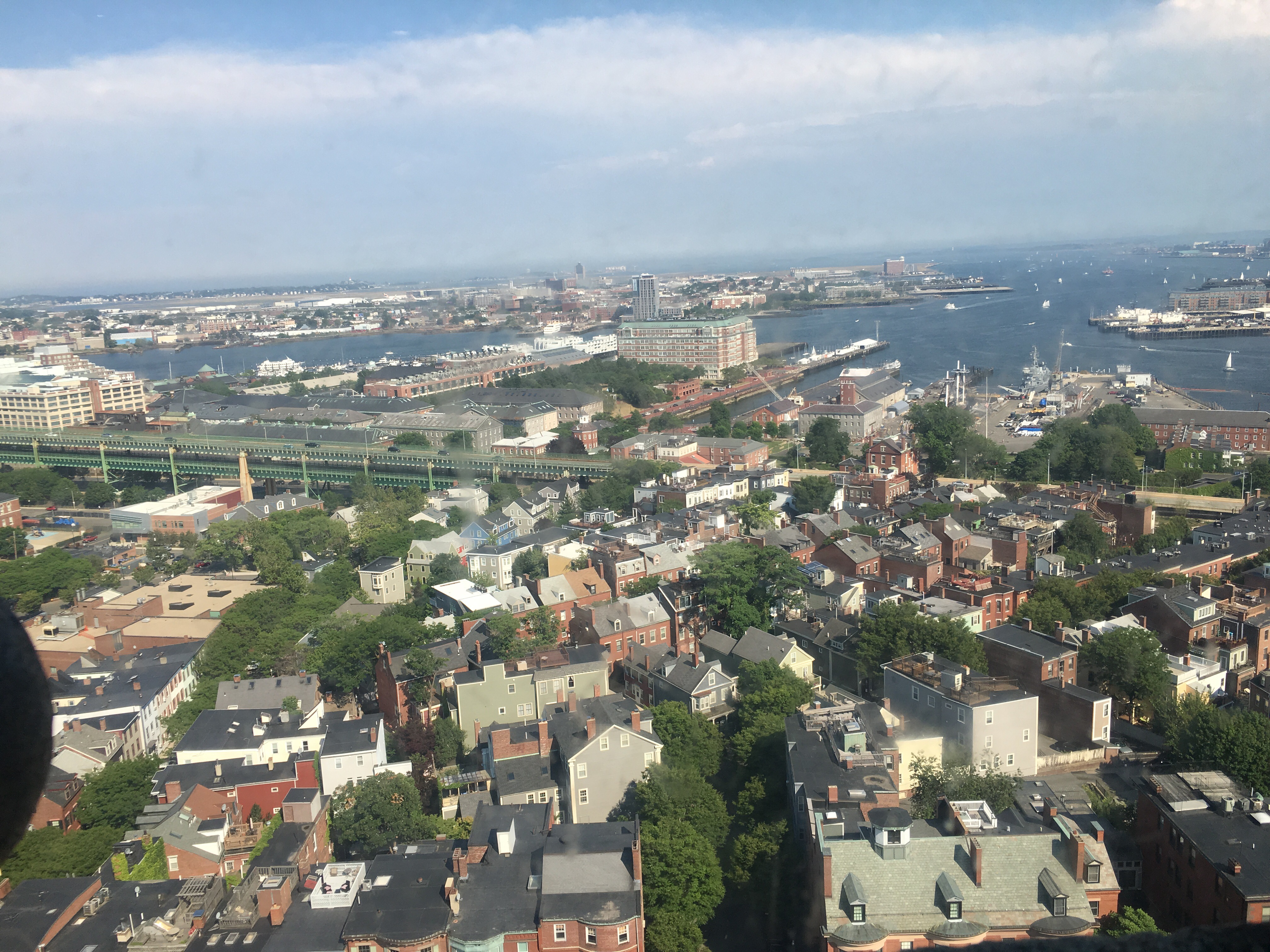
In the wee hours of Tuesday, November 8th, 2016 the world either ends or begins. This is the rhetoric I hear, the anxiety my friends feel, the way we as a country have been visioning our future for the past couple of weeks. What will be our new national narrative?

The world goes on, simply. Nothing really changes overnight, and yet everything changes in our minds: we either lose everything or make history in whatever way our nation decides. This has been a long, grueling, terrifying election season for many. What will we do, who will we be on November 9th?

The past few months I have witnessed some awful events. Recently I wrote about why Donald Trump’s comments around sexual assault and objectifying women hurt me personally, and cause much deeper harm to the marginalized and oppressed. I cannot claim that any presidential candidate has not made worrisome or downright damaging decisions. And, I can say that in these past few months, wondrous moments have also shaken me and made me believe in love as a human act, indeed an extremely courageous one.

Moving to Boston I have struggled to find and maintain community. Being alone is a part of who I am. Yet this time of great fear and hurt has given me a window into the true importance of community and dedicating everything I can to the ones that hold me and keep me. Let me give you some examples.

The Revolutionary Love Project launched in early September and we, 17 fellows, 250 ambassadors and one fearless leader, quickly got down to business. In the course of only eight weeks, we completed three huge goals (one of which will be completed this Tuesday). We took grassroots action and organized over 100 people across the country to host screenings of Divided We Fall, a documentary by our project leader Valarie Kaur about violence against Sikhs and Muslims in the aftermath of 9/11. Some of these screenings happened in living rooms (like mine), and some on college campuses. Just as we reached our targeted 100 screenings, our leader Valarie went on tour with the Together Tour and reached over 20,000 people in 6 cities: Portland, Los Angeles, Chicago, Brooklyn, Atlanta, and Denver. Though I couldn’t attend any of the actual tour dates, I felt a surge of hope every time someone new felt inspired to take action after one of the evenings and posted about it on Facebook or Twitter. So many new Love Ambassadors spoke openly for the first time about their pain and how they have healed, and helped others to do the same. Now, each of us have been making calls (and encouraging others to make calls) to Get Out The Vote, especially in key states like Florida. We have felt the urgency to build bridges and acted upon it through love, not hate.

A few weeks ago I passed by one of the main quads on campus to find almost 50 students occupying a large sector of the grass with tents and signs seeking divestment from fossil fuels at my university. The students demonstrated a deep commitment to our earth and each other as they educated passersby on their way to class. They showed us that climate change is not an issue by itself, but a gender issue, a faith issue, a human rights issue. Hundreds of students showed their support by wearing orange. Just this past Wednesday, several student leaders of faith engaged with members of HEAT (the Husky Environmental Action Team) in an essential conversation about how our faith calls us to care for the earth and take action on climate change. We expanded the boundaries of our own communities that night, welcoming each other among ourselves.

Besides election day, November also hosts National Novel Writing Month. Writing 50,000 words in one month always seemed downright impossible to me- the time and moreover, the content pose a large obstacle. This year, an interfaith activist and professor at Cal Lutheran University started an online group for professors and chaplains in which to participate. My writing class also created a joint account, so we could all contribute to the word count. Both communities in the past five days have been ruthlessly encouraging to every member, posting inspirations on Facebook and checking in with each other individually. So far, I’m on track: it’s November 7th and I’ve written almost 10,000 words. Without these two communities I could barely write this blog post. Though unspoken, there seems to be a deep understanding that though the world feels dark and scary, we have our team and we are writing for each other. Every time someone posts that they have achieved their daily goal, I send them a silent high five. “You DID IT!” I want to scream.

Late on a Friday afternoon, several women leaders of faith crowd in my office, sitting on the floor and watching YouTube videos. We don’t speak about our fears or hopes, but we hold each other’s company. We keep each other safe simply by listening and laughing. I smile, packing my bag to head home for the weekend. We hug good bye, and implore each other to make good choices.

On November 9th, I hope we maintain the urgency that each of these communities has utilized to turn love into action. My fingernails are gone, my eyes are puffy. My heart feels weary, but not closed. The world goes on, and no matter what happens, we can care for each other if we find the courage.

On November 9th, I will recommit to practicing love with optimism and honesty. I will keep writing. I will keep imploring my students to make good choices.
A Halloween Recipe (Try it, it’s yummy)

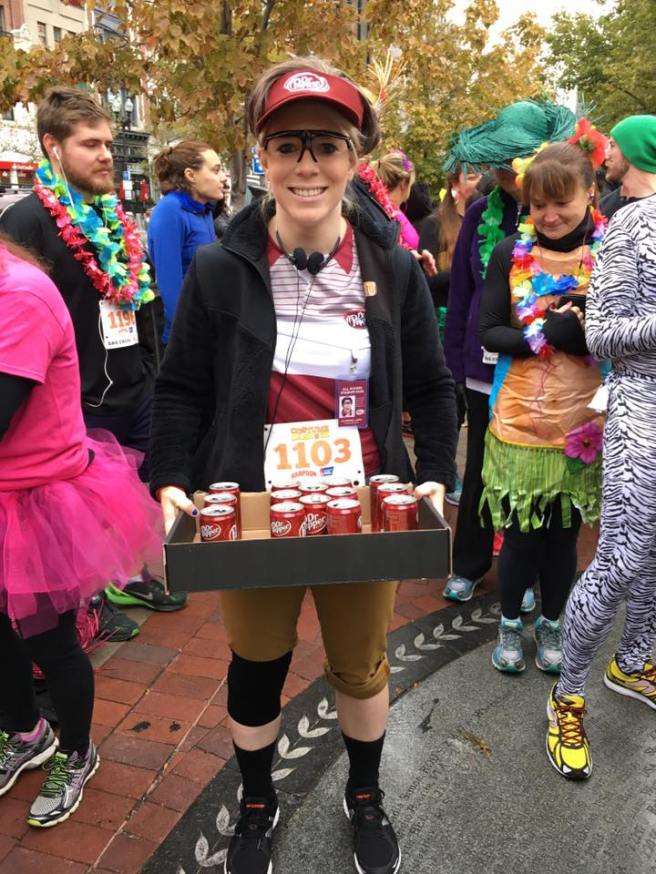
Halloween has always been one of my favorite days of the year. As I get older and feel less enthused about staying out all night and wearing a t-shirt and shorts in cool fall weather, the part that excites me more now is really celebrating the fall season. The pumpkins, gourds, apple cider, and earthy colors ease the looming anxiety that winter is coming, and the days will offer little daylight. I still enjoy dressing up- this year, I ran in a costume dash and baked several pies after finishing.

14906985_10207569043487354_3168132122801290548_n
Dr. Pepper, anyone?

Halloween also reminds me that fall is a season of dying. In many ways, death looks glamorous in the fall. The splendid leaves that burst in reds, yellows, and oranges on the trees that were lush green only weeks before are indeed dying, and eventually will fall to the ground. Once the harvest concludes, we face the end of outside activities- for the next few months, most everything we do will be inside in the warmth. The month of November in particular reminds me to be mindful of those I and the people close to me have lost. Every year, one of my friends has lost a loved one in November. Given the end of light and many crops, it makes sense that naturally, November would be a month of ends of lives as well.

In honor of Halloween and remembering my Grandma Mary, who passed away four years ago in early fall, here is a recipe for a decadent dessert you can make any time of the year, but is particularly special with a warm cup of Mexican hot chocolate (which really, is hot chocolate) and some warm socks. A Blessed Halloween and Dia de Los Muertos to everyone!

Pumpkin Chocolate Tres Leches Cake with Maple Syrup Frosting

  • Difficulty: easy
  • Print

Ingredients

  • 1/2 cup butter, softened
  • 1-3/4 cups sugar
  • 2 eggs
  • 2 cups all-purpose flour
  • 2 tablespoons Hersheys Special Dark cocoa powder
  • 1-1/2 teaspoons baking soda
  • 1/2 teaspoon salt
  • 2 teaspoons pumpkin pie spice
  • 1 14-oz can pumpkin puree
  • 3/4 cup evaporated milk
  • 3/4 sweetened condensed milk
  • 3/4 cup heavy cream
  • 1/2 teaspoon maple extract
  • 3/4 cup butter, softened
  • 3/4 cup vegetable shortening
  • 4-5 cups powdered sugar
  • 1/2 cup maple syrup
  • 1 teaspoon vanilla extract

Directions

  1. Preheat oven to 350 F and grease a 13×9 in. pan.
  2. In the bowl of an electric mixer, beat the butter and sugar on medium speed until light and fluffy.
  3. In a medium bowl, sift together the flour, cocoa powder, baking soda, salt, and pumpkin pie spice.
  4. Add the eggs one at a time to the butter and sugar mixture, mix until combined.
  5. Now, alternate adding the flour mixture with the pumpkin puree to the mixer in 3 increments.
  6. Pour cake batter into greased pan. Bake for 30 minutes.
  7. Let cake cool for at least 30 min. Once cool enough, poke several holes with a straw or anything that will make enough space for the leches.
  8. Mix together the evaporated milk, condensed milk, heavy cream, and maple extract.
  9. Pour mixture over the cake and let sit for at least 30 minutes.
  10. To make icing, cream together butter and shortening on medium speed.
  11. Add 4 cups of the powdered sugar gradually, one cup at a time.
  12. Add the maple syrup. If needed for consistency, add the last cup of powdered sugar.
  13. Mix in the vanilla extract.
  14. Once the leches have settled, frost the cake.
  15. Garnish with chopped pecans, if you like!

Why Writing Brings Me Joy

It seems like all I can talk about these days, besides my moving woes and the storm that is Welcome Week at a large urban university, is my writing. What joy writing has brought me! Someone asked me recently: “Have you always been a writer?” I have always written papers and blogs and reports, yes- but it has not been until this summer that I have mustered the courage to call myself a writer.

A few weeks ago, I shared my experience at the Kenyon Institute seminar on spiritual writing on this blog. The seminar pushed me to make writing a priority, because of the joy and healing the process evokes. As soon as I returned from Gambier, Ohio, I decided to enroll in a GrubStreet class (a Boston non-profit dedicated to providing resources for writers of all ages), mainly for the accountability to write every week. A six-week Online Memoir Generator was about to begin, so I signed up and began to think about my memoir.

writing.jpg

The first week, my classmates and I discussed the topics of our memoirs in the online forum. Death, heartbreak, illness, leaving a life behind to start another- these all made the list. I struggled to describe my story- struggles with faith, growing up, finding community. My eyes rolled as I typed these words, they seemed so overused. Was I whining? I submitted a scene about losing a wiffle ball over the fence that separated my family’s back yard with our neighbor’s house and our quest to retrieve the ball, knowing full well our neighbor lived with dementia. The story provided a little humor and demonstrated the relationship between childhood me, my sister Mallory, and my dad. As words filled my page, though, something else happened. My soul transported back to that scene, that moment, and I remembered walking home after our quest, unsuccessful in retrieving the ball, and having my first encounter with a religious ritual that was not my own. The meaning is in these small details, I decided.

In the next weeks, my classmates shared their work and we commented on each other’s pieces. I found myself cringing to open their submissions on my computer. Am I ready for this? I wondered. Every time I read about the death of my classmate’s sibling, the struggle to raise a child, the reality of living as a gay man, the feeling in my chest resembled a shame as if I had taken off all my clothes to strut my far from perfect body in a room full of people. How unworthy was I to witness these life experiences with the people who lived them, and then to critique their writing about them?

“Work is love, made visible,” wrote Khalil Gibran, in his famous work The Prophet. The course continued, we completed our assignments, and I began to find joy in the work. I wrote about my struggle to feel like part of a community my whole life. I wrote about the car accident that totaled my big red Jeep and my childhood. I wrote, though didn’t submit, a short piece about my cousin who died far too young by her own hand. She was 28, the same age as me. Through the pain revisited on the page, my classmates took me in, and we held each other. I cried at their losses, their love, their pain. And I began to heal, or at least to feel what healing feels like. “Work is love, made visible.”

The love I felt through this process illuminated the source of the joy that I call writing. The source is the community. Writing is such a personal process- we know our story, we own our methods and tactics for telling it. Yet we write to share (if only with our future selves), to connect with our readers. Finding community has been a real challenge for me my whole life, and yet, it only took a website and some discussion forums to find a group of seven people willing to be vulnerable and intimate, willing to put love into the work.

Moving


We’ve all done it. Some of us often, some of us only once. We learn to get better at it, but it’s never enjoyable. It’s usually better with friends, though this can be contested. Whenever I do it, somehow the temperature outside is always well above 90.

When a friend or colleague tells me they are moving, I automatically feel as though they deserve a homemade casserole. Moving is such a silly concept: we take all of our neatly organized belongings (clothes, pots, furniture, chotchkies- there are always way too many of those), make a giant mess placing them all in boxes, bins, suitcases, or other containers to schlep up and down stairs and into a big vehicle so we can then repeat the process in reverse in our new residence.

I once moved apartments in Chicago and spent a week packing, transporting, and subsequently unpacking four giant plastic tubs. This was the most inexpensive and inefficient way to go. Moving outside driving distance should be an Olympic sport, and one that pays. Your options are to sell everything and then buy it all again, or try to ship things- and that will cost you your whole year’s salary.

Yet here I am, planning to move for the up-teenth time, 2 miles away and a world apart. From Boston’s North End- a tiny, cobblestone street vintage European snapshot to Eastie, a heavily immigrant neighborhood that still remains “authentic”, according to one realtor. I wonder who considers themselves to be “inauthentic”?

In the midst of the mess, the boxes, tape rolls, donation piles, never-opened packs of sponges, I have been attempting something quite outside my comfort zone: embracing the clutter. It sound easy, and this is not to say I don’t have clutter in my life (everyone has a junk drawer or three, right?) but when things are even the slightest bit out of order, my mind tends to start buzzing and won’t relax until they’re put back. In their place. Where I have determined that they belong.

It’s not easy to admit a desire for control, especially over something as meaningless as how my bathroom towels are folded. “Who cares?” I sometimes ask myself. “No one will see them anyway.” As I looked at the boxes and bags and crap piled around my living room, the fact that we can be our own worst enemies really hit home. “No one will see it,” isn’t totally truthful. I will see it. I will remember that my life is not as categorized, clean, and minimalist as I would like it to be, as I can convince myself it is by keeping my home in control. This outward reflection of my own inward junk is truth, yet, it is uncomfortable.

Anyone could tell you that life is messy, that it never comes at you neatly packaged with a bow. I’m not 16 and hoping for a car for my birthday. Anyone could also tell you that moving is the worst (alongside waiting in line at the DMV and calling Comcast for customer service), but most everyone, when asked, has a moving story to share. My parents do it (they describe the wilting July day, the day I worked at Bed, Bath and Beyond instead of helping them move, and how all the spices went missing). My friends do it (“We drove a U-Haul all the way to DC from Chicago and realized our apartment was too small for all our furniture!). I do it (remember the blue bins?). Whenever you have nothing to talk about at a party, try asking someone if they’ve had a bad moving experience. You’re set for the next three hours, and I would bet you’ll attract a crowd.

Maybe the reason life is so messy- it’s the dusty kitchen appliance you never used, the wad of old t-shirts in the back of your closet, the business cards from people you don’t even remember tucked away behind all the pay stubs you saved- is the connection we find in the plot of the mess. As I breathe through the mess that ultimately mirrors what my life looks like, I keep a log of the experiences so that next time someone tells me they are moving, we have something to talk about. And for now, the boxes serve as a pretty decent footrest.

Practivism in Perspective: Spending Time at the Interfaith Youth Core’s ILI

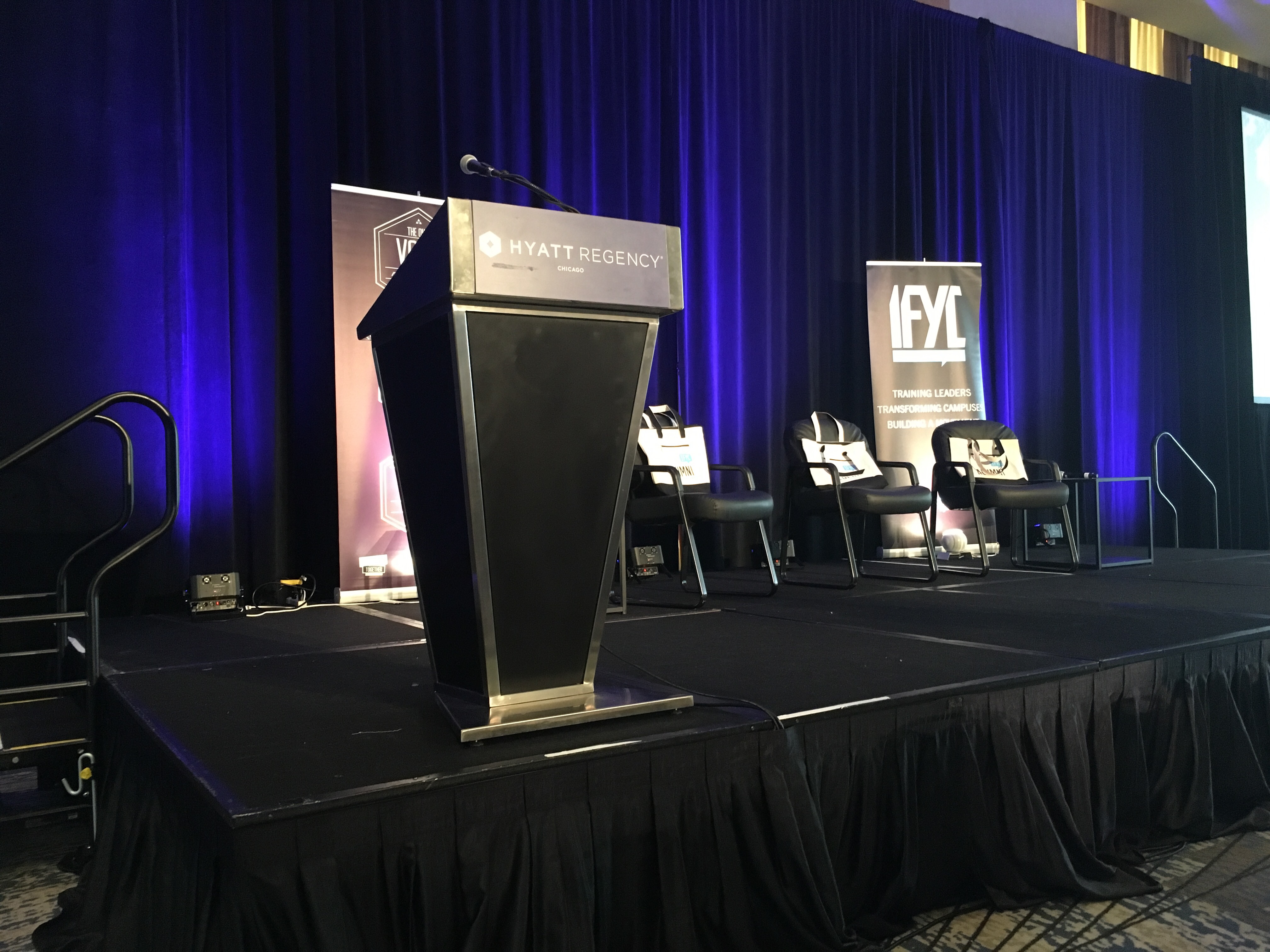
Before my 14-hour debacle getting to Chicago due to “mechanical issues”, I felt pretty confident about what to write this week. After all, I was delivering a short speech at the Interfaith Youth Core’s Interfaith Leadership Institute, and I could very easily transcribe my speech here. Of course, as an educator I consistently learn much more from passionate students than I could ever teach anyone by talking.


When I finally arrived at my hotel around 10:30 pm, 12 hours after my planned arrival to the city I called home for over three years, I felt exhausted. I barely arrived in time for my roommate and new friend Janice D’Souza to let me in our room before falling asleep. In the brief minutes I got to know her before my head hit the pillow and jolted me into dreamland, Janice shared her story with me. She had participated in Better Together, a national Interfaith Campaign, at Berea College when she was a college student. This is how she became an IFYC alum. She had spent the past 14 months traveling around India working with women around issues of education. “I thought I was going to talk about menstruation, disease, and health issues”, she said. “I didn’t consider religion at all. When I found out that the reason so few girls were participating in our programs was that upper caste Hindu families didn’t want their daughters mingling with lower caste families, I realized I had to talk about religion, it wasn’t optional.”

Gazing around the room at the excited and somewhat sleep deprived faces Sunday morning, I felt nostalgic. There is no feeling like meeting 199 other students from around the country who actually care about something you do. I started my speech with a story that revealed my road to interfaith work. I entered college as a business major. In my second year, I added East Asian Languages and Cultures (I had passed out of all but one required language class, so it seemed reasonable). I tacked on International Relations because hey, it was only five classes more, and I thought it would give me access to traveling opportunities. By the time I was almost a junior, I took my first religious studies class- and knew I wasn’t giving this up. Studying religion seemed impractical, and quite unique from my other fields of study- but it was what I loved, pure and simple. “I can do this, all of this,” I thought.

That same summer an esteemed professor in the Marshall School of Business came to the office I worked in as a student one day. He knew my last name because my mom still does his family’s taxes. He launched into a conversation with me about what I was studying, which quickly became an advice seminar.

“You can’t continue with all four of these,” he said. “It’s not practical. You look unfocused, uncommitted, like you don’t know what your passion is.”

“But I have so many passions,” I wanted to say. I looked down at my shoes. Should I continue in the field that would most certainly come with several job offers before I even walked at graduation, or should I choose the destiny that got me out of bed actually excited to go to class every morning?

Business, Japanese literature, and foreign policy did interest me and I enjoyed classes in those majors, but religion was different. In one course, I was transported back in time to the days Jesus lived on earth. I journeyed with him as a person before he was called Messiah. In another class, we spent our time smelling sacred perfumes and elixirs meticulously brewed for sacred rituals. We visited a Hindu temple that put all my senses on overload. And yet, all the rich knowledge I kept acquiring needed to be put to use. What could one do, besides become a professor, with a newfound expertise in classical Taoist apocalyptic texts?

Listening to my colleagues on stage Sunday reminded me why the USC Interfaith Council became my home on campus. This was a community that made religion and spirituality relevant no matter what we were studying. We sought to root our practices, our guiding questions, our assertions about ultimate concern in everything we did- because they sustain us in everything we do, every passion we pursue.

Today, the interfaith movement speaks so much to me because it is not only about religion. The interfaith youth movement, in fact, is about everything beyond religion. Janice was spot on- talking about religion, in this time of deep pain and polarization, is not optional. When I hear students struggling to turn their many interests into a career, I remind them that in our lifetimes, we are expected to have no less than 12. Religious Literacy is a commitment to embracing difference, both among our friends, colleagues, and teammates, and within ourselves. When we do this, we open our personal narrative to multiple possibilities and new perspectives that the world urgently needs.


Save