Hashtags

I’ve worked two full days as the Senior Assistant Director at Northeastern’s Center for Spirituality, Dialogue and Service. Already I feel great- laughter is such a good feeling. At the same time, I feel pretty exhausted… there are so many little tasks to complete that I totally take for granted and they remind me to be more mindful. This morning I listened to Thich Nhat Hanh answer children’s questions about pain and was further reminded that the simple can be complicated.

Around noon I got a twitter notification that some of my friends were talking about WDBJ. Upon closer investigation, I learned that WDBJ is a television news station in Virginia, and that a former employee at the station had entered the set, shot and killed the two anchors while on the air, and shot himself.

“I hate guns”, I thought to myself. Then I said it out loud. “I hate guns. They scare me.” One of the students in our office replied, “I’m not afraid of guns, it’s the people that scare me. A weapon is nothing until someone uses it.”

I realized she was right. Arguments for or against gun control aside, I am grateful for this reminder that humans, individuals, are powerful. A few hours later, a friend of mine from USC named Vicki Chen did something simple, yet extraordinary. She started a hashtag. #WeStandWithWDBJ has spread all over Twitter and other social media sites. Vicki is a journalist and today she decided that she would take her own power, as an individual, and utilize it for good. Two incredible young women reminded me today that we, humans, do have power, and we must choose how we inevitably affect every other person in this world.

Back to School? Join the Interfaith Council…

Many of us are starting school soon, and you know what that means…moving, course shopping, and of course, involvement fairs. This is a great time of year to join a club, a sport, or just find a new community. It’s great to make new friends and build your network no matter how you get involved. Along with these benefits, you can gain some great practical and professional skills. When I was a student at USC, my two main communities were the Latino Business Student Association and the Interfaith Council. After graduating and moving on the graduate school and now a full time university position, I realized how many concrete skills joining an interfaith council can give you for college and beyond…whether or not you are religious. “Interfaith” might sound completely irrelevant to you (and no activity is for absolutely everyone), but if you are at all interested in learning about different cultures or wrestling with life’s “tough” questions, you may want to reconsider walking the other way so quickly. What is an “interfaith council”? Nowadays, every campus interfaith group reflects the diversity of its own culture and structure, but in general, an interfaith or multifaith council is a group of campus community members from different “faiths” (which can include those of no faith: nones, atheists, agnostics, unaffiliated, skeptics) who gather to dialogue about a particular topic, sometimes related to religion and spirituality, and sometimes not so much. Dialogue may be the only purpose for some groups, and for others, community service, visiting sacred spaces, and advising the campus ministry or chaplaincy office on campus may be functions of the council as well. As interfaith councils and action groups have become more common on college campuses, they have also become leadership programs. If you are considering joining your campus’ interfaith or multifaith group, here are 6 concrete skills and benefits you can take from joining an interfaith council or dialogue group:

1.Religious and Cultural Literacy

Many campus interfaith groups meet somewhere between once a week and once a month to dialogue with each other, and often, they choose topics surrounding religion and spirituality. One of the most interesting topics for my peers when I was on USC’s interfaith council was “interfaith dating”. Each of us would share how we felt about dating (whether that was even appropriate) someone from a tradition that was not our own. Conversations like these helped us learn more about each other, and more about other faith traditions. This knowledge of different religious, spiritual, and philosophical traditions is vital in our world, and broadening your own in this setting and not simply by reading from texts will help you in whatever field you choose to pursue. You will be a strong ally for colleagues and may even be called upon to make important decisions given your knowledge of different traditions.

2. Dialogue Facilitation and Conversation Moderating

An interfaith conversation is not one in which the same response from every participant is helpful or possible. In fact, the reason for an interfaith council is to celebrate the richness of difference in the room, and to explore both shared values and distinctions that help us learn more about each other. I remember hearing my Muslim conversation partners cite verses from the Qur’an, the central sacred text in Islam, and thinking, “wow, how beautiful that is!” because I had never heard anything like it. At the same time, we all recognized pretty quickly how important food and sharing was for most all of our traditions. Learning how to both participate in and moderate a conversation in which people may disagree but can do so respectfully will help you not only in your future career, but in the classroom as well. Have you ever felt intimidated to speak in class because you’re sure someone will tear your argument apart? A good interfaith conversation will teach you how to listen respectfully and respond in a way that builds off the previous person’s comment, whether you agree or not. This shows both skill and preparedness in the classroom.

3. Build Your Network on a Global Scale

Within three weeks of joining the interfaith council as an undergraduate, my network (and entire world) had broadened exponentially. Many interfaith council members are connected to other communities, religious and otherwise. One of the best parts of an interfaith council is that members come from different fields of study and departments on campus. When we planned the inaugural Student Multifaith Leadership Conference, we asked our film student member to help us build our conference website, our business students to spearhead fundraising for the event, and everyone participated in reaching out to people in their own field to attend. Learning to dialogue and work with people from different fields and areas of expertise will not only expand your network, you will learn how to collaborate and call on colleagues with different skill sets. No matter which industry you choose to pursue after graduation, this skill will help you be entrepreneurial and complete creative projects. As entrepreneurs, we say “your network is your net worth”, and this statement is not a lie.

4. Meet Students (and others) You Never Would Otherwise

This follows directly from the last skill, but again, learning to dialogue and work together with people whom you wouldn’t meet otherwise will not only increase your knowledge of different cultures and traditions, but will give you a breadth of knowledge of many industries and fields. Religion and spirituality does not exist in a vacuum, and many times our interfaith council ended up dialoguing about an important issue on campus or something exciting in a member’s field- like the intersection of spirituality and medicine, or how we might look for solutions to global climate change. It is invaluable to have an expertise in conversation-making, especially with people you don’t see everyday (or ever).

5. Self-Awareness and Individuality

One of the greatest skills we can develop that often gets overlooked or minimized is a deep understanding of ourselves, the different pieces of our identity, and the fact that all of us are individuals. As someone who was still exploring my faith in college, the questions with which my peers on the interfaith council wrestled as we dialogued together forced me to self-reflect on my answers- what did I think about an afterlife? What did my tradition say about service to others? Why was I in this room, talking to these people? Developing this self-awareness not only helped me in my faith journey, but helped me understand my studies, my work, and every activity I pursued as part of my complex identity. I realized that my primary interest in religion and spirituality was an interest in helping people, in connecting the college experience to a deeper meaning. Further, interfaith dialogue helped me understand something crucial- every person is an individual, and while they may subscribe to a religion, a spiritual practice, or any set of beliefs, they do not represent the entirety of that belief system, nor does the system represent all of who they are. Knowing this will help you connect more deeply with every person you meet, by seeing everyone as a complex individual, not assuming anything about them.

6. Welcoming and Inclusive Actions

In my experience, interfaith councils certainly seek to welcome members of diverse faith and non-faith traditions, but they also should welcome members who hold many different identities. Through my peers, I constantly learned and still discover new ways to be inclusive, whether it means being mindful of my language or making sure dietary customs are considered if we provide a meal. This might seem grueling and prohibitive for an honest conversation, but in fact, creating an inclusive space where everyone can share and learn from each other without feeling marginalized or fearful of being wrong promotes the richest conversation. If everyone participating in the dialogue agrees that the environment is not a politically-correct contest, but a true space to learn from and educate each other, you can learn how to create this kind of space elsewhere, from the classroom to a team meeting. While this might be the toughest and most gradual skill to learn, it is undoubtedly one of the most important for the communities we seek to lead.
And perhaps most importantly to college students, in my experience, being part of an interfaith council meant tons of free meals (Burklo pizza was the best meal of the week for many of us at USC) and deep friendships that have lasted beyond even graduate school. Hopefully these skills were convincing to some! No interfaith council at your school? You could always start one…

Cultivating Compassion through Self-Reflection

Purple and turquoise signs. Students wearing college t-shirts. Pictures of interfaith leaders like MLK and Gandhi, Valarie Kaur and Dorothy Day. Yep, I was definitely at the Interfaith Youth Core’s 2015 Chicago Interfaith Leadership Institute (ILI).

Even though I never attended an ILI as a student, I’ve attended a handful. I got to speak on an alumni panel, attend an alumni gathering, and this past weekend, I was excited to transition to attending as a “campus ally” in my new role at Northeastern University. This was a particularly exciting ILI because 300 students traveled from around the country to participate, the largest ILI ever.

After meeting with a few of IFYC’s supporters, staff members and fellow alumni, we headed down to dinner where the founder of IFYC, Dr. Eboo Patel, announced the recipient of this year’s Mike Hammer Interfaith Leader award, Samantha Nichols. Samantha is an interfaith leader at Missouri State University.

No matter how many times I attend an ILI, I will never find them redundant or dull, even if I’ve done Talk Better Together (an ice breaker activity) a hundred times. At dinner I sat next to my friend and fellow alumnae Karyn Wouden, who brings interfaith leadership into her vocation, teaching and performing harp. She works in a pretty unique field for IFYC alumni, though a very important one as an artist and a teacher. After we listened to Samantha’s eloquent acceptance speech, Karyn and I expressed a mutual feeling, one of intense admiration for all the great work that IFYC alumni do, and a constant feeling of “not doing enough”, like starting a non-profit.

I considered these feelings for a while as I lay in bed that night, unable to sleep from the adrenaline I always try to suppress after an event hosted by IFYC. Both feelings- admiration, and ambition- are good, in some ways. With all the frustrating, maddening, terrifying news we hear every day, admiration for young people working together despite sometimes fundamental differences is exactly what we need. And further, lifting up the stories of cooperation and compassion around us is one of our most important jobs as interfaith leaders. Ambition is also good, it keeps us motivated right? Yes, but sometimes, it also hinders our compassion for ourselves. When we see great work all around us, it’s natural to feel like we don’t measure up, like we aren’t doing enough.

I won’t say that we cannot or should not ever feel this way, it really is natural. But what I would like to work on, as someone concerned with compassion toward others beginning with myself, is something Samantha noted in her acceptance speech. Samantha noted that “she never intended to climb a mountain”, but that at some point, she realized she was already part of the way up. There is always more to climb, but many times, we forget that we have climbed any of the mountain at all.

The reason ILIs will never get old for me, and I could guess the other IFYC alumni I see over and over, is that seeing students light up when they meet each other, learn something new about a different tradition, or hear about the multitude of ways they might take this leadership training into their unique career path is because we return to our own narrative of becoming interfaith leaders. I see students laughing and joking with each other, and I remember when the Faiths Act Fellows belted N’SYNC songs on our tiny bus as we drove through Malawi. I see students gather every ounce of courage they have to ask Dr. Patel a question in front of everyone else, and I remember when it took all my courage just to shake his hand. I see Samantha so gracefully accept her well-deserved award, named after my Fellows Alliance supervisor, and I remember beaming with pride as I accepted my university’s award for the most contribution to religious life on campus.

Climbing a mountain is an ambitious and arduous task indeed, and so is growing as an interfaith leader. Maybe some of our friends climb faster. We are all climbing the same mountain. We all have our own strategies. And we have all ascended part of the mountain, which is a positive story to tell for those who may be just beginning. As I seek to tell the successful stories of my peers, I seek to self-reflect on my own success, and return to my own narrative of becoming an interfaith leader. This helps me cultivate compassion within, which undoubtedly helps cultivate compassion toward others.

Friends…and Faith.

First off. I feel proud of two recipes I developed, so I’m posting pictures:

IMG_4849 IMG_4859

The first one is a filled cannoli cupcake. I make a chocolate cake recipe, baked the cupcakes, filled them with cannoli filling (including chocolate chips) and then filled mini cannoli and put them on top. GOURMET.

This past weekend, my mom and I drove to Sacramento to visit my sister who is in her general medicine rotation. We spontaneously drove to San Francisco and ate everything in site. On Sunday, we drove home, and I made a huge lasagna (pictured) and meatloaf so she could eat for the next month.

Thank you for humoring me. This week was also important because I officially accepted a position at Northeastern University, working in the Center for Spirituality, Dialogue, and Service. I am beyond excited (and nervous) to be a full-time college chaplain and interfaith advocate.

So I am spending my last days in LA for a while, and trying to hang out with as many of my friends as possible. I was reflecting on how my relationships formed with my closest friends, and whether our friendships had anything to do with faith. Faith is, of course, something I think about much of every day. My friends from the USC Interfaith Council of course relate to my faith directly- we met by talking about religion, spirituality, and matters of meaning. I have been wondering how my friendships from outside this community, namely, my friends from the Latino Business Student Association, have or have not formed around religious and spiritual values. At first glance, it seems religion has nothing to do with our relationships. But digging deeper, I think there is something to be said for family traditions.

In June, I traveled to Spain with two of my best friends Darlene and Veronica, despite my track record for bad luck while traveling (especially at airports). We arrived at 7 am in Madrid on a Sunday morning, and even though we felt pretty jetlagged, we set off on a self-guided walking tour of the city. On our way to the Royal Palace, we stopped inside the Cathedral de la Almudena, Madrid’s principal Catholic church. The cathedrals in Spain were all awe-inspiring, perhaps most especially La Sagrada Familia in Barcelona, but in that first moment, I realized that my two friends standing next to me had something deep in common with me- we had all grown up in Catholic families, and this space meant more to us than a tourist attraction.

I met Veronica my first year of college when we took an international business course together at USC. We traveled to Beijing over spring break, visiting companies and some cultural sites. We stayed friends when we both joined the Latino Business Student Association, where I met Darlene. Since graduating from USC, the three of us have traveled together to watch USC games and on vacation.

Even though we all grew up in Catholic families, we practice differently. Though I consider myself a practicing Buddhist, I never “left” the Catholic church- you’ll find me in the balcony at midnight mass on Christmas Eve. Darlene reads at her church. Veronica has her own traditions. When we get together, the three of us rarely discuss theology. We do discuss our families and our communities quite a bit. We make fun of rituals we all know. This is what forms an underlying bond in our friendship- we understand ritual and how a faith community functions. Standing in the cathedral together, admiring the sacredness of the space, we understand that faith drives beauty, and we are grateful to receive it at that moment.

As I transition to living in Boston, I will remember this bond we have, and hope to find deep meaning with new friends. Perhaps it will not be related to falling asleep in church- but it may very well be embedded in a shared reverence for the sacred.

Zion’s New Hands

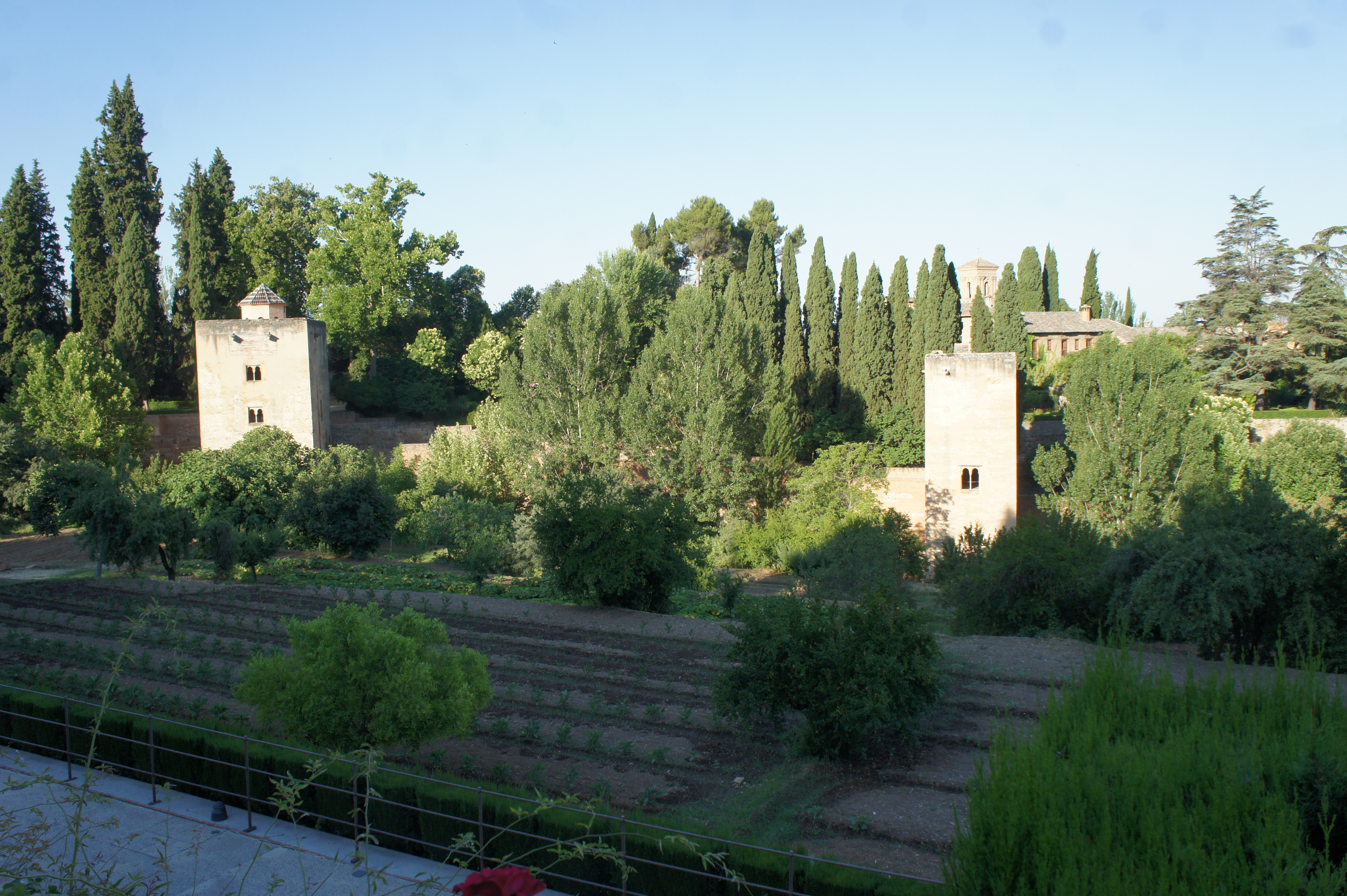
SONY DSCA photo from the Alhambra in Granada, Spain

I heard an amazing story on the news- eight-year-old Zion Harvey from Baltimore, Maryland was the first person to receive a double hand transplant. He actually had a kidney transplant at age four. He suffered a sepsis infection at age two, and underwent two years of dialysis. From the news stories, he seems to be pretty happy, despite some pretty serious suffering.

This story is wonderful in an obvious and more subtle way. We can celebrate the success of the doctors, the scientists, and everyone who made this possible, and we should. How much collaboration did this take? And research?

To me, what is deeply inspiring next to this modern miracle is the fact that there’s still plenty of suffering to undergo. Zion has to take medicine the rest of his life to ward off cancer and infection, and the doctors aren’t sure how likely it is he the medication will work. The transplant doesn’t alleviate Zion’s illness. It allows him and his family to orient around the illness in a different way, a happier, more positive way.

This is a good lesson for us, about suffering. It’s always around us, and in us. We can’t live a perfect life because we live in an imperfect world- yet we can shape our lives and our minds to live positively in the world, acknowledging the suffering we encounter. If we lose a family member or a friend, for instance, we need time to mourn and be mindful of our suffering, and we can also use the positive memories of this person to carry us forward, not to alleviate, but to live with the patches of darkness that mark us all, that make us human beings.

Little moments of happiness today: Running in the sun, celebrating my mom’s birthday tonight (and all weekend with my sister), catching up with a friend who lives far away

Success Stories

I have been feeling very upset by events in the world this past…year and a half, really. It seems like every day, there is untimely death due to violence, debilitating inequality, and pure hate towards individuals and groups. Just this week, two young boys who embarked on a fishing trip off the coast of Florida have gone missing, a dentist killed a beautiful lion in Zimbabwe for no apparent reason, and as the 2016 presidential election draws closer, every new channel shows clips of candidates chastising and blaming the others for issues in our nation, many times dismissing them as simply “stupid”.

Violence bothers me, in fact, it makes me physically sick. As a chaplain, I can’t help but immediately put myself in the shoes of family members and friends who lose loved ones due to violence, especially young people. What really makes me feel upset is the rampant dehumanization and lack of dialogue in my country, and the lack of attention we give to stories of people working together, despite differences. In the work that I do as a college chaplain, I see students work together and learn from each other every day, despite sometimes radically different worldviews. I believe that in order to repair this broken world, to end our suffering both individually and collectively, not only do we need to start listening to those who disagree with us, but we need to hear stories of success.

I hope to do just that with this space. Seeing the success of my students and those around me when they learn from people who are different than them, and subsequently take action together to make their communities better, keeps me motivated to shake my head at those who say we have reached the point of no return. Our world is messed up, they say. They are right- our world is messed up, but it is not entirely dark. People are doing fantastic work every day to improve the lives of those around them, and these stories need to be shared. Even stories that seem trite or actions we take for granted should be lifted up to show us that our work does have meaning, it does have impact. Thank you for reading.

Inspiration for the week: “Love and compassion are necessities, not luxuries. Without them, humanity cannot survive.”
Dalai Lama XIV, The Art of Happiness