Happy Birthday!

The Practivist is two this week, so I had grand plans to make a cake to celebrate. I also got donuts and baked cookies, because go big or go home. Well, this is how the cake turned out:
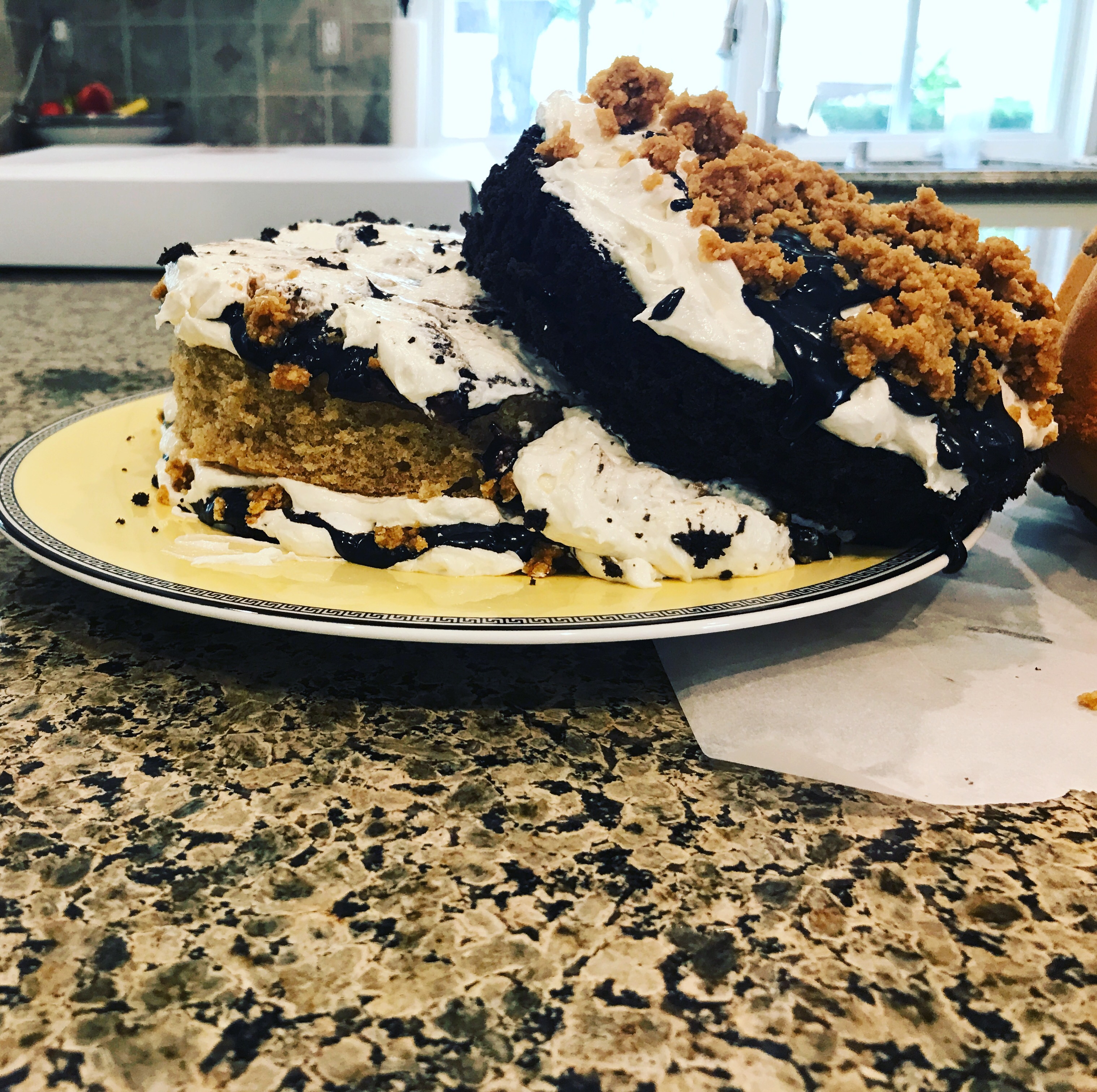
S’mores cake with graham cracker and chocolate cake layers, fudge sauce, marshmallow icing and graham cracker crumble

My mom saw it first. I got a text saying “emergency” while reading in my room, and rushed downstairs to find her laughing. “What!” I looked at her expecting something terrible, but she pointed to the cake. The marshmallow frosting was too slippery. “Geez, you scared me!” We both laughed very hard. That’s exactly what this blog is about, I realized. Finding joy in the imperfect, the disastrous. The cake tasted great, by the way. Appearances aren’t everything.

A year ago, I attended the Beyond Walls Spiritual Writing retreat in Gambier, Ohio. 100 religious leaders (of sorts) stayed in the Kenyon College dorms and wrote op-eds, essays, religious commentaries, and stories. It was at that retreat that I committed to posting a blog every week, and I’m happy to share that I made it! 52 posts later, my writing feels more natural. Every week offered an opportunity to reflect on this idea of staying grounded in the daily struggle, whether it was personal or worldly (often both). Since last July, I joined a memoir writing group, started working for an amazing project (the Revolutionary Love Project, founded by Sikh-American activist and filmmaker Valarie Kaur- also a personal hero), and ran a marathon. I quit my job. I got accepted to my dream PhD program in religious studies at Stanford and moved back to California. I finished cataloguing my blessed collection of books, many of which came from my grandmother’s house when she passed away. My sister graduated from medical school and started her residency at home. For the first time in over six years, my family is all in one place.

Though my writing has certainly rambled down different paths, I believe this blog remains true to my original idea of exploring how we, as human beings, demand resilience in ourselves. Suffering grounds me in my religious beliefs because all humans experience it. Yet, we are capable of countering it, and even ending it in certain circumstances. This year I often found that joy presented itself in a form of self-allowance. When we realize we are deserving of the life we are given, the gifts of said life present themselves. I’ll never forget when Valarie spoke to our group of fellows on the phone after the election and she told us we deserved joy especially in a time such as this. “We will never let them take it away,” she said.

My students often gifted me opportunities to learn, which I loved and cherished. I had no idea that my job involved so much learning, often in times I was supposed to be the teacher or coach. I feel much better about admitting my mistakes, even when they have caused someone I love to hurt. Guilt still plagues me, but I am able to name it and even let it go more easily sometimes.

Not every blog post was easy to write, and definitely not all of them turned out the way I envisioned. Some of them make me cringe reading them back, but I’ve decided to leave them as they are to trace the journey and accept the imperfection of where I was when I completed them. Authors speak often about the trajectory of their work and how much their earlier writing influences their current projects because the necessity of reflection and knowing oneself through process makes us better writers.

It’s difficult to imagine a year from now because as life has taught me, plans often meander or even take a sharp turn away from an original intention. That’s why this blog has been so important to me, because the friends and others who have read even one posting and commented or messaged me saying, “I identity with this” have made it worth it to stay up late or carve out time (when I really didn’t have it) to keep going. I plan to keep writing and learning and making mistakes. Here’s to another year and maybe even another cake that resembles the leaning tower of frosting.
Freedom

Today is a day to celebrate.

…But what are we celebrating? I’ve been thinking about that question all week as the flags have come out, the barbecue grill tops scraped off, red white and blue cupcakes to car decals .

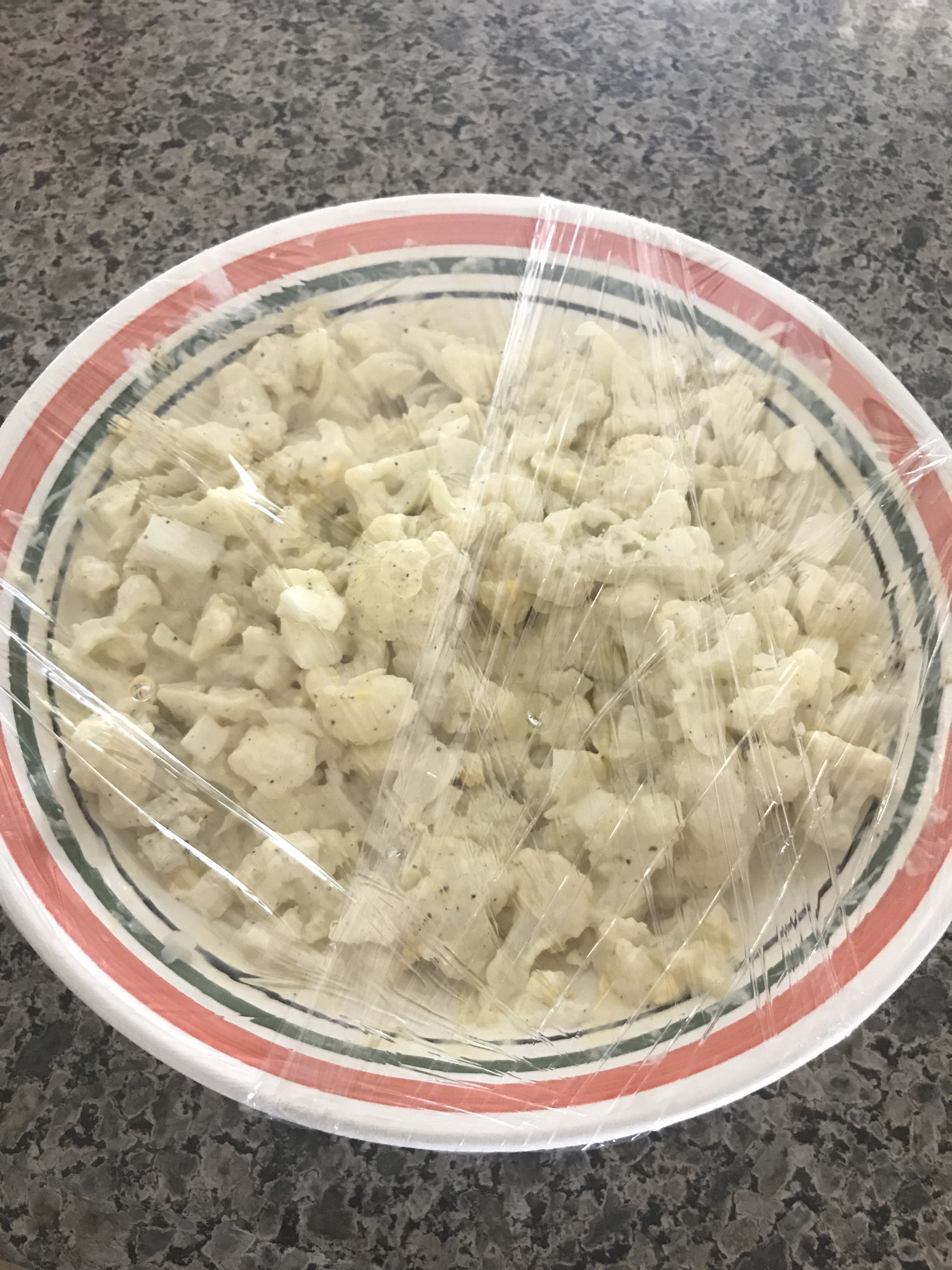
My not so famous (yet) cauliflower “potato” salad

This past May I got a unique opportunity to drive across the country on the way home from Boston to LA. As you can imagine, I saw plenty of landscapes and moreover, significantly distinct ways of life from farms to fabulous mansions across the street from national art museums. The trip felt like a giant learning expedition, helping me understand just slightly better what “divided” means in our country. Maybe the one thing each place had in common was that it rained. And fast food. I cannot soften how apparent it is that we are not a unified nation, because that would gloss over so many struggles and injustices I saw right outside the car door window.

Today is a day to celebrate, not despite these struggles, but because of them. Sojourner Truth, a suffragette and influential fighter for women’s rights during and after slavery, once said: “I will not allow the light of my life to be determined by the darkness around me.” Joy is an act of resistance. We all agree on this as we fight for justice, a path often surrounded by strife and mourning and wondering when, how, what.

I was in Las Vegas this past weekend with one of my best friends from USC and her sister. We sat around a shisha pipe (my request) as I fired off life questions. “What is your greatest fear? What are you most proud of? Who is someone you let go of too soon? What is one thing you want to see for yourself in five years?” I don’t remember exactly which question we began discussing, but our parents came up as a subject of both respect and recognition of imperfection. We all confessed that one thing our parents have given us is a safety net: an ability to take risks and even make pretty terrible mistakes without letting us fall completely to our demise. Maybe it’s money, maybe a place to stay, maybe simply a listening ear, but we could not downplay the sacrifices of our parents and grandparents who worked and still work to give us what this country is supposed to provide for everyone: freedom.

Freedom is a big word, and as someone who practices Buddhism most humbly and often in a state of questioning, I think about freedom from suffering as a goal for which to strive. Help to free others from suffering,  free my own mind of craving and desire that causes suffering. Today I firmly believe we are celebrating the people who have risked their own suffering to free others from it. Immigrants who settled here 50 years ago or yesterday to transform their rootedness into the branches for their children and grandchildren. Women who persist, nevertheless. Queer folx who selflessly write and speak and talk to the people around them and the world to educate us, even though that is exhausting and by no means a requirement of them or their bodies. People of color who tear down “normal” behavior, speech, culture, bound up in whiteness. Dreamers, teachers, the friends who gently push us to think about how our words and actions affect everyone around us, sometimes in causing pain. These are the people who take on greater binds of suffering every day, under the star-spangled banner,  believing we can be better.

These are the people who fight to bring joy, making the fight worth it. Today as I am blessed to have dinner with my family around a nourishing meal, I am grateful for the unheard and unseen who work tirelessly without an ounce of recognition except the unflagging hope for all of us.

In My Grandmother’s Footsteps

The first road trip I ever took was not by car, but by train. My mom, grandma Mary, and cousin Meghan flew all the way to New Hampshire to help me pack my room after my freshman year at St. Paul’s, and we began our journey. We stopped in Philadelphia, Chicago, Santa Fe, and finally arrived back in Los Angeles, weary but fulfilled. Grandma Mary and I both agreed that Santa Fe was our favorite. Not only was the food unbelievable, but the colors everywhere astounded us. Every building, facade, and even road seemed like a “pow!” to the eyes. We loved the smells and the art and the fantastic desert all around us. To this day, Santa Fe and Tucson are two places I feel completely at home. The last time I was in Tucson, I wrote a letter to my grandma every night, even though she has been gone for a few years now. I told her about the cacti and the dry heat, and the house that we stayed in. The owner described it as “living on the edge of things.”

Teddy Roosevelt National Park

I’ve been on the road for a week now, and every day has felt stunningly long. From Boston to Cleveland to Chicago to Minneapolis, the terrain has changed from city night lights to plains and now forest over the last three days in North Dakota and Wyoming. In Medora, North Dakota, I hiked the vast trails across Teddy Roosevelt National Forest and spent the night in an old west town complete with a saloon. In the evening, the air grew cooler and even fresher. Today I passed through South Dakota and almost immediately ascended a mountain at the Wyoming border, which would eventually lead to the Devil’s Tower National Monument. Devil’s Tower is the first ever national monument, and an extremely sacred place to several American Indian tribes. I watched the sun set over the gigantic volcano remnant as crickets chirped and I read about maps.

Devil’s Tower

Since arriving at the National Forest, I have been feeling a subtle longing for the house in which my grandma Mary lived in Lake Isabella, California. We called it “the lake,” and a few times a year, my family and my mom’s brothers would fill the house for a week or so. The lake house was “on the edge of things.” Everyone ended up sharing beds and only two bathrooms, and during the day we would hike out to the lake and set up chairs, coolers, and life vests. We liked to float in them after we felt too tired from jumping off rocks or swinging from trees into the water. Several moments over the course of the last few days have given me pause, like the taste of the air after a quick and intense rain shower or the sound of running shoes crunching on gravel on a dirt path. “Just like the lake,” I repeat.

If this road trip has taught me anything so far, it is that I find sacred in physical place and space. My senses bring back memories of grandma Mary and I speak to her. “You’d love this view,” I whisper. “This night sky reminds me of you and when we used to sit under it roasting marshmallows.” It’s amazing how much our senses remember and how connected they are to our emotions. I’m glad my grandmother is still with me, even if only in my footsteps.

Graduations are the Worst

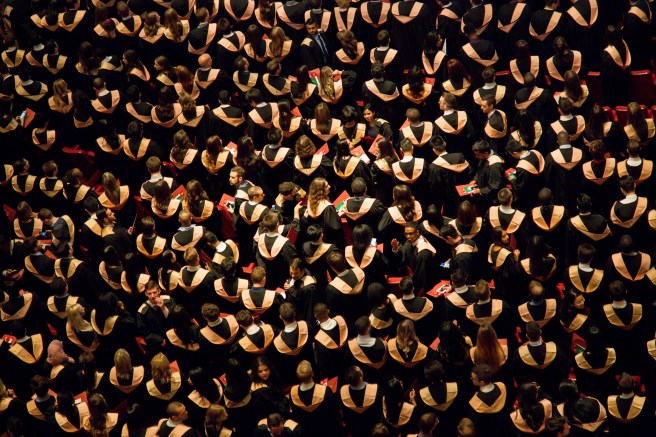
It’s that time of year again. Early May- when the rain is simply unbearable because it’s supposed to be April showers May FLOWERS, but it’s 55 degrees every day and the clouds just can’t seem to leave the party. It’s the time I should be starting my summer plan- to read 300 books, write 500 pages, workout every day (twice), hang out with friends, and “relax”, because somehow the ideal summer schedule includes eight extra hours in a day. And, in these weeks of caps and gowns, honor cords and club sashes, gifts and moving dates and yearbooks and parents, everything feels like chaos.

faustin-tuyambaze-135473.jpg
PC: Faustin Tuyambaze

I’ve been through a few graduations. At the end of eighth grade, my class sat on bleachers in our school gym facing the audience in a commencement mass. We were instructed to keep our knees locked together, because the white nurse-like pinafores we wore would reveal much too much if our legs flared out. Every picture of that day portrays me in deep concentration- I had gotten my makeup done for the first time ever, and I’d be damned if I let my knees separate. In high school, my classmates were forced to travel to our own graduation, because a flood had forced the school to end the Spring Term three weeks early. We wore white rain boots with our dresses for fun. I remember spending the last night before graduation in my dorm room, which I hadn’t occupied for three weeks. That night, tradition dictated that the seniors participated in one final chapel service while the rest of the students waited for us outside to say goodbye. Students stay on the chapel lawn until well past midnight, usually. I admit- my instinct was to silently sneak through the crowd and back to my room, safe from the tears and awkward exchanges. College and graduate school certainly offered their own rights of passage- black gowns, caps that made me fuss with my hair endlessly. Everything must look perfect for the pictures!

After several rounds of this pomp and circumstance, I cannot help but admit that I simply hate graduations. The word “commencement” obviously brings up cliches of new beginnings and opportunity, but I experience these ceremonies as downright anxiety inducing. No one says what is actually true. “See you in a very, very long time…perhaps never!” After each grandiose ceremony, complete with advice and rituals, I feel as though a place I’ve inevitably worked to call home, to build relationships, to find my place within the place, is kicking me out without a second glance. “Welcome to the alumni network, you can donate here and here and here.”

This post probably sounds like a rant, because it’s masking how I really feel at graduation ceremonies, which is so incredibly proud of every single person who has achieved this magnificent goal and yet, so undeniably sad. Graduations mark a transformation of your place in the community- namely, that you’re moving on from it. Even after four of my own and several of friends and family, I will never get used to these ceremonies. They break my heart as much as they make it fly.

I do feel immensely proud of everyone graduating at this time. You deserve every bit of congratulations for working your behind off for one, two, four, six, or maybe thirteen years! I hope you throw your cap in the air with everyone. I hope you wave at your friends when you receive your diploma (even if it’s really a blank tube- you’ll get it in the mail six weeks later). I hope you cry a little- because this moment is bittersweet and you deserve the difficult goodbyes too. Congratulations, classes of 2017! All my love to you ❤


A Fractured Vision

Taking a 6 am bus is pretty committed. Or silly. I’m not totally sure which. Anyway, at 6 am our bus left Boston for NYC, so I could make it in time for the Revolutionary Love Conference at Middle Collegiate Church. I was looking forward to this gathering for several reasons, including getting to meet the Revolutionary Love Fellows for the first time in person, hearing from many of my activist and organizer heroes, and finally getting the chance to visit Middle Church. The conference focused on racial justice and specifically, how we might make love a public ethic in a time of great division.


As more speakers took the stage- Valarie Kaur, Van Jones, Brian Maclaren, Dr. Eboni Marshall Turman, Dr. Traci West- the crowd filling the sanctuary listened and learned, cheered and encouraged. I felt myself experiencing a sense of joy and belonging that I haven’t for a long time. This is not to say that the content of every speaker’s message was uplifting- in fact, they shared some downright despairing stories and facts. The urgency to do this work together- the work of intersectional racial justice- is not at all overhyped. Yet the authenticity of each person on the stage inspired me to believe I can do the work without knowing all the answers. Perhaps without knowing any answers at all.


During one of the first panels, Anurag Gupta challenged us to imagine a world without racial bias. Gupta is the CEO of Be More America, an organization that trains leaders to examine and let go of unconscious bias.

“Close your eyes,” he asked us. “Imagine what this world would look like.”

I have to admit something- this was an extremely difficult exercise for me. I imagined the big loud streets right outside the church I sat in, in the middle of New York City. If you’ve ever walked down 2nd Avenue on the Lower East Side, you know the cliches are true. There aren’t many places you can smoke hookah at bar owned by an Egyptian man that sits next to world-famous Japanese restaurant on one side and a Halal Indian market on the other. You can meet one million kinds of people in New York City- and yet, this romantic picture does not do justice to the injustice. It would be so easy to sing the praises of diversity without recognizing the bias, the racism, the bigotry. I couldn’t fully imagine a world without the bias, which both scared me and then, empowered me.

One thing I know for sure is that eliminating bias cannot eliminate our differences, any single one. The danger of creating a more similar society is far worse than one in which people must grapple with particularities. As the conference carried on, I realized each person’s vision for fighting racism and bias is not the same- in fact, some of the ideas shared vehemently disagreed with others spoken.

So perhaps the question “what does the world without bias look like” is better asked, “what does A world without bias look like,” recognizing that even the vision must fracture. As Becky Bond and Zack Exley write in Rules for Revolutionaries, “the revolution isn’t handed to us on a silver platter.” We are inventing the mechanism as we build it. The important thing is not to agree completely, but to utilize the variety of gifts we hold to work toward the vision. We learn along the way.

We Never Should Have Met

Facebook has been reminding me of memories recently (this must be a new feature- unless I’m only now realizing it. Or old enough to get memories?) and I have been feeling nostalgic. How much has changed in five years- and yet, how much really hasn’t.

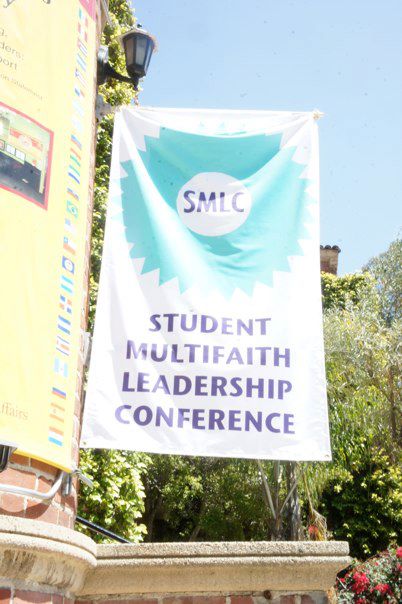
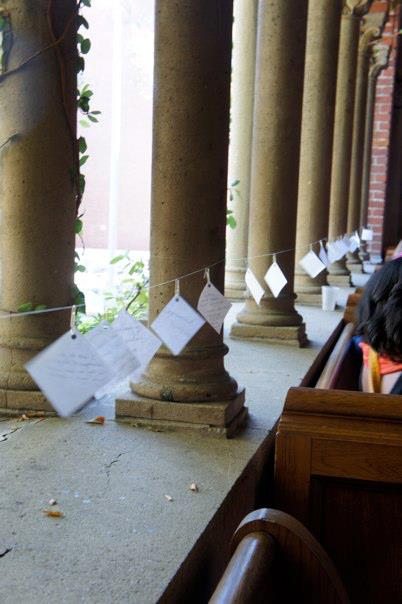
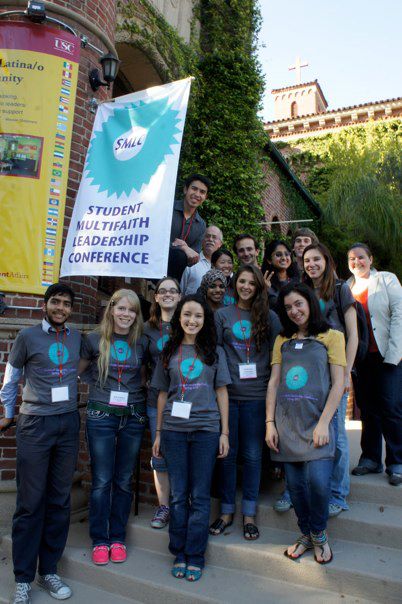
This morning, Facebook informed me that five years ago today, the USC Interfaith Council hosted the first ever Student Multifaith Leadership Conference (SMLC) on campus. I remember planning that conference with the other IFC members. We spent many nights crammed in one of our apartments, working tirelessly to get spread the word and get our logistics in place. It was my last semester at USC, and I recall a distinct feeling of being busy beyond imagination- writing two theses, taking twenty units, still fulfilling my role as IFC president, and finding time to make the most of LA with my friends- and yet experiencing pure joy despite the stress. The IFC really bonded as a team.

580220_3031658753644_1409522558_n

Reflecting on myself five years ago, I can’t help but feel proud of the students I served at Northeastern, and the amazing interfaith leaders I have met around the country since the SMLC. The world is in a different place, sort of- on the whole, these students are much more aware of the role interfaith communities must play in dismantling systems of oppression and including various identities at the table. I see a great success and opportunity in partnership- beyond dialoguing and learning, the young people are showing up for each other to seek racial justice, gender equity, rights for immigrants and the undocumented.

My Senior Ministry Project at UChicago focused on interfaith dialogue as a model for building identity awareness. I think it’s no secret that when we seek to hear convictions that conflict or sometimes even threaten our own, we learn more about ourselves. We are forced to contemplate our own beliefs. One afternoon on the fourth floor of Swift Hall (the home of the Divinity School), I presented my thesis to the Dean of the Divinity School. He asked me to dig deeper on a couple points, and finally, he said, “Tell me honestly- how many students do you really think would participate in this kind of thing? It seems like such a specialized program.” “All of them should,” I responded. He laughed. “You really believe that?”

The idealist in me says yes, I do believe that. I think everyone should participate in interfaith dialogue- even the vehement atheists. Education is about confronting ideas that bring us discomfort. Interfaith dialogue at it’s height is deeply uncomfortable. I have learned over several years of doing this work that humans are pretty particular when it comes to our worldviews. And yet, voicing our particularities is exactly what makes the work together so meaningful.

521979_3031662113728_838276500_n

I remember the day of the SMLC donning my purple and turquoise shirt proudly. There was a typo on it, but that made it our own. At the closing panel, I sat next to my friend Antonia, a pagan writer and anthropologist, feeling a little sad that the experience was over. We had all put such heart into the work. And we never should have met, that group of people. We studied different fields, traveled to different places, called several nations home. The intentionality of the group is what gave me so much life, so much joy. As I continue to reflect on my journey at Northeastern, I believe the days I felt the most joy were the days I saw that intentionality in my students.

529956_3031667153854_1864528299_n.jpg

When there is no reason for us to meet, we are faced with our own truths. We can’t fall back on assumptions that we are friends because we find the same things interesting. Discomfort brings learning. It also helps us build deeper relationships because it helps us dismantle the systemic urge to stay safe in our bubbles. If every person we encounter is meant to teach us, we learn most from those who are most distinct from us. We never should have met. And yet, here we are, finding joy in the world together.

Full Circle

I don’t have to tell you that the world is funny, that life is not linear, that time is sometimes not a helpful tool for us- and sometimes it is.

joey-kyber-115166.jpg
PC: Joey Kyber

Just last week I was writing a short story about stepping outside my comfort zone. I wanted to talk about joining the Interfaith Council at USC after meeting Varun, the Dean of Religious Life. The story of finding Varun is a silly one, it involves pulling a newspaper out of a trash and seeing his name in the headline. “What’s a Dean of Religious Life?” was the first question that popped in my head. The article in the Daily Trojan (our university’s daily paper) described the many experiences Varun lived that led him to this role. Living in Nepal as a Buddhist Monk, finishing both a Master of Theological Studies degree from Harvard University and a law degree from UCLA, hosting a radio show, meeting His Holiness the Dalai Lama, even being an avid sports fan- all of these influenced the person he is today. Reading about them, I thought, “I want to live like this person. I should probably meet him.”

Nine years (!) later, I’m sitting at my desk at Northeastern University in Boston, where I have served in a chaplain role for almost two years. First I see the text messages from my mom and dad: “Did you see the LA Times article about Varun? I think he mentioned you.” Friends are sharing on Facebook. Varun himself emails me a link to a stunning story about his trajectory at USC, as a non-ordained Hindu attorney. It sounds just like the article I read as a lost sophomore at USC, at a time when I knew I loved studying religion, but had no idea what to do about it. This was the article that pushed me to email him in that chilly office on the second floor of the business school, that for the first time showed me I could live a life full of passion like Varun, combining so many different interests. And it’s my last week here, which feels as though a circle has been completed.

I think it’s really important to experience nostalgia sometimes, as a reminder to feel gratitude for the people who have been a constant support in our lives. I was going to post a bunch of vignettes this morning from my time at Northeastern, because there are so many wonderful and hilarious moments from these two years. I only got to tell a handful at my lovely going away party. This morning I took a Lyft to work because I baked too many treats to take on the T, and as we inched along on the 93 toward Roxbury, I looked out at the Boston skyline centered on the Prudential Center, its windows shimmering in the sunlight, and realized today is my last Monday here. Only two years ago, my mom and I attempted to navigate this ridiculous freeway and street system to move me into my tiny apartment in the North End. I remember sending Varun a picture, knowing I had made him proud. The community here has made me proud, especially after so much hardship. On the wall behind me hangs three simple letters that welcomed me on my first day: J-E-M, my name. I’m taking them with me to hang in my new office (if I get an office).

Link to the story: http://www.latimes.com/local/lanow/la-me-usc-chaplain-20170403-story.html

Nightmare

I woke up screaming at 2 am after experiencing a nightmare.

This certainly was not the first time I’ve had bad dreams- often when I am stressed or anxious about a meeting, a test, even the amount of work ahead of me, my sleep has been fitful or disturbed. My dreams include strange and weird images. But this was different. This was terrifying darkness and powerlessness. This was screaming in sleep and out loud. For the life of me, I can’t figure out what this dream means.

james-stamler-153583
PC: James Stamler

I’m in a dark room, laying on a bed. Someone outside the room is keeping guard. I’m shouting to let me out- please! But the person doesn’t respond. I realize I’m dreaming within a dream, and try to wake up. I’m paralyzed, just lying on this bed. Wake up, wake up! Until finally, someone shoves me and I am, in fact, awake.

I have never been so happy to see my room in Boston, dimly lit from the moon peeping in through the curtains, my stuffed animals strewn about the sheets. After a few deep breaths, I felt a little calmer, but disoriented still. I clutched my penguin Plush and tried to fall back asleep.

This weekend I revised about 25 pages of my memoir. Revision may indeed be harder than writing in the first place. After receiving feedback from my classmates, I was forced to grapple with the questions they posed to make my narrative clearer.

“Why did the narrator (me) say she didn’t believe in God when this is a memoir about faith?”

“What made the narrator hide the fact that she was traveling by herself?”

“Why does the narrator feel so guilty about almost everything?”

I kept writing and deleting, writing and deleting. I found myself scratching my head.

I don’t know why.

Just as nightmares illuminate possible emotions we are hiding deep within, perhaps these questions led to a stir where there has long been no movement. The only way for me to understand this terrible, terrible dream is to wonder what came up as I faced these questions, trying to honestly tell the story of my life and my journey. Darkness. Paralysis. As if stirring kicks up dust we are forced to inhale, sneeze, and clear away.

Aliveness

I, like almost everyone around me, am a mess.

I feel exhausted.

I feel exasperated.

I feel anxious. SO anxious.

Every morning, I wake up much before I hope to and feel awake. Not awake in a refreshed sense, but in a nervous, jittery, need to run off the energy awake. My stomach feels upset, my neck aches, even my breathing feels shallow. I end up reading or scrolling through Instagram in bed, which only entertains for so long. Sometimes after literal hours of tossing and turning, I get out of bed, rush through my morning ritual, and head to work on a crowded sweaty train.

I remember Thich Nhat Hanh’s wisdom: When you are in a rush, slow down. Seriously, we need to slow down.

In the past couple of weeks as this sleeplessness and anxiety has really started to affect me, I have noticed another feeling creeping up. It directly relates to anxiety: it’s called helplessness.

Helplessness, as if losing agency, power, the ability to control anything in a situation. That causes anxiety. I have been in several situations this year that felt completely out of my control. In these situations, I find myself wishing things, like, “I wish this person wasn’t here.” Or, “I wish I knew more than I do.” I find myself begging. Who, I’m not sure.

In my sleepless mornings I have sped through several books. My “to read” pile is diminishing. This past week I finished Brian McLaren’s We Make the Road by Walking: A Year-Long Quest for Spiritual Formation, Reorientation, and Activation. The book offers 52 chapters of “lessons” for spiritual formation, to be divided up into each week of the year. As an instant gratificationist, of course I couldn’t save the lessons, I wanted them now. So I read the book in 2 days, and learned some fascinating perspectives on biblical narrative and how McLaren defines spirituality, calling it “the quest for aliveness.” I began to think about how I cultivate aliveness- running, writing, reading, and resisting. These activities bring me joy, challenge me, and allow me to see growth in myself. Aliveness. Perhaps the opposite of anxiety.

j4pae7e2_ws-jared-erondu
PC: Jared Erondu

As I continued through the lessons, toward the end of the book I read this:

My anxiety is more dangerous to me than whatever I am anxious about. My own habit of condemning is more dangerous to me than what I condemn in others. My misery is unnecessary because I am truly, truly loved. (McLaren 143)

And suddenly it was clear: I have been my own worst enemy. I have been completely in my own head, and frightened myself to the point of insomnia. I have blamed others. I have felt miserable. I am miserable, and there is absolutely no reason for me to do nothing about this misery.

I am a mess. But I don’t need to sit in filth forever. In fact, I could do one thing today that would make me feel empowered. And celebrate that empowerment. I could be more congratulatory about finishing a run- not just feeling like I had to. I could write for the pure joy of writing, and not worry about it being terrible. And I could start thinking along the lines of what I can control, and focus on those things.

It sounds SO simple and easy, but it’s so easy to feel frozen in anxiety and misery. It’s hard to name for ourselves what we can’t control. I think aliveness is making peace with this, and learning to hold the things that give us our uniqueness. I’m done being a mess, at least, in my own head. It’s time to start assessing what needs to float there, and what can drift away.


Preflection.

rdvp7whoibw-niels-weiss
PC: Niels Weiss

HAPPY 2017!!!

Another day turns into another year. Here we are! Today I checked my social media channels frequently to see what friends and family were feeling as the new year approached. I’m so proud of y’all! You achieved an incredible amount this year, despite some serious tragedies amidst every day strife and violence. If we are honest, changing the last two numbers of the date today to 17 don’t wipe any of this away, and surely, as we have already seen in Istanbul, tragedy looms over and over.

I really loved my friend/co-worker/colleague/tea buddy Kaitlin Ho’s reflection questions that she posted a few days ago. They certainly helped me put my own experience in context and focus on the present time. Though so much could be written for my responses to each question, here are my reflections and preflections as we begin a new year:

Where did I see glimmers of hope/light?

My students and co-workers. This past semester was exhausting for everyone, I have never seen so many young people physically show signs of fatigue and anxiety. Yet- the people around me, students and co-workers alike, delved deep and found unrelenting compassion for each other. The day after the election, 45 of our university’s community members gathered to dialogue and share, and I witnessed active listening, people making space for each other, and even strangers hugging. A week after that, a group of students attended a workshop I facilitated for the Global Citizenship Project around storytelling for social change- republicans, democrats, and international students included. Though I felt nervous, the students made themselves vulnerable to each other and shared some heartwarming and heart-wrenching stories about living with depression, experiencing their parents’ divorce, and other touching experiences. For a moment it felt like we had created community across an unbridgeable divide.

Where did I experience darkness?

I witnessed the ugliness of bureaucracy and large corporate institutions. I felt dehumanized and witnessed through my own lens of privilege how deep-seeded oppression is around me.

What did I see in my character that I’m proud of/want to see more of?

I ran 3 half marathons and started training for my first full marathon this past year. I’m gearing up for Boston in April. What I’ve learned in my running journey so far is that health cannot be achieved through only physical well-being, it’s so much more about the mind. I found that attempting to be gentle but encouraging of my body and mental state got me so much farther than beating up myself up for missing a day, or running too slow, or not stretching enough. I felt more motivated to take care of myself when I was merciful. As I start the serious training, I want to see more appreciation of the immense task it is to live, love and breathe on this earth day in and day out- appreciation of my own body, and of others’.

What do I want to change?

I want to engage in more honest, uncomfortable conversations that will continue to educate me in the fight for equity. I learned this year that I can’t expect people to call me out unless I create that norm and culture, demonstrating that holding each other accountable is an act of revolutionary love. I don’t want to feel frozen in my humble social justice work, and staying in motion means finding opportunities to educate myself at every turn.

Who are people I’m grateful for?

I literally start to cry when I think about how many people rooted for me this year, and how I could never repay the kindness and generosity they have shown. People I love donated to the charity I will run for in the Boston Marathon, listened to me complain and express frustration and still stuck by me, read my blog and other writings, gave me meaningful projects to work on, and met with me to give advice or just be in good company. I’m grateful for the interfaith movement, for the Revolutionary Love Fellows, for my students, for my new writing partners, for my family, for my partner, and for the people who were not afraid to ask for favors.

Who are friends with whom I need to reconcile?

I struggled with forgiveness, mercy and reconciliation this year. It took almost all year for me to realize that forgiveness and mercy are truly divine, but cannot be hurried. Rather than thinking about specific individuals, I’m going to continue challenging myself to hash out these concepts as they relate to healing and how I can be a better friend and family member to others.

What are my greatest desires and needs in my relationships, my faith, my work, my health?

This is such a good and difficult question. I like being needed and feeling important, but I think what I actually need is the opposite- a chance to be in communities where I don’t play a leadership role and simply exist among others. I need to continue struggling in my faith and what I believe about ambition and justice. I need to keep writing, focusing on meaningful writing rather than quantity. I need to be my own best advocate for my health and in doing so, learn to be a fierce advocate for others.

And finally…here’s to reading 100 books this year 😀 mostly for pleasure.