On the 15th Anniversary

15 years ago today my father appeared in the room my sister Mallory and I shared. He wasn’t singing his off-key “good-morning!” jingle that normally got us out of bed within seconds so we wouldn’t endure any more. This morning, at around 6 am, my father simply took a deep breath and said, “planes just hit the twin towers.”

My sister and I, 3000 miles away from New York City and completely bewildered, followed him to our tiny dining room where my mother stood glued to the small Panasonic television. She seemed to be watching a scene from a movie that kept playing over and over again. I watched as a tiny object hit the building, an explosion erupted, and the building crumbled to the ground almost instantly. The scene replayed over, and over, and over. “Why is this happening?” my sister touched my mother’s arm. “They think it’s terrorists,” she replied, never averting her eyes.

In the next two hours, my father drove us to our small Catholic school as he would any Tuesday. Our neighbor Grayson carpooled with us. When we approached the school, the normal line of cars for drop off was no where to be found. We pulled up to the entrance and Coach Val, our P.E. teacher, met us at my father’s car. “School’s cancelled today,” she informed us. We drove home. Grayson and I tried to find a movie to see, but decided against it. “I think I should go home,” he said, and walked home.

I called my grandmother, the smartest person I knew. I felt so confused. Why would anyone fly airplanes into a building and kill thousands of people? I heard her voice on the other end of the phone. “Grandma,” I paused. “Is this like Pearl Harbor? Do you remember that?”
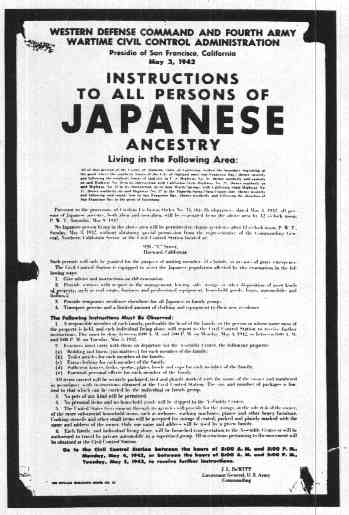
9066


My grandmother remembered exactly where she was when Japanese planes attacked Pearl Harbor. “My sister and I were playing outside with toys our father brought us from Japan,” she explained. Her father was in the Navy. “As soon as we heard what happened, we took those expensive, rare toys and we smashed them. We wanted nothing to do with anything Japanese. That was like affirming the enemy and what they did to our country.”

In college I wrote my honors thesis about the parallels between the attack on Pearl Harbor and the attacks on the twin towers and the Pentagon. My mission was to demonstrate that the aftermath of Pearl Harbor had caused significant civil rights violations for Japanese Americans and several other marginalized groups at the time, and that now, 70 years later, Muslim Americans and others were experiencing the very same violations in different ways. I poured over records of illegal surveillance, deportation, and hate crimes on American citizens. The inspiration for my project was twofold: Japan had become a second home for me after studying there for a year, and as a member of USC’s Student Interfaith Council, I had developed a deep friendship with another member of the Council: an Egyptian-American Muslim woman.

Through my research, the finding that gave me most pause was not the countless civil rights violations, the violence both Japanese and Muslim Americans encountered after the events, or even the conspiracy theories that 9/11 was an “inside job.” What really moved me were the stories I discovered in the Rafu Shimpo, Los Angeles’ Little Tokyo newspaper, about Japanese Americans fighting for Muslim Americans’ rights and safety 70 years after their own community had been “othered”, outcast, labeled subversive and dangerous. I read about Japanese American Angelinos marching outside the Little Tokyo Public Library demanding justice for Muslims. I poured over the story of Karen Korematsu, the daughter of Fred Korematsu, a man who attempted to escape internment by receiving plastic surgery and changing his name. Karen is an activist in San Francisco, and through an institute in her father’s name, advocates for Muslim Americans through education initiatives. Tears dotted my notebooks as I wrote about these stories. My heart sang witnessing a community once shunned and literally displaced from their homes and freedom making a commitment to help a different community now experiencing what they did.

In my work now as a religious life professional in higher education and interfaith leader, I am often asked what core beliefs I hold as a practicing Zen Buddhist. Usually, I respond with the Four Noble Truths, the Eightfold Path, and perhaps my own truth that suffering is communal and a reality for each of us. I speak often of interconnectedness, the effect every person’s actions have on the world. Not one person lives in a vacuum, we all reside in this ever-changing, impermanent world. We are all connected, no matter how hard we try to distance ourselves. When I think about people I love, this is an easy concept to hold. My care for one person is like a ripple in a pond, it spreads through one person to another, and another, and another.

As I reflect on my grandmother smashing her Japanese toys, the objects that represented her country’s enemy, I realize her effort to separate herself and her American identity mirror the efforts of millions who denounce terrorists. I have tried to separate myself completely from the people who have harmed my generation, denouncing them as sick, monsters, unhuman. The truth is, interconnectedness means that I am forever connected to my worst enemies, and to affirm this is to affirm my own implicitness in violence and oppression every single day. My actions cause suffering, and I need not look further than  next door where a family of eight lives in fear of going hungry each night for proof.

15 years later, the image of the planes hitting the towers as they crumble plays in my mind as if it were yesterday. 15 years later I know why the stories of the Japanese American activists fighting for the rights and dignity of Muslims touch my heart so fervently. These activists recognized their interconnectedness- not only to the Muslim and Sikh Americans and others who have suffered in the aftermath, but to the terrorists, the suicide bombers, the fighter pilots whose actions still have immense effect today. Hate crimes and violence against Muslims have surged this year, the wounds of terrorism and mass violence still fresh. This risky act of caring for another person or community who suffers, especially when they are ostracized, can only be sustained by love. This love is what makes the reality of interconnectedness a triumph, not a failure.

I wish everyone a blessed, contemplative anniversary of a very tragic day. I urge us to remember that every moment is full of potential tragedy and triumph, and that the difference is made when we act through love.


My Revolutionary Love Story: A Call to Action

A photo by Greg Rakozy. unsplash.com/photos/oMpAz-DN-9I
PC: Greg Rakozy


Writing for the Revolutionary Love Project with one of my heroes, Valarie Kaur, and her team of Revolutionary Love Fellows these past three weeks has been nothing short of exhilarating. Every night I find myself  writing an op-ed, article, or blog post that speaks what my heart is feeling: that love needs to go further at this moment in our world. I have been reading stories of love overcoming fear and pain and hate. The stories I am privileged to read from other “love” enthusiasts like me always demonstrate a difficult decision they face and ultimately the choice to act rather than stay silent.

I have learned through these stories and reflecting on my past that “loving our neighbor” must mean more than loving only those who agree with us. In fact, as a practicing Zen Buddhist, I believe that that revolutionary love is about demonstrating compassion for those with whom we completely disagree, those whom we believe cause harm to ourselves and our world.

A few years ago, I was on a bus to Columbia, Missouri, to visit a friend working at the University of Missouri. Since my bus wasn’t direct, I connected in St. Louis. My first bus was almost two hours late arriving and in order to make the connection, I sprinted what felt like miles through the terminal, throwing myself on the steps in the bus just as the doors closed. “Whew,” I gasped for breath. “Made it.” I took the only seat open next to a young man wearing an old baseball cap and tattered jeans. “Ma’am, would you like the window seat?” My partner stood up to move before I could even refuse. I slid across the faux leather seats and thanked him. “On my way, see you in two hours!” I texted my friend.

The first half an hour or so, neither of us spoke. I tried reading John Rawls’ Political Liberalism, but my stomach began to feel queasy. Luckily, my polite seat partner began a conversation at that moment, asking me what I do. He explained he was on his way to Denver to become a truck driver. He had been traveling for over 30 hours by bus already. “I’m studying religion,” I started to explain, when he interrupted excitedly:

“Well thank GOD for that! Finally, I meet someone who is spreading the word of Jesus and being a good Christian. I’ll tell you, all these Muslims and gay folks contaminating our country, it is sure a relief to meet you.”

My heart sank to my feet. No words. I looked down at my lap, and stared at my backpack for a moment- the very backpack that held my UChicago Spiritual Life Council folder decorated with pictures of my friend Sunil (a Hindu-Buddhist classmate), my mentor (a lesbian Quaker woman), and my partner (an atheist international student). This man, a perfectly polite individual, had just shattered my hope in humanity for the moment. I was faced with a choice- I could say nothing, or I could tell the truth. If I said nothing, I could let him assume that I was a Christian, that I believe Muslims and gays sully our society, and I could guarantee we would have a seemingly pleasant conversation.

Or, I could tell him the truth. I could tell this man that I don’t believe in God, at least not the one he does. I could tell him that one of my best friends (who happens to have a black belt in Tae Kwon Do) is a Syrian-American Muslim. I could tell him that my family includes a two gay uncles who adopted a son years ago. I could tell him that I vehemently disagree with his assertion that Muslims and “gays” are detrimental to our society, and that in fact, I believe they are essential.

I took a deep breath and explained that my master’s program was an interfaith one, that my classmates included Christians from several denominations, an agnostic playwright, a Lesbian seeking ordination, and that I don’t actually spread the word of Jesus as my messiah- though I do love his message and works. My explanation wasn’t smooth, or confident, or perhaps even completely comprehensible- I fumbled with my words and used “like” and “um” far too much. Silence followed. The man grumbled something about the next 1.5 hours of his life being wasted. I closed my eyes pretended to sleep. After an eternity, I arrived in Columbia and never saw this man again.

Yet, I did see this man again. I see him every day. I see Islamophobia right before my eyes when people stare at women wearing hijab on the train and grimace. I see homophobia and transphobia and plain ignorance when perfectly well-meaning adolescents use the words “gay” and “fag” as insults, or when people in my community mis-gender my trans colleagues and friends. I see the oppression my own mind, body, and existence are implicit in, and know that more often I don’t see it and no one calls me out because that’s what privilege is. The man on the bus is everywhere, and this is why I am a Revolutionary Love Fellow. The reason I chose to tell him the truth is love. Love for my friends and my family, and also love for the human being who invoked such harm. Revolutionary Love is not perfect, it is a process. It’s about compassion, for ourselves and for others.

My call to action is to share your story with me. Every time I read a story of someone choosing love and taking action, I am deeply inspired and motivated to continue the hard work and long hours. I want to know what Revolutionary Love means to you. What difficult path did you choose in order to put love in the world, and what has come of that decision? You can comment, email me, find me on social media. I won’t share your story unless you give me permission. Please consider sharing- your story matters to me and to the world.

For more info on the Revolutionary Love Project, visit http://revolutionarylove.net/ and look at the three calls to action. A little time can go a very long way. Thanks for your support and love.


Why Writing Brings Me Joy

It seems like all I can talk about these days, besides my moving woes and the storm that is Welcome Week at a large urban university, is my writing. What joy writing has brought me! Someone asked me recently: “Have you always been a writer?” I have always written papers and blogs and reports, yes- but it has not been until this summer that I have mustered the courage to call myself a writer.

A few weeks ago, I shared my experience at the Kenyon Institute seminar on spiritual writing on this blog. The seminar pushed me to make writing a priority, because of the joy and healing the process evokes. As soon as I returned from Gambier, Ohio, I decided to enroll in a GrubStreet class (a Boston non-profit dedicated to providing resources for writers of all ages), mainly for the accountability to write every week. A six-week Online Memoir Generator was about to begin, so I signed up and began to think about my memoir.

writing.jpg

The first week, my classmates and I discussed the topics of our memoirs in the online forum. Death, heartbreak, illness, leaving a life behind to start another- these all made the list. I struggled to describe my story- struggles with faith, growing up, finding community. My eyes rolled as I typed these words, they seemed so overused. Was I whining? I submitted a scene about losing a wiffle ball over the fence that separated my family’s back yard with our neighbor’s house and our quest to retrieve the ball, knowing full well our neighbor lived with dementia. The story provided a little humor and demonstrated the relationship between childhood me, my sister Mallory, and my dad. As words filled my page, though, something else happened. My soul transported back to that scene, that moment, and I remembered walking home after our quest, unsuccessful in retrieving the ball, and having my first encounter with a religious ritual that was not my own. The meaning is in these small details, I decided.

In the next weeks, my classmates shared their work and we commented on each other’s pieces. I found myself cringing to open their submissions on my computer. Am I ready for this? I wondered. Every time I read about the death of my classmate’s sibling, the struggle to raise a child, the reality of living as a gay man, the feeling in my chest resembled a shame as if I had taken off all my clothes to strut my far from perfect body in a room full of people. How unworthy was I to witness these life experiences with the people who lived them, and then to critique their writing about them?

“Work is love, made visible,” wrote Khalil Gibran, in his famous work The Prophet. The course continued, we completed our assignments, and I began to find joy in the work. I wrote about my struggle to feel like part of a community my whole life. I wrote about the car accident that totaled my big red Jeep and my childhood. I wrote, though didn’t submit, a short piece about my cousin who died far too young by her own hand. She was 28, the same age as me. Through the pain revisited on the page, my classmates took me in, and we held each other. I cried at their losses, their love, their pain. And I began to heal, or at least to feel what healing feels like. “Work is love, made visible.”

The love I felt through this process illuminated the source of the joy that I call writing. The source is the community. Writing is such a personal process- we know our story, we own our methods and tactics for telling it. Yet we write to share (if only with our future selves), to connect with our readers. Finding community has been a real challenge for me my whole life, and yet, it only took a website and some discussion forums to find a group of seven people willing to be vulnerable and intimate, willing to put love into the work.

Moving


We’ve all done it. Some of us often, some of us only once. We learn to get better at it, but it’s never enjoyable. It’s usually better with friends, though this can be contested. Whenever I do it, somehow the temperature outside is always well above 90.

When a friend or colleague tells me they are moving, I automatically feel as though they deserve a homemade casserole. Moving is such a silly concept: we take all of our neatly organized belongings (clothes, pots, furniture, chotchkies- there are always way too many of those), make a giant mess placing them all in boxes, bins, suitcases, or other containers to schlep up and down stairs and into a big vehicle so we can then repeat the process in reverse in our new residence.

I once moved apartments in Chicago and spent a week packing, transporting, and subsequently unpacking four giant plastic tubs. This was the most inexpensive and inefficient way to go. Moving outside driving distance should be an Olympic sport, and one that pays. Your options are to sell everything and then buy it all again, or try to ship things- and that will cost you your whole year’s salary.

Yet here I am, planning to move for the up-teenth time, 2 miles away and a world apart. From Boston’s North End- a tiny, cobblestone street vintage European snapshot to Eastie, a heavily immigrant neighborhood that still remains “authentic”, according to one realtor. I wonder who considers themselves to be “inauthentic”?

In the midst of the mess, the boxes, tape rolls, donation piles, never-opened packs of sponges, I have been attempting something quite outside my comfort zone: embracing the clutter. It sound easy, and this is not to say I don’t have clutter in my life (everyone has a junk drawer or three, right?) but when things are even the slightest bit out of order, my mind tends to start buzzing and won’t relax until they’re put back. In their place. Where I have determined that they belong.

It’s not easy to admit a desire for control, especially over something as meaningless as how my bathroom towels are folded. “Who cares?” I sometimes ask myself. “No one will see them anyway.” As I looked at the boxes and bags and crap piled around my living room, the fact that we can be our own worst enemies really hit home. “No one will see it,” isn’t totally truthful. I will see it. I will remember that my life is not as categorized, clean, and minimalist as I would like it to be, as I can convince myself it is by keeping my home in control. This outward reflection of my own inward junk is truth, yet, it is uncomfortable.

Anyone could tell you that life is messy, that it never comes at you neatly packaged with a bow. I’m not 16 and hoping for a car for my birthday. Anyone could also tell you that moving is the worst (alongside waiting in line at the DMV and calling Comcast for customer service), but most everyone, when asked, has a moving story to share. My parents do it (they describe the wilting July day, the day I worked at Bed, Bath and Beyond instead of helping them move, and how all the spices went missing). My friends do it (“We drove a U-Haul all the way to DC from Chicago and realized our apartment was too small for all our furniture!). I do it (remember the blue bins?). Whenever you have nothing to talk about at a party, try asking someone if they’ve had a bad moving experience. You’re set for the next three hours, and I would bet you’ll attract a crowd.

Maybe the reason life is so messy- it’s the dusty kitchen appliance you never used, the wad of old t-shirts in the back of your closet, the business cards from people you don’t even remember tucked away behind all the pay stubs you saved- is the connection we find in the plot of the mess. As I breathe through the mess that ultimately mirrors what my life looks like, I keep a log of the experiences so that next time someone tells me they are moving, we have something to talk about. And for now, the boxes serve as a pretty decent footrest.

Running in New York City

Ah, the fresh smell of filth only semi-recognizable. We arrived in NYC Saturday afternoon and hauled our luggage 6 blocks to the Pod Hotel. A pod hotel offers you a bed that fills the whole room with some storage underneath and a box bathroom. But you can’t complain about being right at 39th and Lexington, right?

We spent the weekend wandering around Art Museums and eating ramen and bao buns that one cannot find in Boston. Every day we walked over 30,000 steps. Our feet ached. We munched on sweets from Milk Bar and Levain Bakery until my throat scratched from sugar overload. I obnoxiously posted pictures of sunsets atop tall buildings on my Instagram. #NYCshortweekend.


On Sunday we hiked all the way from our hotel to the Guggenheim, a museum I had never visited before, and then through Central Park to the American Museum of Natural History. As we trudged through Central Park with dampened t-shirts (it was about 97 F without humidity), I watched the runners on the road as they headed south. Some of them had flashy neon shorts and tank tops, while others donned old grey shirts with track shorts and mid-calf white socks. I marveled at every single person brave enough to sweat it out in that heat.

I have been a runner for almost 14 years now. As a freshman in high school, I joined the cross country team because my dad said it would help me get in shape for basketball. Funnily enough, I ended up not even playing basketball my senior year. But I ran every year, and constantly felt inadequate. My body was larger than my teammates’ and it took more time for me to carry it, mile by mile. 3 miles always felt horrendously long. I remember secretly rejoicing when my IT band became inflamed and I had to take a month off running. Every summer I promised to train and be more prepared for the season, but my times never improved. Yet every year, I ran in my little red shorts and tank top and counted down the number of races left to complete.

The funny thing is, I’ve never stopped running, even though there are times I really hate it. Every few months since high school, my body would get a strange craving to stretch my legs and pound the pavement. I would always feel so sore after running when I hadn’t in so long. The next day, I’d hit my legs until the lactic acid started to move, and I’d be off. The music in my earbuds has ranged from Incubus to Turkish pop stars.

When my friend Taylor asked me (ok, challenged me) to run a half marathon almost a year ago, I scoffed. The longest I had ever ran without stopping was about seven miles, and that was torture. I figured I would start training, have a good few weeks, and then like many initially titillating hobbies, I would find something better to do like bake low-carb cheesecake. But November became December and then the New Year came, and I ran a mile longer every week. The last few weeks in February I ran 11 or 12 miles on Saturdays. I couldn’t believe it- the chubby last-to-finish high schooler was actually doing this! Just as the cherry blossoms bloomed, I finished the half marathon in Washington, D.C. with my friends Taylor, Areeba and Audrey. We ate a big, much deserved brunch after crossing the finish line.

When I see anyone running (on purpose), my respect for the person skyrockets. Perhaps it’s because I have learned how much practice running takes. “It’s just one foot in front of the other,” our coach at the treadmill studio shouts as we sprint for 30 seconds. Sometimes the simplest action takes the most practice. When we meditate, we simply sit on a cushion and stay still. The practice is letting ourselves stay purely in this moment. It can be easy to rush through life with distractions at every turn, but being alone with ourselves can feel excruciating.

Spending the weekend in New York was a blessing, a much-needed distraction from the ever-approaching school year mayhem. I felt a little sad on the bus back home because we our fun had ended so soon. I thought about the runners in the park. If we, runners, ran for the finish, we would quickly give up and find something more enjoyable to do like barre or hip hop yoga. We run because we enjoy the challenge, we thrive on finding presence in the pain. As Haruki Murakami wrote in his memoir about training for the New York City Marathon, “pain is inevitable…but suffering if optional.” Arriving back in our humble Boston studio, I collapsed on the bed and massaged my feet.

Practivism in Perspective: Spending Time at the Interfaith Youth Core’s ILI

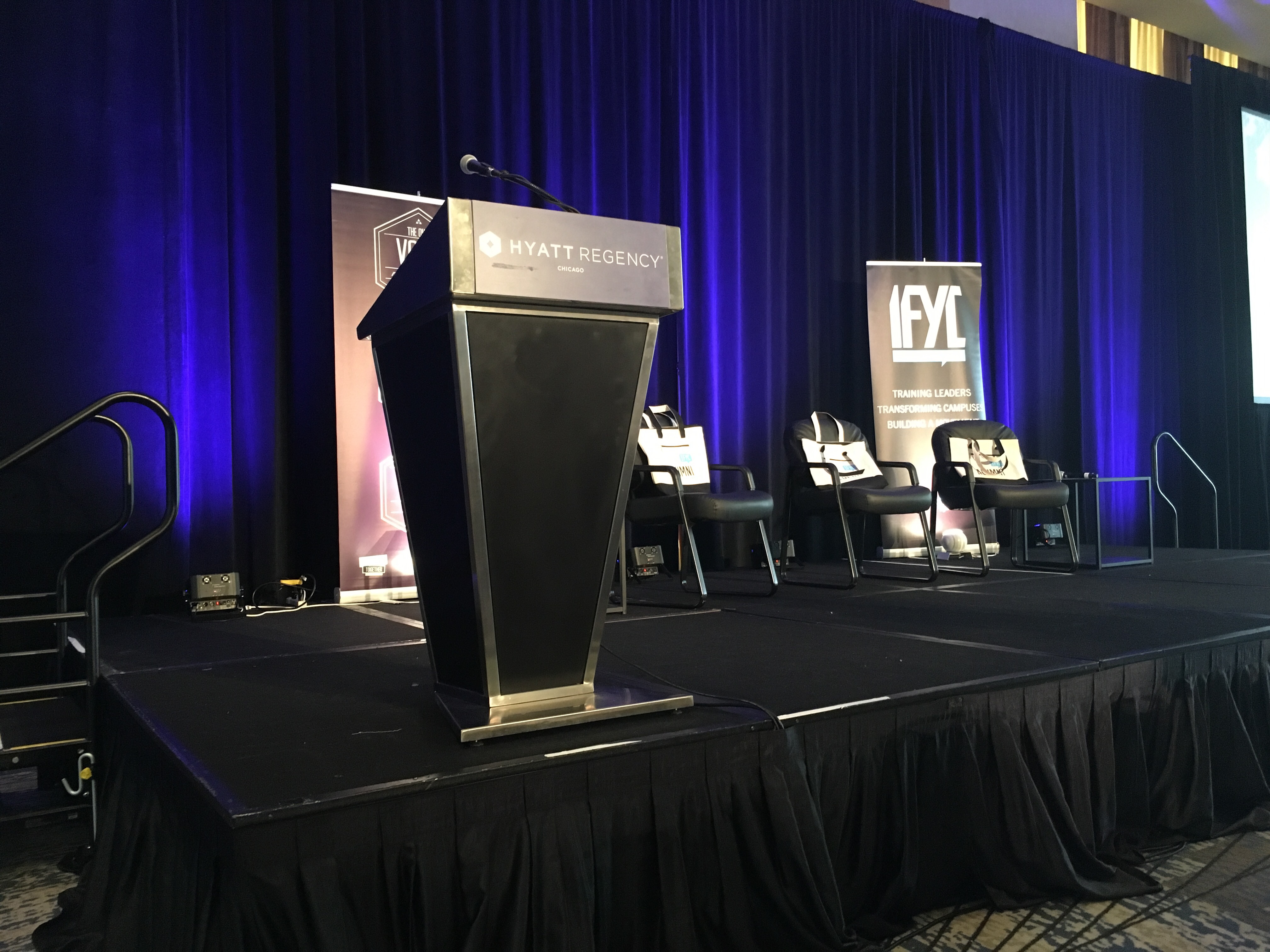
Before my 14-hour debacle getting to Chicago due to “mechanical issues”, I felt pretty confident about what to write this week. After all, I was delivering a short speech at the Interfaith Youth Core’s Interfaith Leadership Institute, and I could very easily transcribe my speech here. Of course, as an educator I consistently learn much more from passionate students than I could ever teach anyone by talking.


When I finally arrived at my hotel around 10:30 pm, 12 hours after my planned arrival to the city I called home for over three years, I felt exhausted. I barely arrived in time for my roommate and new friend Janice D’Souza to let me in our room before falling asleep. In the brief minutes I got to know her before my head hit the pillow and jolted me into dreamland, Janice shared her story with me. She had participated in Better Together, a national Interfaith Campaign, at Berea College when she was a college student. This is how she became an IFYC alum. She had spent the past 14 months traveling around India working with women around issues of education. “I thought I was going to talk about menstruation, disease, and health issues”, she said. “I didn’t consider religion at all. When I found out that the reason so few girls were participating in our programs was that upper caste Hindu families didn’t want their daughters mingling with lower caste families, I realized I had to talk about religion, it wasn’t optional.”

Gazing around the room at the excited and somewhat sleep deprived faces Sunday morning, I felt nostalgic. There is no feeling like meeting 199 other students from around the country who actually care about something you do. I started my speech with a story that revealed my road to interfaith work. I entered college as a business major. In my second year, I added East Asian Languages and Cultures (I had passed out of all but one required language class, so it seemed reasonable). I tacked on International Relations because hey, it was only five classes more, and I thought it would give me access to traveling opportunities. By the time I was almost a junior, I took my first religious studies class- and knew I wasn’t giving this up. Studying religion seemed impractical, and quite unique from my other fields of study- but it was what I loved, pure and simple. “I can do this, all of this,” I thought.

That same summer an esteemed professor in the Marshall School of Business came to the office I worked in as a student one day. He knew my last name because my mom still does his family’s taxes. He launched into a conversation with me about what I was studying, which quickly became an advice seminar.

“You can’t continue with all four of these,” he said. “It’s not practical. You look unfocused, uncommitted, like you don’t know what your passion is.”

“But I have so many passions,” I wanted to say. I looked down at my shoes. Should I continue in the field that would most certainly come with several job offers before I even walked at graduation, or should I choose the destiny that got me out of bed actually excited to go to class every morning?

Business, Japanese literature, and foreign policy did interest me and I enjoyed classes in those majors, but religion was different. In one course, I was transported back in time to the days Jesus lived on earth. I journeyed with him as a person before he was called Messiah. In another class, we spent our time smelling sacred perfumes and elixirs meticulously brewed for sacred rituals. We visited a Hindu temple that put all my senses on overload. And yet, all the rich knowledge I kept acquiring needed to be put to use. What could one do, besides become a professor, with a newfound expertise in classical Taoist apocalyptic texts?

Listening to my colleagues on stage Sunday reminded me why the USC Interfaith Council became my home on campus. This was a community that made religion and spirituality relevant no matter what we were studying. We sought to root our practices, our guiding questions, our assertions about ultimate concern in everything we did- because they sustain us in everything we do, every passion we pursue.

Today, the interfaith movement speaks so much to me because it is not only about religion. The interfaith youth movement, in fact, is about everything beyond religion. Janice was spot on- talking about religion, in this time of deep pain and polarization, is not optional. When I hear students struggling to turn their many interests into a career, I remind them that in our lifetimes, we are expected to have no less than 12. Religious Literacy is a commitment to embracing difference, both among our friends, colleagues, and teammates, and within ourselves. When we do this, we open our personal narrative to multiple possibilities and new perspectives that the world urgently needs.


Save

Plane

“The plane is broke, it’s a no go.” The United captain had barely prophesied our fate before the lovely flight attendant, hair tied tight up on her head, put herself in an “I must help everyone” mode. “Good luck y’all! There’s magazines outside!” Cellphones shot to old men’s ears. “Hello Dave this is Frank, my flight to Chicago has been cancelled…” The matter-of-fact tone not at all disguising rage, frustration, cursing with every expletive. 

A younger man turned toward me as I pulled my backpack down from the overhead bin. He looked panicked. “I’ve never had a flight cancelled before,” he confessed. “What do we do?” I told him I think we wait in a line. The helpful flight attendant 

When Death Becomes Air, or Some Thoughts on Doctors and Dying

I am not a doctor by any means. A few weeks ago, my sister Mallory sent me a paper she had written about an interesting patient case and I spent more time trying to pronounce the diagnosis, symptoms, and medicines than actually editing. I do, however, run quite often and have developed a habit of listening to books on Audible while running. When you’re sick of listening to the same pump-up music for weeks on end, reading while running is a good alternative.

The last book I finished is the best-selling When Breath Becomes Air by Paul Kalanithi. It’s a memoir of sorts about a budding brain surgeon who is diagnosed with lung cancer. The book begins with the diagnosis and how Kalanithi’s relationship with his wife is affected. Later in the book, he admits that having cancer may have saved his marriage. Kalanithi and his wife Lucy decide to have a child even though they know his time is limited. Kalanithi left the book incomplete- he began writing it the year he died, and as his wife notes in the epilogue, the book is a testament to the life he left incomplete.

Earlier this year I wrote a post after reading Being Mortal by Atul Gawande, a text that argues we, doctors and patients, do not prepare adequately for “the end.” Aging, Gawande says, is a somewhat new phenomenon, and one with which we in the United States and perhaps elsewhere have not learned to develop a relationship until it is too late. I remember while reading Being Mortal that there is a deep connection doctors and chaplains have, even though our day to day job descriptions look wildly different. We both are placed in charge of holding someone’s life in our hands. Overwhelmingly, it is not an individual’s life, but their family and friends, the people that mean something in their lives. We perform our work with a strong commitment to journeying with the patients and people we encounter when they trust us. The best of us worry about our patients and our care-seekers long after we’ve left work for the day.

death becomes air.jpg
PC: Pablo Garcia Saldana


My sister Mallory is about to begin her fourth year in medical school. This weekend, she flew from Philadelphia to Los Angeles (home) and today will drive up to Fresno, California to begin yet another rotation. She has moved her living space at least three times in the past year and begun a new rotation in a new hospital every six weeks. When Kalanithi describes his medical student days- excruciatingly long hours, candy bars for lunch, dropping on the floor from exhaustion upon returning home after his wife had gone to sleep- I found myself nodding while jogging along the river. “Sounds like Mallory,” I thought to myself. I wondered how in the world medical students do it. But they do, and they transform lives every day.

Not every day, doctors are reminded that doctors also fall ill. My mom texted me on Friday. “That surgeon that Mallory really admires has 15 months.” “That surgeon” is a legend. My mom tasked me with “send her some words of I don’t know what.” I certainly didn’t know what. Chaplain rules: 1) don’t evade a painful subject. 2) Practice empathy 3) Ask what they need (and mean it!).

“Mom told me about the surgeon at Drexel. Sorry to hear about him, that’s awful. Do you need anything?” I sucked in a breath.

“No thanks, it’s definitely a bummer. All the residents are crying and my other attending is a mess. Just a reminder that we are all human and that life is short,” she sent back.

Such prophetic words from a medical student! I wiped away a few tears. She was right. As a chaplain and a sister, I wished my care in that moment could be more than a “you’re right” reply.

Doctors and especially brain surgeons often live under the stereotype that they are mathematical, cold, even unhuman. They see the body as a puzzle to put back together or a circuit with a loose wire. In hearing the stories from Mallory, sometimes this seems true. But also true is the care surgeons hold for their patients, the deep affect that success or failure has on them because the lives they hold in their hands matter. When doctors themselves fall ill, when they are diagnosed with terminal cancer, they too must make decisions with the people they love. I find solace in Mallory’s early recognition of this, mourning the deep sorrow she feels for her mentor’s life cut short. Inevitably, she will be reminded of this too often as a brain surgeon. But with hope, I know she will do her best to do what I strive as a chaplain: to hold her patients close to her heart and do her best to serve them.

All Are (Not) Welcome

In my interfaith work, I have taken up a bad habit that I only recently realized is bad. On posters, in newsletters, on Facebook, to colleagues when describing an event, dialogue, or even my office in general, I say, “All Are Welcome.”

It sounds great, in theory. How could you not welcome someone, given your position? Interfaith work is about welcoming those with whom we disagree. And now you’re suggesting this is bad?

I was walking on one of the warmest days of early Summer with a colleague at the university. We were discussing a joint dialogue and the details when we began discussing places of worship and the historical pain many have caused. “You can put your rainbow flag out all you want,” they said. “But that doesn’t mean I’m welcome. Where am I going to sit if there are traditional gendered seating areas. Where am I going to pee? Is everyone going to stare at me because I don’t fit?”

My colleague has a point. Many churches and other places of worship do genuinely want to welcome those whom have historically been rejected- members of the LGBTQ community, for instance. I walked by a large church on Boylston Street a few days ago with a big sign that practically shouted, “Muslims Welcome Here!” I wondered why this church felt compelled to welcome Muslims so aggressively. Moreover, I pondered what it would mean to show, not just state, the welcome.

all are welcome.jpg
PC: Peter Hershey

When students are new to interfaith work, we often talk with them about religious literacy, the deepening of knowledge about rituals, practices and beliefs that are foreign and sometimes in opposition to their own. The basic conversations revolve around knowing what kind of food to provide at an event (no pork, probably good) or how to choose a date and time (Friday evening for Shabbat observant Jews? Not a good plan) or even greetings that will make guests feel welcome (Salaam Aleikum!) These are all wonderful practices, and they catalyze a developing mindset toward religious differences. The goal is to help students eventually deepen their knowledge enough that they do not accept “normal” for them to be “normal” for another.

Still reeling from my deeply meaningful experience at the Beyond Walls Spiritual Writing program at Kenyon College two weeks ago, I have been thinking about a seminar  that focused on how we as writers define our audience. Our guide shared with us a helpful catchphrase: “When you write to everyone, you write to no one. But if you write to someone, you write for anyone.” This sounds exclusive. The point is, when we turn our attention to a particular audience, we are intentional and focused. Best-selling author Ta-Nehisi Coates wrote Between the World and Me to his sons; millions of people have read the book.

Knowing my audience is key in my interfaith work. Saying “all are welcome” negates the sometimes overlooked truth that even in a space open to folks who may disagree, we still all agree on certain norms and values. If a white supremacist, fundamentalist person attended an event and began spouting hateful words, I would ask them to leave. They are not welcome. In interfaith work as in all spaces, it is necessary to demonstrate how certain individuals are welcome, from bathrooms to belief affirmations. It is also crucial that I know my audience, I understand who will come to the space and uphold the values of learning from one another, finding common ground, and respecting their peers. If we welcome all, we welcome no one. If we welcome someone, we welcome anyone.

Why I Wouldn’t Share the Cure for Cancer

This past week I have been blissfully writing and recharging at the Kenyon Institute’s Beyond Walls Spiritual Writing Program. We have focused on four broad genres of writing, including Midrash, the personal essay, the Op-Ed, and the blog. Every session has been insightful, and through the prompts and practices, I have found myself in tears more than once. The healing and learning we can do for ourselves through writing is nothing short of amazing.

I have been struggling for a while to use my voice in a way that is helpful and not harmful. Every day my Facebook feed is filled with violent, destructive articles and pictures that demonstrate just how unjust (and downright painful) this world can be. Liberating the marginalized from this system feels impossible. My mind and heart ache with emotion, with empathy and a calling to reach out and rise up. I want to validate the anger, fear, and unspeakable pain so many feel. Is adding my voice harmful, is it stifling to those who historically have never had a voice? Most definitely, I believe.

In our session centered around the Op-Ed, we played a game. Our facilitator posed the question, “If you knew the cure for cancer, would you tell the room full of cancer patients before you?” Most everyone responded that they would. “Absolutely not,” I thought. The systems and institutions would still fail these patients, would demand payment after unpaid bills, would privilege insurance, citizenship, able-bodied, and urban dwellers. What good is a cure when it is inaccessible?

The world has always been broken. I am acutely aware of this as I consume article after blog after facebook status stating how this is true, what the problem is. I see some forms of solutions- what allies can do, how to provide self-care, who to call when threatened. But the large vision of equality or peace in a world in which racism and sexism and oppression don’t exist at all doesn’t seem to be an option. I have been longing for a picture of this utopia and fallen short, perhaps because I believed once that my goal as a Zen Buddhist was to attempt to end the suffering of all human beings in order to end my own. As I see it now, the world will always include suffering. My objective is to create slivers of joy in a time of unbearable pain.

Last night we all traced our foot on a blank piece of paper. We filled the foot with words, describing how we feel “stuck.” I wrote about feeling trapped in silence, but that I know silence to be siding with oppression. Justice needs voices and words. We each drafted a question that would help us escape our “stuckness.”

This morning I shared my question with two new colleagues, both women Episcopal Priests. They paused. One answered, “When I talk with people who I know have thoughts and ideas but don’t feel they can speak, I ask them questions. I ask them to respond.” The other said, “This sounds like something Jesus wondered about.”

Jesus?

Jesus.

beatitudes
PC: Rob Bye

As she explained her answer, I realized that the Jesus I knew as a young Catholic is not the only side to the teacher. I always knew Jesus to be a humble son of a carpenter, gentle, someone who spent time with the people others ignored or cast out. But Jesus was also a very influential leader by the time he died. He built a strong, active ministry that brought people together across classes and tribes. He spoke with authority and commitment. In his work, he included the poor, the hungry, the lepers, society’s “ills” because people listened to him. Jesus was the voice when the voiceless needed sound.

I do not believe myself to be a prophet or Messiah. I am a teacher and am moved by the sacredness in every single person. The struggle to know when and how to speak my truths will stay with me as I hold Jesus’ famous beatitudes in my heart. Blessed are the voiceless.