Lessons from Tears

Last week, I was in Salt Lake City attending the Parliament of the World’s Religions. 10,000 people from different faiths and communities gathered at this momentous event, and 10 of those individuals made up our Northeastern delegation. 3 staff and 7 students of the Center for Spirituality, Dialogue and Service took part in sessions, plenaries, and experiences that taught us new lessons, from the wisdom of grandmothers to Mormon feminism to combating hate speech, both in person and online. When I returned home late Monday evening, I felt overly exhausted, yet thought deeply about the stories I took with me. Throughout last week, I learned many lessons from tears.

Before we touched down in Salt Lake City, I clung to the book in my lap as my middle seat jerked back and forth from turbulence. The book is called “Tears and Tributes” and tells the story of the martyrdom of Imam Husayn (‘AS) and his companions. The story was particularly pertinent to last week, as both Sunni and Shi’a Muslims observed Ashura. For Sunni Muslims, Ashura marks the day the Pharaoh in Egypt freed the Israelites. However, for Shi’a Muslims, the day observes the martyrdom of Imam Husayn, son of Ali, the nephew of the Prophet Muhammad (SAW). In Shi’a communities, this time is deeply mournful. As my stomach turned with anxiety, tears streamed down my face as my mind immersed itself in the beautiful but tragic story of the events at Karbala.

Last week, recovering from jet lag and lack of sleep, I attended the Islamic Society of Northeastern’s Fall Dinner. ISNU’s student leaders had been planning all semester for this event, featuring two speakers: a Sunni activist and non-profit founder, Sara Minkara, and a Shi’a convert and scholar, Coa Schwab. Approximately 100 students attended the dinner- it was a big success. Seeing the student leaders enjoy the fruits of their work made me so delighted. I laughed with the students at my table throughout the evening.

As I began to say my good byes, one student began a lively conversation about some of my professors at the University of Chicago. We excitedly shared the books we had read about Muslim Worship, and promised to have tea with a newly realized mutual friend. When I finally made my way toward the exit, our Shi’a Muslim Advisor gestured toward the student, and said “He is such a beautiful soul. Yesterday, he spent an hour with me, listening to the story of the tragedies at Karbala, crying with me. Though he is Sunni, he cares deeply that the Shi’a community is acknowledged and welcomed. I appreciated that so much this evening.”

Tears welled in my eyes again- this moment illuminated the real essence of “reclaiming the heart of our humanity”, the theme of the 10,000 person gathering I had just attended. Perhaps this gesture seemed small. Listening to a story and making a brief announcement at the Fall Dinner about the differences in Sunni and Shi’a observance of Ashura may not heal deep wounds in both communities, but isn’t reclaiming our shared human heart the first step? In order to help each other heal, we must acknowledge each other’s experiences. Wiping away the few tears on my face, I thought, “this is where we must start”, and headed home.

Appreciating Islam from a Buddhist Perspective

Today is the end of a pretty trying week. Violence, death, and hate continue to plague our world and especially our country. This weekend is no different- a number of “anti-Muslim” rallies and protests have been planned across the country, forcing mosques and even schools to be wary of threats. This is frankly ignorance and hate- but many interfaith activists won’t stand for it. Across the country, they have also been planning- dialogues, service projects, and even “mosque tours”. Despite the frustration I feel knowing ignorance still permeates, I want to humbly do my own part as an interfaith activist to affirm that Islam, and Muslims, are forces for good in the world. As is my custom, I want to focus on a positive way to engage this situation- so here are 4 aspects I appreciate and admire about Islam and Muslims, given my own experience and relationships:

  • The Ummah

Ummah means community, and can refer to a local community of Muslims or the global community, sometimes called ummah wahida. Anywhere I have traveled in the world, Muslims have treated me as they treat each other- like family. In Turkey, I have experienced first-hand a friend of a cousin of a father (and so on) invite me into their home, feed me delicious food, and fuss over me with no hesitation, and they do this for anyone willing to be company. This is true in the United States too- at iftar or the breaking of the fast during the month of Ramadan, my friends who have fasted all day offer each other dates (traditional bites to break fast) first, before feeding themselves. It really is like a global family, knowing that of course there are many differences. Salat, the five daily prayers, also have a communal aspect, one that reminds me of my own Buddhist sangha. Both prayer and meditation can be individual, but praying and meditation with others often enhances the experience.

  • Scholarship and Commitment to Faith

It can be very difficult to remain faithful while studying or working- especially if the study focuses on the faith you practice. At the University of Chicago, many of my Muslim friends expressed this difficulty yet still found a way to adhere to their faith and excel in their studies. I found that studying Islam and the Muslim experience was most powerful for me when my classmates were Muslims who sought to learn more about their own faith, historically, literally, and anthropologically. Further, many Muslims take education very seriously, committing years of their lives to studying medicine, law, or public policy- subjects that allow them to improve our communities. Faith definitely fuels this passion for scholarship and community building, one that offers a model for other people of faith or no faith.

  • Young Muslim Activists

An argument that frustrates me deeply is the “if Muslims are so great, why don’t they speak up and say ‘we are not like [insert extremist group here].'” The truth is, Muslims do speak out, often quite eloquently, about their desire and work toward peace and why they condemn these groups. Even more powerfully, so many young activists model the values in Islam that completely defy extremism and violence. One of my Muslim classmates raised over $100,000 last year for AME churches in the wake of the tragedy in Charleston, South Carolina. Just this past week at Northeastern University, Muslim students organized “Islamic Charity Week” and hosted an event every day that raised both funds for non-profit organizations and awareness about important issues. You don’t have to look very far to find young Muslims doing awesome work around the world, and I’m proud to call a couple of them my friends.

  • Approaches to Interfaith Work

A large part of my network both professionally and personally are people involved in the interfaith movement. Muslims are very passionate about interfaith work, especially when people come together to perform service. My friend Sarrah, once the president of USC’s Interfaith Council and now a medical student at Harvard, so beautifully states that illness does not choose who it affects based on religion or faith, so why should we choose whom we serve based on this? Islam is about serving humanity and making the world better. Without Muslims, the interfaith movement, especially the youth, would not be nearly as strong.

There are a million more elements of Islam that I admire, so until next time, Salam Aleikum (peace be upon you!).

Pope Pilgrimage

pope program

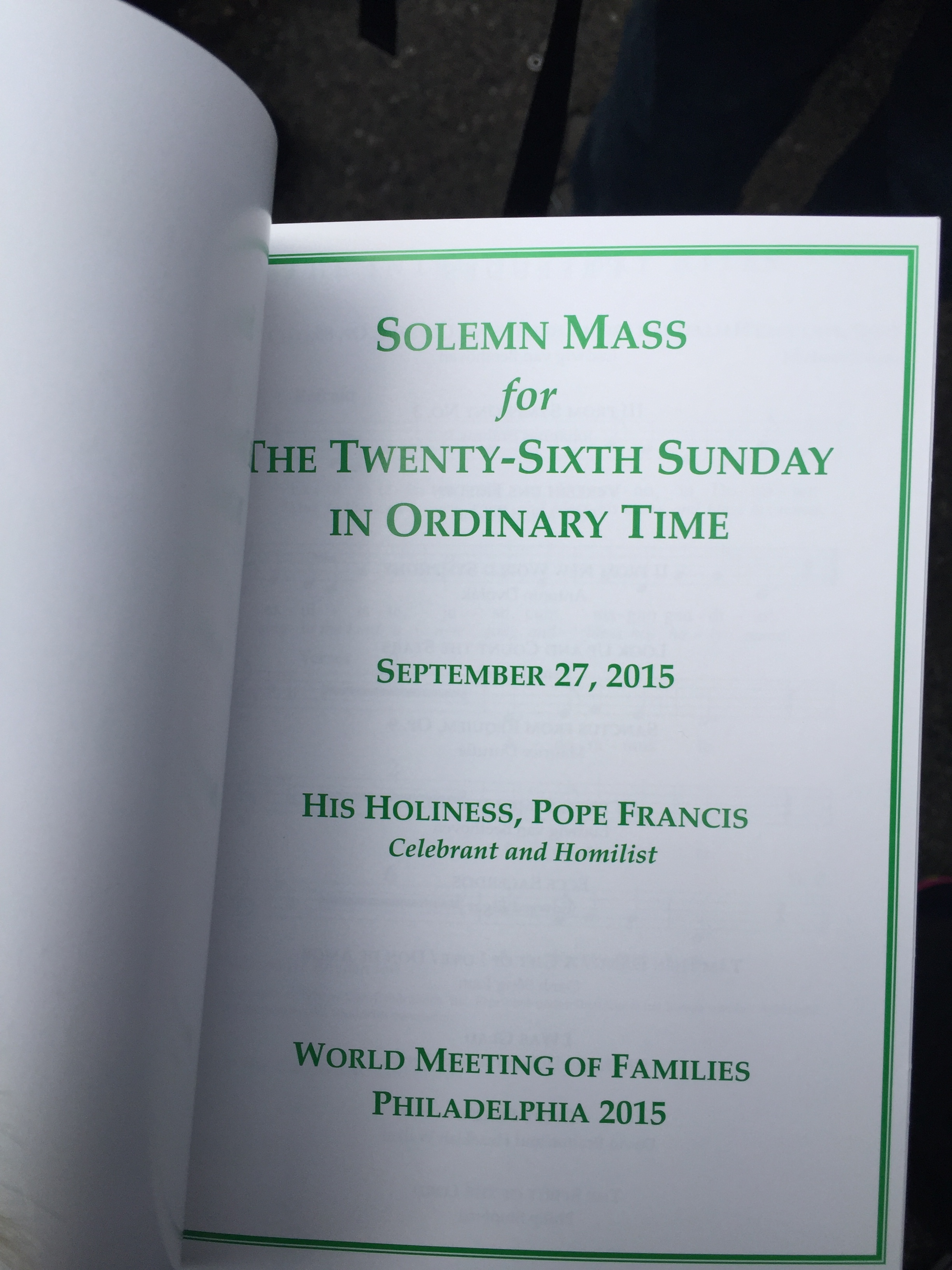
I began my pilgrimage at 6:45 am Sunday morning when I boarded the Northeast Regional Amtrak to Philadelphia and cracked open The Art of Pilgrimage by Phil Cousineau. This week was full of pilgrimage for many communities- Muslims celebrated the return of pilgrims on the Hajj with Eid Al-Adha. The Hajj brings thousands of Muslims to Mecca, Saudi Arabia every year, as pilgrimage is one of the 5 pillars of Islam. Jews observed Yom Kippur and before that Rosh Hashanah, the day of atonement and the new year. While not necessarily about physical pilgrimage (though many do return home or travel to be with family), one could say these two days both require journeys through the soul- challenges and transformations, just as pilgrimages require of us.

“Openness, attentiveness, and responsiveness are the essence of pilgrimage”, Cousineau writes. Over 2 million people joined me yesterday as we gathered to celebrate mass with Pope Francis. As I craddled my book on my backpack waiting to pass security, I heard dozens of languages spoken around me, some casually, some chanting, some in common prayer. Church groups donned in matching t-shirts attempted to stick together by holding hands. Babies cried and slept on shoulders, and in a vacant parking lot to the left of the security checkpoint, children ranging from 3 to 16 organized a soccer game. Souvenir sellers shouted their prices, and the crowd waxed and waned in anticipation and anxiety, in direct correlation to the amount of their personal space.

As I waited, I read more about pilgrimage. I began to wonder if waiting was actually my arrival, if catching a glimpse of Pope Francis was perhaps secondary to what would eventually overwhelm me with gratitude: as the mass took place everyone began saying the prayers and songs together. If you listened, the Lord’s Prayer happened almost completely in unison, in multiple languages. No one pushed or shoved. A young woman next to me began to cry, and I patted her hand, gesturing to my watery eyes. At that moment, I felt so inspired by every pilgrim around me, each journeying, anticipating, experiencing.

My faith comforted me so deeply yesterday. The three pieces Cousineau named as essential to pilgrimage, openness, attentiveness, and receptiveness, are also crucial to my practice of Zen Buddhism. I left for Philadelphia today feeling open to any new experience I was fortunate to receive. This made me feel calm and grateful- especially when I could have felt impatient and disappointed at the amount of space between me and the altar. As I waited, I turned my attention to my intention for this pilgrimage: to honor my family’s heritage as Italian Catholics, my passion for finding wisdom in all religions and the teachings of religious leaders. Perhaps most selfishly, I came to experience Pope Francis saying mass on my country’s soil, among 2 million citizens of the world. Receptiveness is an interesting piece in pilgrimage, and in Buddhism- it is perhaps the most important in both. Receptiveness does not mean we must react to each and every experience. It means that we should take our experiences on our pilgrimage and make meaning of them. Yesterday, the meaning of my pilgrimage was interconnectedness- to my family, my global community, and myself as a person of faith. Sometimes, physical proximity is essential to experiencing the sacred- perhaps the real wisdom is recognizing what physical attribute that is. As I wrote sleepily on the train home, I vowed to “share the boon”, as Cousineau names our debt to those who greet us on our return. I hold my fellow pilgrims with me, hoping they return safe and transformed.

Telescope

Today felt as though I was constantly zooming in and out on reality- like a telescope, allowing us to see one item in detail, then pulling back to look at a bigger picture. One moment, I was in “go” mode- printing flyers, setting up chairs, directing people. Changing the order of our 9/11 Vigil at the last moment so the President of Northeastern University could offer remarks. Running to the bookstore for the eighth time to buy another cord to connect my computer to the Sacred Space’s AV port. Walking so, so fast to the library because I couldn’t get our printers to work.

These moments felt like I was severely zoomed in- I was concentrated on my task at hand, checking my time to make sure everything was on schedule. I was mindful of my actions, but perhaps less of my emotions. And then I was nervous- I enjoy public speaking, and also feel very nervous.

“Zoomed in” was how I experienced most of this day. But in the short moments that my telescope collapsed, the moments in which I remembered why I was completing all these tasks, I fought the urge to cry.

Today at Northeastern, we celebrated many lives, and we mourned the members of our family that we lost. We hit the singing bowl 12 times- once for every student that died in the attacks of September 11, 2001. We listened to Billy Collins’ “The Names”, a poem dedicated to victims of the attacks. A Muslim student read the poem. I thought about how powerful it was that this student read this poem so beautifully, and how difficult it could have been, given his identity as Pakistani-American. President Aoun spoke about the Northeastern family, and we reflected on how strong our community is, especially in times of crisis. Two flower pots lined the center table, unassuming, hopeful and calm, and fragrant. Another student worker picked them out with me yesterday. Students and staff introduced themselves to one another. I met a few new colleagues. I helped the Muslim students arrange the room for Juma’a prayer after the service, and answered some emails, and said hello for the last time to our Muslim Spiritual Advisor, as he ends his time at NU for a new job.

10 students made quilts and cards for a women’s shelter in Boston. They listened to music and sat in a circle. I arranged the chairs again, this time for the memorial service for Javier, a NU student who died over the summer. I printed 50 programs, went back to the bookstore, and taught myself how to setup the AV. As I walked back from the library, I gazed at the picture of Javi on the program, and wondered who he was. After the service, I watched 50 of his friends sign the journal for his family, and thought how much one person, one life, is worth.

I didn’t know you, Javi. From the amount of people gathered today in your memory, you were well liked- no, you were well loved. You seemed like a student I would have liked to meet, and get to know. I would have loved you- just as I love all my students. Maybe you would have worked for our office, maybe not. Maybe you never wanted to think about faith, or big questions. Maybe you did. Maybe you would have come in just to ask where the restroom is, or to find your way to Curry Student Center. Maybe you would recognize someone, a friend or classmate, and stay a little longer than you planned. Hopefully, you would have felt welcome. You might even have come to an event in the Sacred Space- and you would have laughed with me and Alex and the student workers. You might have come in to talk more at length, and you would yawn from doing too much homework too late at night (or talking to friends, or eating delicious latin food, as they said you enjoyed). Maybe you would have shared some beautiful and heartbreaking things about your family, or moving, or what was bugging you about life at NU. Maybe you would ask for some advice, and we could talk through a problem, and maybe you would follow it, maybe not. Maybe, you would have graduated without ever setting foot in CSDS. And that would be totally fine. Probably, you would go on to save lives as a doctor or bioengineer, and you would love almost every second of it. I didn’t know you, Javi, but I feel like I met you just a little today. And for that, I am grateful and unworthy.

Today I felt like a member of the Northeastern family. And like my own family, I knew I would do anything for each member, to challenge them, support them, and love them as much as possible.

St. Anthony’s Birthday

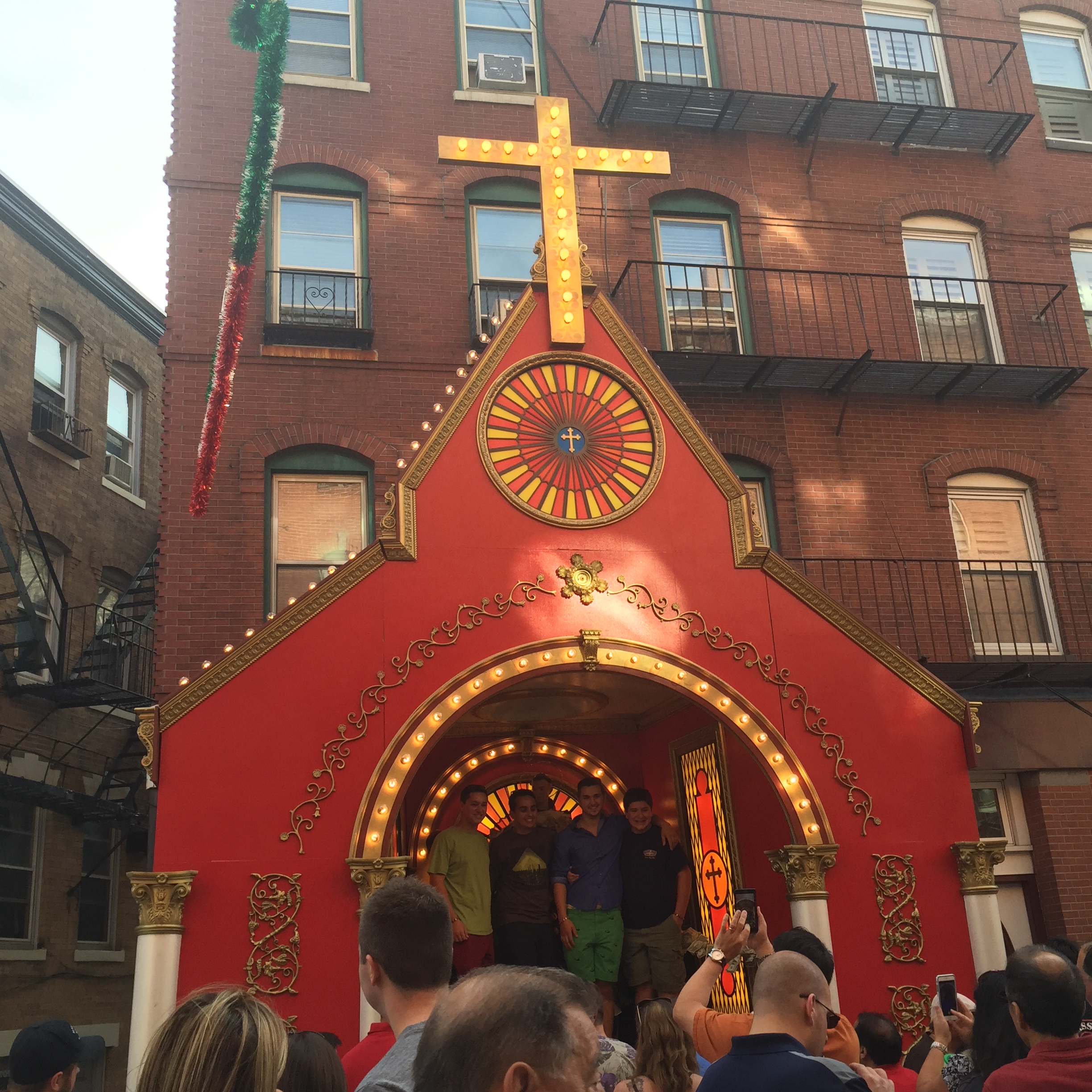
This weekend my neighborhood (the North End in Boston) celebrated the Feast of San Antonio and Santa Lucia. The streets swelled with people, visiting makeshift booths selling arancini (rice balls with cheese and spinach), calamari, Italian ice, and other delicious snacks. There was an arepa booth that particularly intrigued me. Throughout Saturday and Sunday, members of St. Anthony’s society carried the statue of St. Anthony around the neighborhood and festival-goers pinned money onto the streamers tied around the statue. As I lazed in the morning and early afternoon, marching bands filled my apartment with celebratory music from the street below, while viewers shouted “Viva Antonio, Viva!”

IMG_4981

San Antonio is one of the most famous saints in the Catholic tradition, originally from Portugal but attributed to a region in Italy called Padova, where he died. Anthony is said to have known scripture fiercely well, and to have been an eloquent, serious preacher. Today he is most famous for being the patron saint of lost items, or lost people.

As I meandered through the tiny streets of Little Italy, St. Anthony calls to me. My senses feel alarmed as smells and colors change rapidly, from garbage to fried oreos, from the red, gold and green banners hung from old street lamps to deep green bottles of olive oil. A man on a motorcycle yells something at me that I choose to ignore, and I cause a slight grumble as I bustle past a middle-aged lady strolling on the sidewalk with her husband and children. Am I lost?

It’s been two weeks since I moved to Boston, and I have learned quite a bit- I can take the train to work without getting lost. I know where to buy groceries, dish soap, and even specialty salami, if I want. My apartment has internet and electricity, and I’ve even cooked enough food to carry me through the week. Eggplant lasagna.

Yet, I am lost…but not actively looking to be found. I am shocked, torn away from the familiar, and learning to do everything, every part of my day, in a way that becomes routine. As my body becomes exhausted very quickly, I begin to focus on my breath. We all need a reminder that every action impacts our world, for us and those around us. Not all who wander, are lost…perhaps some who are lost need to wander.

Hashtags

I’ve worked two full days as the Senior Assistant Director at Northeastern’s Center for Spirituality, Dialogue and Service. Already I feel great- laughter is such a good feeling. At the same time, I feel pretty exhausted… there are so many little tasks to complete that I totally take for granted and they remind me to be more mindful. This morning I listened to Thich Nhat Hanh answer children’s questions about pain and was further reminded that the simple can be complicated.

Around noon I got a twitter notification that some of my friends were talking about WDBJ. Upon closer investigation, I learned that WDBJ is a television news station in Virginia, and that a former employee at the station had entered the set, shot and killed the two anchors while on the air, and shot himself.

“I hate guns”, I thought to myself. Then I said it out loud. “I hate guns. They scare me.” One of the students in our office replied, “I’m not afraid of guns, it’s the people that scare me. A weapon is nothing until someone uses it.”

I realized she was right. Arguments for or against gun control aside, I am grateful for this reminder that humans, individuals, are powerful. A few hours later, a friend of mine from USC named Vicki Chen did something simple, yet extraordinary. She started a hashtag. #WeStandWithWDBJ has spread all over Twitter and other social media sites. Vicki is a journalist and today she decided that she would take her own power, as an individual, and utilize it for good. Two incredible young women reminded me today that we, humans, do have power, and we must choose how we inevitably affect every other person in this world.

Back to School? Join the Interfaith Council…

Many of us are starting school soon, and you know what that means…moving, course shopping, and of course, involvement fairs. This is a great time of year to join a club, a sport, or just find a new community. It’s great to make new friends and build your network no matter how you get involved. Along with these benefits, you can gain some great practical and professional skills. When I was a student at USC, my two main communities were the Latino Business Student Association and the Interfaith Council. After graduating and moving on the graduate school and now a full time university position, I realized how many concrete skills joining an interfaith council can give you for college and beyond…whether or not you are religious. “Interfaith” might sound completely irrelevant to you (and no activity is for absolutely everyone), but if you are at all interested in learning about different cultures or wrestling with life’s “tough” questions, you may want to reconsider walking the other way so quickly. What is an “interfaith council”? Nowadays, every campus interfaith group reflects the diversity of its own culture and structure, but in general, an interfaith or multifaith council is a group of campus community members from different “faiths” (which can include those of no faith: nones, atheists, agnostics, unaffiliated, skeptics) who gather to dialogue about a particular topic, sometimes related to religion and spirituality, and sometimes not so much. Dialogue may be the only purpose for some groups, and for others, community service, visiting sacred spaces, and advising the campus ministry or chaplaincy office on campus may be functions of the council as well. As interfaith councils and action groups have become more common on college campuses, they have also become leadership programs. If you are considering joining your campus’ interfaith or multifaith group, here are 6 concrete skills and benefits you can take from joining an interfaith council or dialogue group:

1.Religious and Cultural Literacy

Many campus interfaith groups meet somewhere between once a week and once a month to dialogue with each other, and often, they choose topics surrounding religion and spirituality. One of the most interesting topics for my peers when I was on USC’s interfaith council was “interfaith dating”. Each of us would share how we felt about dating (whether that was even appropriate) someone from a tradition that was not our own. Conversations like these helped us learn more about each other, and more about other faith traditions. This knowledge of different religious, spiritual, and philosophical traditions is vital in our world, and broadening your own in this setting and not simply by reading from texts will help you in whatever field you choose to pursue. You will be a strong ally for colleagues and may even be called upon to make important decisions given your knowledge of different traditions.

2. Dialogue Facilitation and Conversation Moderating

An interfaith conversation is not one in which the same response from every participant is helpful or possible. In fact, the reason for an interfaith council is to celebrate the richness of difference in the room, and to explore both shared values and distinctions that help us learn more about each other. I remember hearing my Muslim conversation partners cite verses from the Qur’an, the central sacred text in Islam, and thinking, “wow, how beautiful that is!” because I had never heard anything like it. At the same time, we all recognized pretty quickly how important food and sharing was for most all of our traditions. Learning how to both participate in and moderate a conversation in which people may disagree but can do so respectfully will help you not only in your future career, but in the classroom as well. Have you ever felt intimidated to speak in class because you’re sure someone will tear your argument apart? A good interfaith conversation will teach you how to listen respectfully and respond in a way that builds off the previous person’s comment, whether you agree or not. This shows both skill and preparedness in the classroom.

3. Build Your Network on a Global Scale

Within three weeks of joining the interfaith council as an undergraduate, my network (and entire world) had broadened exponentially. Many interfaith council members are connected to other communities, religious and otherwise. One of the best parts of an interfaith council is that members come from different fields of study and departments on campus. When we planned the inaugural Student Multifaith Leadership Conference, we asked our film student member to help us build our conference website, our business students to spearhead fundraising for the event, and everyone participated in reaching out to people in their own field to attend. Learning to dialogue and work with people from different fields and areas of expertise will not only expand your network, you will learn how to collaborate and call on colleagues with different skill sets. No matter which industry you choose to pursue after graduation, this skill will help you be entrepreneurial and complete creative projects. As entrepreneurs, we say “your network is your net worth”, and this statement is not a lie.

4. Meet Students (and others) You Never Would Otherwise

This follows directly from the last skill, but again, learning to dialogue and work together with people whom you wouldn’t meet otherwise will not only increase your knowledge of different cultures and traditions, but will give you a breadth of knowledge of many industries and fields. Religion and spirituality does not exist in a vacuum, and many times our interfaith council ended up dialoguing about an important issue on campus or something exciting in a member’s field- like the intersection of spirituality and medicine, or how we might look for solutions to global climate change. It is invaluable to have an expertise in conversation-making, especially with people you don’t see everyday (or ever).

5. Self-Awareness and Individuality

One of the greatest skills we can develop that often gets overlooked or minimized is a deep understanding of ourselves, the different pieces of our identity, and the fact that all of us are individuals. As someone who was still exploring my faith in college, the questions with which my peers on the interfaith council wrestled as we dialogued together forced me to self-reflect on my answers- what did I think about an afterlife? What did my tradition say about service to others? Why was I in this room, talking to these people? Developing this self-awareness not only helped me in my faith journey, but helped me understand my studies, my work, and every activity I pursued as part of my complex identity. I realized that my primary interest in religion and spirituality was an interest in helping people, in connecting the college experience to a deeper meaning. Further, interfaith dialogue helped me understand something crucial- every person is an individual, and while they may subscribe to a religion, a spiritual practice, or any set of beliefs, they do not represent the entirety of that belief system, nor does the system represent all of who they are. Knowing this will help you connect more deeply with every person you meet, by seeing everyone as a complex individual, not assuming anything about them.

6. Welcoming and Inclusive Actions

In my experience, interfaith councils certainly seek to welcome members of diverse faith and non-faith traditions, but they also should welcome members who hold many different identities. Through my peers, I constantly learned and still discover new ways to be inclusive, whether it means being mindful of my language or making sure dietary customs are considered if we provide a meal. This might seem grueling and prohibitive for an honest conversation, but in fact, creating an inclusive space where everyone can share and learn from each other without feeling marginalized or fearful of being wrong promotes the richest conversation. If everyone participating in the dialogue agrees that the environment is not a politically-correct contest, but a true space to learn from and educate each other, you can learn how to create this kind of space elsewhere, from the classroom to a team meeting. While this might be the toughest and most gradual skill to learn, it is undoubtedly one of the most important for the communities we seek to lead.
And perhaps most importantly to college students, in my experience, being part of an interfaith council meant tons of free meals (Burklo pizza was the best meal of the week for many of us at USC) and deep friendships that have lasted beyond even graduate school. Hopefully these skills were convincing to some! No interfaith council at your school? You could always start one…
Cultivating Compassion through Self-Reflection

Purple and turquoise signs. Students wearing college t-shirts. Pictures of interfaith leaders like MLK and Gandhi, Valarie Kaur and Dorothy Day. Yep, I was definitely at the Interfaith Youth Core’s 2015 Chicago Interfaith Leadership Institute (ILI).

Even though I never attended an ILI as a student, I’ve attended a handful. I got to speak on an alumni panel, attend an alumni gathering, and this past weekend, I was excited to transition to attending as a “campus ally” in my new role at Northeastern University. This was a particularly exciting ILI because 300 students traveled from around the country to participate, the largest ILI ever.

After meeting with a few of IFYC’s supporters, staff members and fellow alumni, we headed down to dinner where the founder of IFYC, Dr. Eboo Patel, announced the recipient of this year’s Mike Hammer Interfaith Leader award, Samantha Nichols. Samantha is an interfaith leader at Missouri State University.

No matter how many times I attend an ILI, I will never find them redundant or dull, even if I’ve done Talk Better Together (an ice breaker activity) a hundred times. At dinner I sat next to my friend and fellow alumnae Karyn Wouden, who brings interfaith leadership into her vocation, teaching and performing harp. She works in a pretty unique field for IFYC alumni, though a very important one as an artist and a teacher. After we listened to Samantha’s eloquent acceptance speech, Karyn and I expressed a mutual feeling, one of intense admiration for all the great work that IFYC alumni do, and a constant feeling of “not doing enough”, like starting a non-profit.

I considered these feelings for a while as I lay in bed that night, unable to sleep from the adrenaline I always try to suppress after an event hosted by IFYC. Both feelings- admiration, and ambition- are good, in some ways. With all the frustrating, maddening, terrifying news we hear every day, admiration for young people working together despite sometimes fundamental differences is exactly what we need. And further, lifting up the stories of cooperation and compassion around us is one of our most important jobs as interfaith leaders. Ambition is also good, it keeps us motivated right? Yes, but sometimes, it also hinders our compassion for ourselves. When we see great work all around us, it’s natural to feel like we don’t measure up, like we aren’t doing enough.

I won’t say that we cannot or should not ever feel this way, it really is natural. But what I would like to work on, as someone concerned with compassion toward others beginning with myself, is something Samantha noted in her acceptance speech. Samantha noted that “she never intended to climb a mountain”, but that at some point, she realized she was already part of the way up. There is always more to climb, but many times, we forget that we have climbed any of the mountain at all.

The reason ILIs will never get old for me, and I could guess the other IFYC alumni I see over and over, is that seeing students light up when they meet each other, learn something new about a different tradition, or hear about the multitude of ways they might take this leadership training into their unique career path is because we return to our own narrative of becoming interfaith leaders. I see students laughing and joking with each other, and I remember when the Faiths Act Fellows belted N’SYNC songs on our tiny bus as we drove through Malawi. I see students gather every ounce of courage they have to ask Dr. Patel a question in front of everyone else, and I remember when it took all my courage just to shake his hand. I see Samantha so gracefully accept her well-deserved award, named after my Fellows Alliance supervisor, and I remember beaming with pride as I accepted my university’s award for the most contribution to religious life on campus.

Climbing a mountain is an ambitious and arduous task indeed, and so is growing as an interfaith leader. Maybe some of our friends climb faster. We are all climbing the same mountain. We all have our own strategies. And we have all ascended part of the mountain, which is a positive story to tell for those who may be just beginning. As I seek to tell the successful stories of my peers, I seek to self-reflect on my own success, and return to my own narrative of becoming an interfaith leader. This helps me cultivate compassion within, which undoubtedly helps cultivate compassion toward others.

Friends…and Faith.

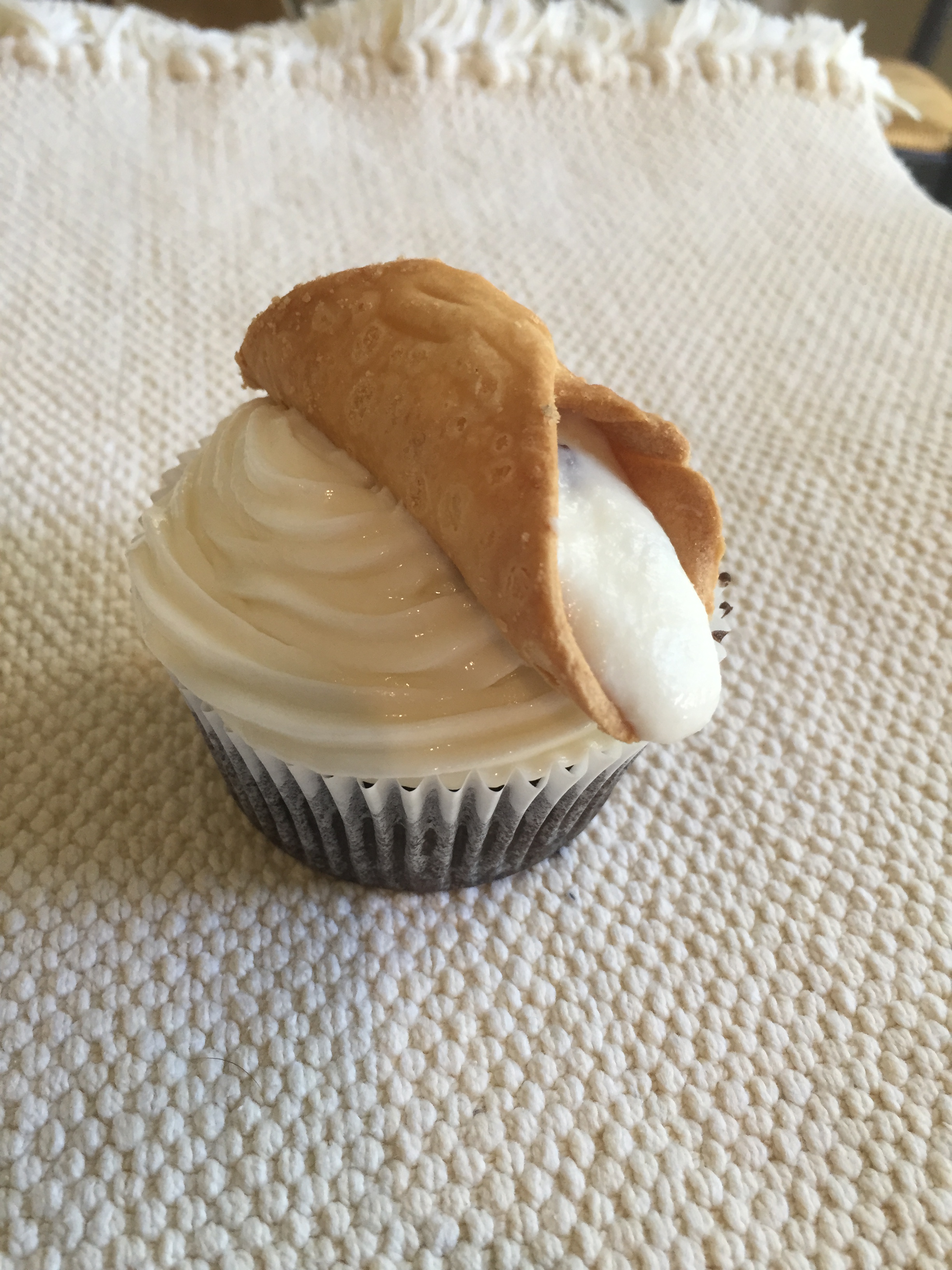
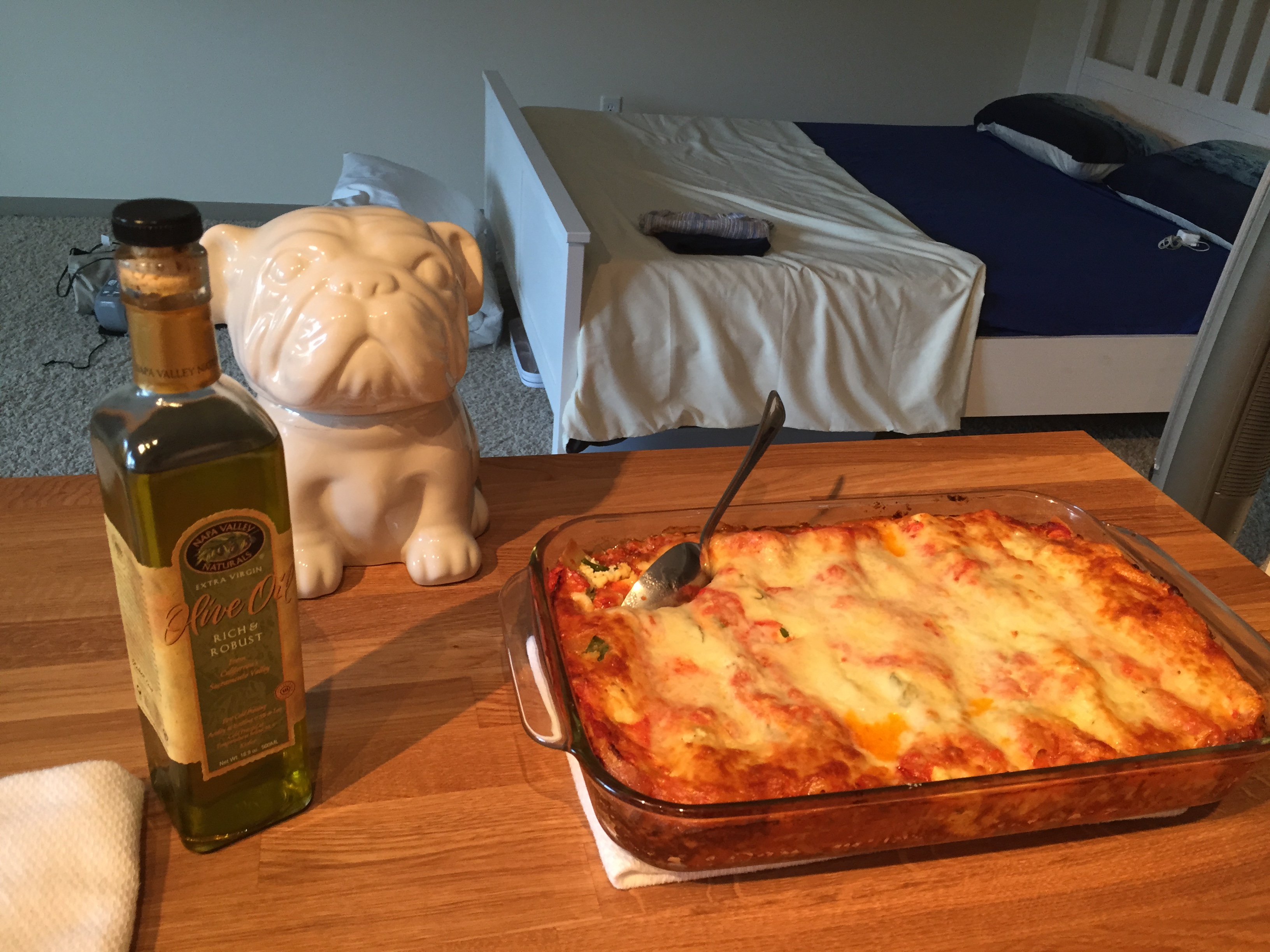
First off. I feel proud of two recipes I developed, so I’m posting pictures:

IMG_4849 IMG_4859

The first one is a filled cannoli cupcake. I make a chocolate cake recipe, baked the cupcakes, filled them with cannoli filling (including chocolate chips) and then filled mini cannoli and put them on top. GOURMET.

This past weekend, my mom and I drove to Sacramento to visit my sister who is in her general medicine rotation. We spontaneously drove to San Francisco and ate everything in site. On Sunday, we drove home, and I made a huge lasagna (pictured) and meatloaf so she could eat for the next month.

Thank you for humoring me. This week was also important because I officially accepted a position at Northeastern University, working in the Center for Spirituality, Dialogue, and Service. I am beyond excited (and nervous) to be a full-time college chaplain and interfaith advocate.

So I am spending my last days in LA for a while, and trying to hang out with as many of my friends as possible. I was reflecting on how my relationships formed with my closest friends, and whether our friendships had anything to do with faith. Faith is, of course, something I think about much of every day. My friends from the USC Interfaith Council of course relate to my faith directly- we met by talking about religion, spirituality, and matters of meaning. I have been wondering how my friendships from outside this community, namely, my friends from the Latino Business Student Association, have or have not formed around religious and spiritual values. At first glance, it seems religion has nothing to do with our relationships. But digging deeper, I think there is something to be said for family traditions.

In June, I traveled to Spain with two of my best friends Darlene and Veronica, despite my track record for bad luck while traveling (especially at airports). We arrived at 7 am in Madrid on a Sunday morning, and even though we felt pretty jetlagged, we set off on a self-guided walking tour of the city. On our way to the Royal Palace, we stopped inside the Cathedral de la Almudena, Madrid’s principal Catholic church. The cathedrals in Spain were all awe-inspiring, perhaps most especially La Sagrada Familia in Barcelona, but in that first moment, I realized that my two friends standing next to me had something deep in common with me- we had all grown up in Catholic families, and this space meant more to us than a tourist attraction.

I met Veronica my first year of college when we took an international business course together at USC. We traveled to Beijing over spring break, visiting companies and some cultural sites. We stayed friends when we both joined the Latino Business Student Association, where I met Darlene. Since graduating from USC, the three of us have traveled together to watch USC games and on vacation.

Even though we all grew up in Catholic families, we practice differently. Though I consider myself a practicing Buddhist, I never “left” the Catholic church- you’ll find me in the balcony at midnight mass on Christmas Eve. Darlene reads at her church. Veronica has her own traditions. When we get together, the three of us rarely discuss theology. We do discuss our families and our communities quite a bit. We make fun of rituals we all know. This is what forms an underlying bond in our friendship- we understand ritual and how a faith community functions. Standing in the cathedral together, admiring the sacredness of the space, we understand that faith drives beauty, and we are grateful to receive it at that moment.

As I transition to living in Boston, I will remember this bond we have, and hope to find deep meaning with new friends. Perhaps it will not be related to falling asleep in church- but it may very well be embedded in a shared reverence for the sacred.

Zion’s New Hands

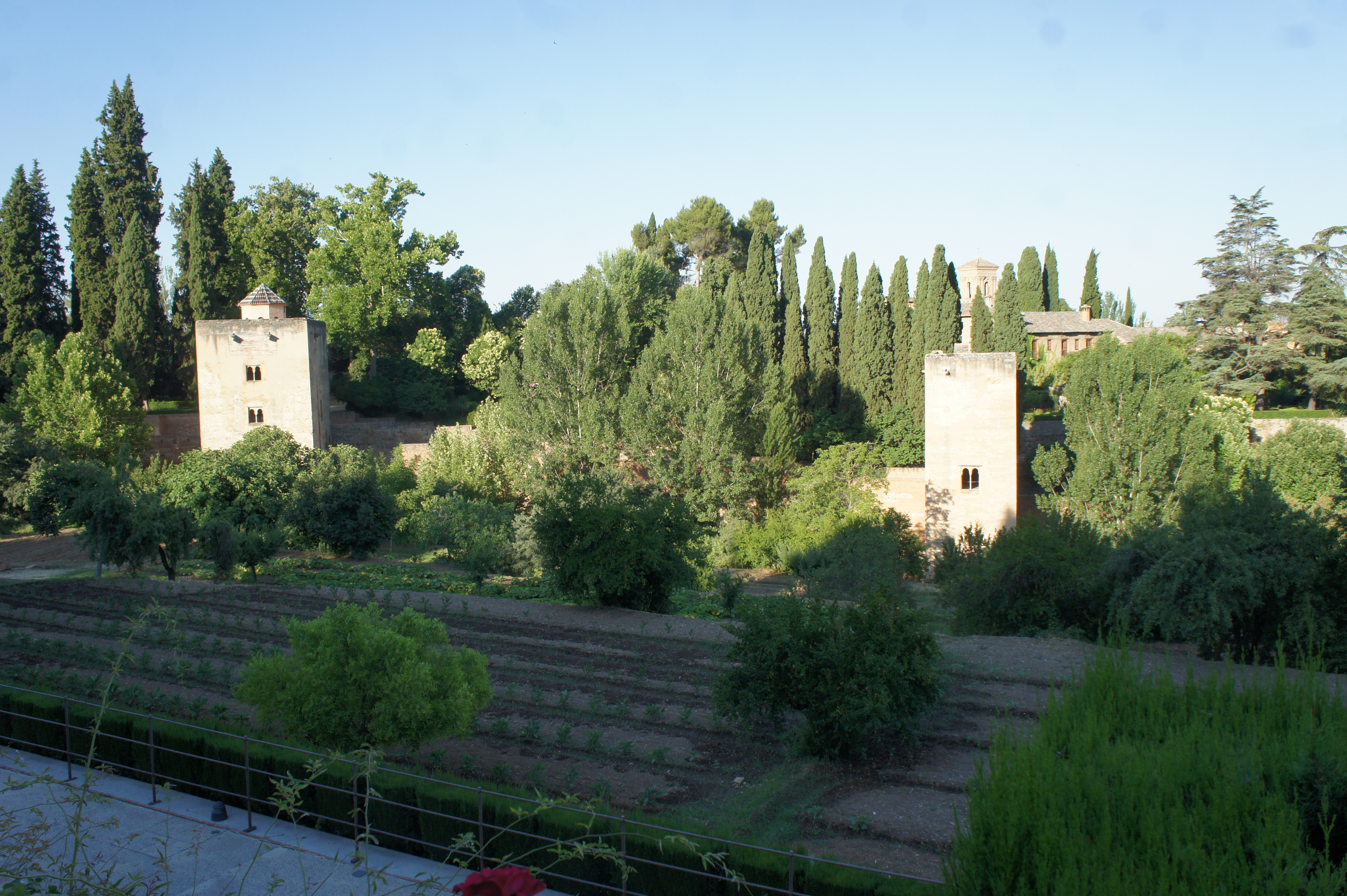
SONY DSCA photo from the Alhambra in Granada, Spain

I heard an amazing story on the news- eight-year-old Zion Harvey from Baltimore, Maryland was the first person to receive a double hand transplant. He actually had a kidney transplant at age four. He suffered a sepsis infection at age two, and underwent two years of dialysis. From the news stories, he seems to be pretty happy, despite some pretty serious suffering.

This story is wonderful in an obvious and more subtle way. We can celebrate the success of the doctors, the scientists, and everyone who made this possible, and we should. How much collaboration did this take? And research?

To me, what is deeply inspiring next to this modern miracle is the fact that there’s still plenty of suffering to undergo. Zion has to take medicine the rest of his life to ward off cancer and infection, and the doctors aren’t sure how likely it is he the medication will work. The transplant doesn’t alleviate Zion’s illness. It allows him and his family to orient around the illness in a different way, a happier, more positive way.

This is a good lesson for us, about suffering. It’s always around us, and in us. We can’t live a perfect life because we live in an imperfect world- yet we can shape our lives and our minds to live positively in the world, acknowledging the suffering we encounter. If we lose a family member or a friend, for instance, we need time to mourn and be mindful of our suffering, and we can also use the positive memories of this person to carry us forward, not to alleviate, but to live with the patches of darkness that mark us all, that make us human beings.

Little moments of happiness today: Running in the sun, celebrating my mom’s birthday tonight (and all weekend with my sister), catching up with a friend who lives far away