
We Never Should Have Met

Facebook has been reminding me of memories recently (this must be a new feature- unless I’m only now realizing it. Or old enough to get memories?) and I have been feeling nostalgic. How much has changed in five years- and yet, how much really hasn’t.

This morning, Facebook informed me that five years ago today, the USC Interfaith Council hosted the first ever Student Multifaith Leadership Conference (SMLC) on campus. I remember planning that conference with the other IFC members. We spent many nights crammed in one of our apartments, working tirelessly to get spread the word and get our logistics in place. It was my last semester at USC, and I recall a distinct feeling of being busy beyond imagination- writing two theses, taking twenty units, still fulfilling my role as IFC president, and finding time to make the most of LA with my friends- and yet experiencing pure joy despite the stress. The IFC really bonded as a team.
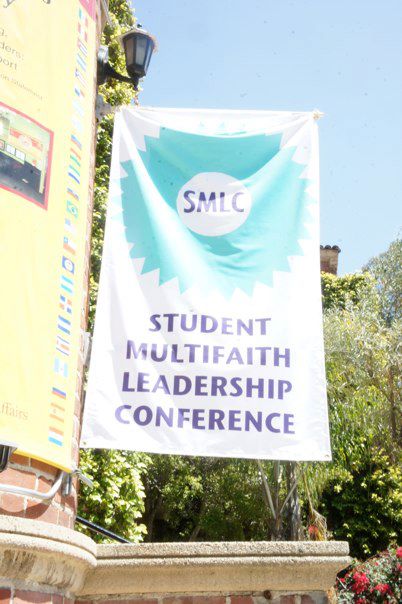
580220_3031658753644_1409522558_n

Reflecting on myself five years ago, I can’t help but feel proud of the students I served at Northeastern, and the amazing interfaith leaders I have met around the country since the SMLC. The world is in a different place, sort of- on the whole, these students are much more aware of the role interfaith communities must play in dismantling systems of oppression and including various identities at the table. I see a great success and opportunity in partnership- beyond dialoguing and learning, the young people are showing up for each other to seek racial justice, gender equity, rights for immigrants and the undocumented.

My Senior Ministry Project at UChicago focused on interfaith dialogue as a model for building identity awareness. I think it’s no secret that when we seek to hear convictions that conflict or sometimes even threaten our own, we learn more about ourselves. We are forced to contemplate our own beliefs. One afternoon on the fourth floor of Swift Hall (the home of the Divinity School), I presented my thesis to the Dean of the Divinity School. He asked me to dig deeper on a couple points, and finally, he said, “Tell me honestly- how many students do you really think would participate in this kind of thing? It seems like such a specialized program.” “All of them should,” I responded. He laughed. “You really believe that?”

The idealist in me says yes, I do believe that. I think everyone should participate in interfaith dialogue- even the vehement atheists. Education is about confronting ideas that bring us discomfort. Interfaith dialogue at it’s height is deeply uncomfortable. I have learned over several years of doing this work that humans are pretty particular when it comes to our worldviews. And yet, voicing our particularities is exactly what makes the work together so meaningful.
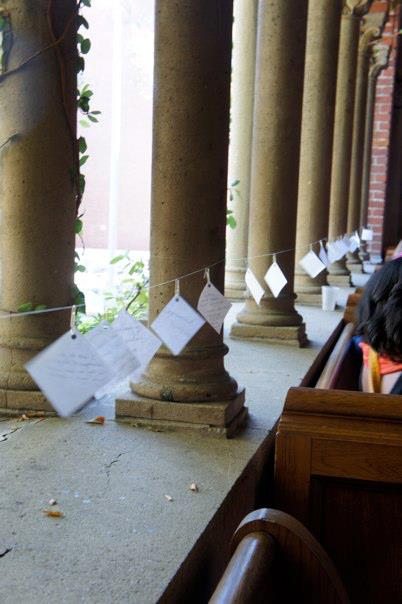
521979_3031662113728_838276500_n

I remember the day of the SMLC donning my purple and turquoise shirt proudly. There was a typo on it, but that made it our own. At the closing panel, I sat next to my friend Antonia, a pagan writer and anthropologist, feeling a little sad that the experience was over. We had all put such heart into the work. And we never should have met, that group of people. We studied different fields, traveled to different places, called several nations home. The intentionality of the group is what gave me so much life, so much joy. As I continue to reflect on my journey at Northeastern, I believe the days I felt the most joy were the days I saw that intentionality in my students.
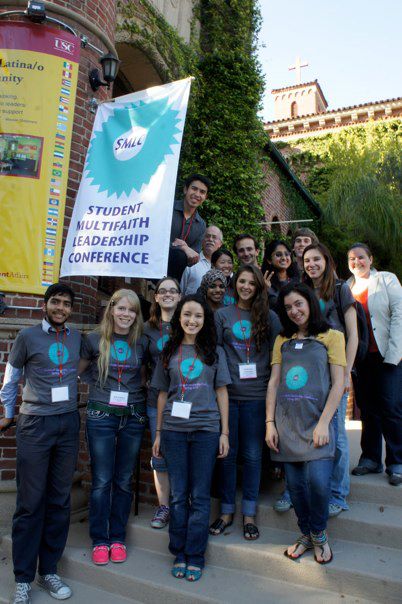
529956_3031667153854_1864528299_n.jpg

When there is no reason for us to meet, we are faced with our own truths. We can’t fall back on assumptions that we are friends because we find the same things interesting. Discomfort brings learning. It also helps us build deeper relationships because it helps us dismantle the systemic urge to stay safe in our bubbles. If every person we encounter is meant to teach us, we learn most from those who are most distinct from us. We never should have met. And yet, here we are, finding joy in the world together.

Full Circle

I don’t have to tell you that the world is funny, that life is not linear, that time is sometimes not a helpful tool for us- and sometimes it is.

joey-kyber-115166.jpg
PC: Joey Kyber

Just last week I was writing a short story about stepping outside my comfort zone. I wanted to talk about joining the Interfaith Council at USC after meeting Varun, the Dean of Religious Life. The story of finding Varun is a silly one, it involves pulling a newspaper out of a trash and seeing his name in the headline. “What’s a Dean of Religious Life?” was the first question that popped in my head. The article in the Daily Trojan (our university’s daily paper) described the many experiences Varun lived that led him to this role. Living in Nepal as a Buddhist Monk, finishing both a Master of Theological Studies degree from Harvard University and a law degree from UCLA, hosting a radio show, meeting His Holiness the Dalai Lama, even being an avid sports fan- all of these influenced the person he is today. Reading about them, I thought, “I want to live like this person. I should probably meet him.”

Nine years (!) later, I’m sitting at my desk at Northeastern University in Boston, where I have served in a chaplain role for almost two years. First I see the text messages from my mom and dad: “Did you see the LA Times article about Varun? I think he mentioned you.” Friends are sharing on Facebook. Varun himself emails me a link to a stunning story about his trajectory at USC, as a non-ordained Hindu attorney. It sounds just like the article I read as a lost sophomore at USC, at a time when I knew I loved studying religion, but had no idea what to do about it. This was the article that pushed me to email him in that chilly office on the second floor of the business school, that for the first time showed me I could live a life full of passion like Varun, combining so many different interests. And it’s my last week here, which feels as though a circle has been completed.

I think it’s really important to experience nostalgia sometimes, as a reminder to feel gratitude for the people who have been a constant support in our lives. I was going to post a bunch of vignettes this morning from my time at Northeastern, because there are so many wonderful and hilarious moments from these two years. I only got to tell a handful at my lovely going away party. This morning I took a Lyft to work because I baked too many treats to take on the T, and as we inched along on the 93 toward Roxbury, I looked out at the Boston skyline centered on the Prudential Center, its windows shimmering in the sunlight, and realized today is my last Monday here. Only two years ago, my mom and I attempted to navigate this ridiculous freeway and street system to move me into my tiny apartment in the North End. I remember sending Varun a picture, knowing I had made him proud. The community here has made me proud, especially after so much hardship. On the wall behind me hangs three simple letters that welcomed me on my first day: J-E-M, my name. I’m taking them with me to hang in my new office (if I get an office).

Link to the story: http://www.latimes.com/local/lanow/la-me-usc-chaplain-20170403-story.html

Birthday

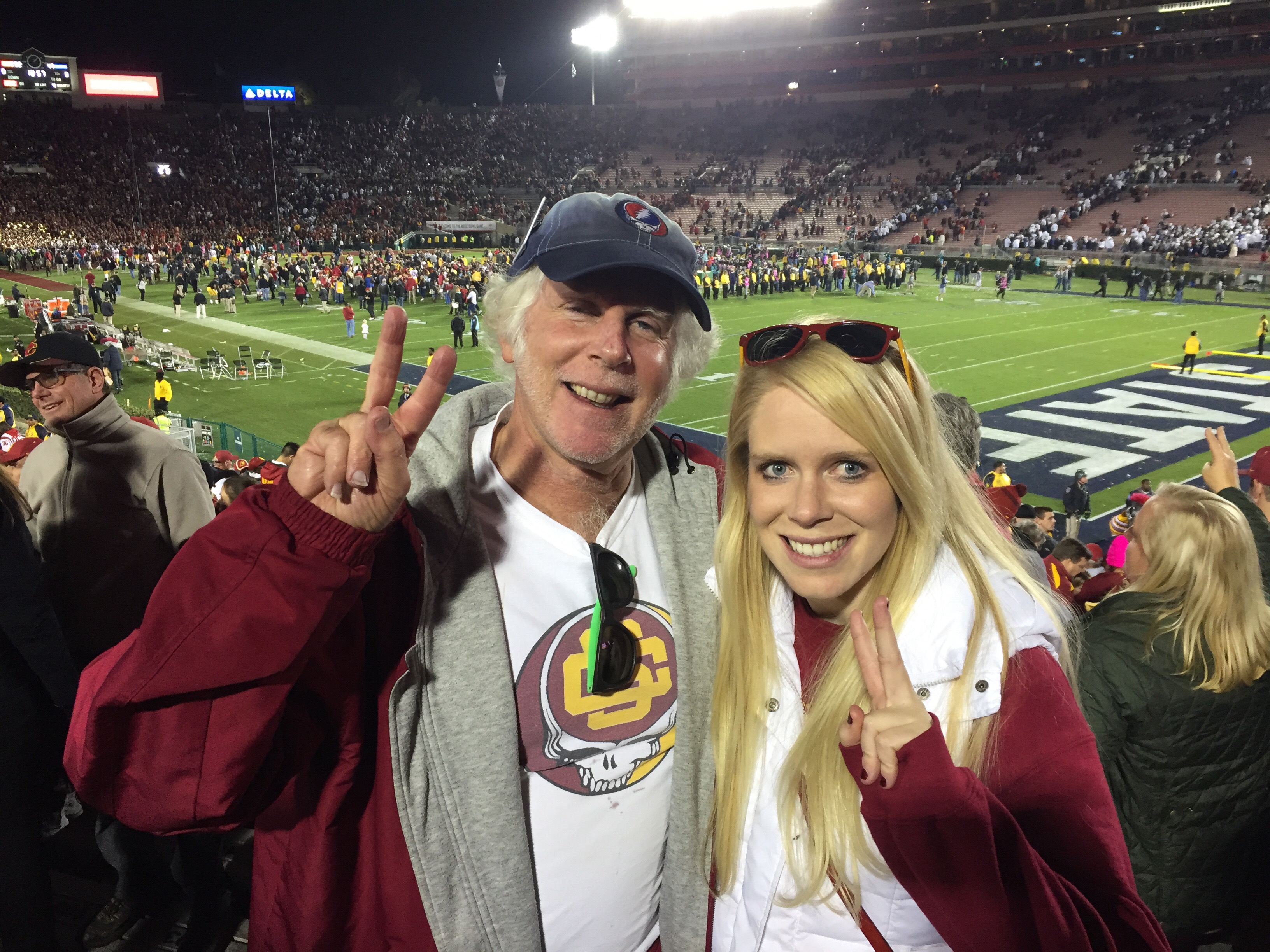
It’s thaaaaaat time of year, again. I definitely understand the shift from getting excited about one’s birthday to really dreading having to say you’re another year older. Anyway, change is inevitable, so here we are. I do feel like my birthday gift came a little early this year, that is on January 2nd, the Trojans battled until the end and came out on top. I hugged my dad so hard and then definitely shed some tears (mostly releasing the pent up stress I carried for 3.98 quarters of the same). After starting out 1-3, I’m so impressed with the coaching, the teamwork, and the unwillingness to give up. Even if it’s only football.


Before the game started, I met my friends Darlene (affectionately Darlo) and Veronica (affectionately Vero) and stayed with Darlo’s family for a while as we counted down until the gates opened to the Rose Bowl (our natural habitat). As my dad and I walked the almost three miles to find them, I noticed some Penn Staters tailgating with a Confederate flag on their pickup truck. Admittedly, my face scrunched up in disapproval before I fully registered what was before my eyes. And I started thinking about how strange and unique this humongous group of people was that came together, at least physically, to watch a sporting event.

My dad likes to be overly friendly to visiting fans. Having traveled to many games, we have witnessed our fair share of mean, rude, drunk and nasty people before and after games, win or lose. No one likes getting trash talked, at least, I certainly hate it. My dad and I walked most of the way from the train station to the stadium with a family from the Jersey Shore, decked out in their blue and white jerseys. After we parted ways eventually and passed that pickup truck, I thought about what the two schools represented in this space- their locations, their atmospheres, their populations. USC lies in the heart of a densely populated uber-metropolis. Penn State is more than an hour away from a midsize city. USC is a medium-sized private institution that brags about their international population, and Penn State is a massive public school, about 3/4 of the students are white. Both schools’ NCAA football programs are considered in the top 5 of all time, and for the most part, both schools respect each other as historic rivals. Statistics aside, frankly, as I looked around I noticed how ethnically diverse the USC fanbase seemed compared to Penn States’. This isn’t a judgement, simply an observation.

I spent my week off reading, because that’s how I veg. Since the election, I have committed to exploring genres and authors who have written notable works in the past few years on identity-based politics. It feels like a tiny step in the right direction when I feel “frozen” in terms of social action. Reading by no means represents direct action to dismantle or tear down, but my thought process was that by sharing my own mistakes and reading about those who share theirs, I could take some small steps to avoid committing microaggressions, or be more thoughtful in my language. On the plane to LA two days before Christmas, I finished Arlie Russell Hochschild’s Strangers in Their Own Land, a sociologist’s reflections and learnings about spending time among working class whites in rural Louisiana. The book has been a conversation piece in my circles lately. I wanted to read it because Hochschild states that her mission with the study was simply to try and understand a group of people who live in a very different world from her, and subsequently, consider politics quite distinctly. I think that’s a solid mission- it echoes goals of some interfaith communities, not to change minds, but to educate and understand, to find some common ground.

Hochschild interjects a few times throughout the book that she vehemently disagrees with her newfound friends on many issues- taxes, welfare, and the “right to choose”, among others. I found myself wondering, “how could this person have spent five years with people whose views make her terribly uncomfortable?” And yet, I believe that’s exactly where I need to push myself. Perhaps it wasn’t appropriate then, and would have led to unnecessary trash talk- but what would it have looked like to start a conversation with the pickup truck driving, Confederate flag touting Nittany Lion?

I’m going to keep reading, but recognize that only through some difficult conversations will I actually begin to educate myself. I think my toolkit as an interfaith dialoguer and someone who strives to sustain a meditation practice is helpful, yet not something to hide behind. Another year older, and hopefully, just a little bit wiser. Fight On!