Perfect is poison

I have been striving for perfection and decided it needs to stop.

Aiming to do a good/great/really awesome job at something is not a bad thing to do, but there comes a point when one claps the dust off their hands, tilts their head to admire the arduous work just finished, and moves on. Perfectionism prevents this- we start to dwell and not live in the present. There’s that one little smudge that if corrected, will make us feel satisfied. But there is always another smudge. 
 I learned this week that perfectionism does something else dangerous too: it allows us in our own mind to separate ourselves from other beings and things in the world. I might say “At least I’ve done more x than so and so, or got a better grade than…” But at the core of my humanness, I am not better than anyone, anything. At the beginning of time, I was one with the exact only mass that existed and there was no such thing as difference.

Cavities are no fun, we can probably all agree to this statement. On Thursday morning, I went to get my first one drilled and filled. I am almost 30 years old. When my dentist called to tell me what needed to be done, I hung up the phone and cried. “You’ve ruined it,” I heard myself say. “Your teeth are no longer perfect.” To make matters worse, I started naming all the people I knew who had cavities so I wouldn’t feel alone. 
PC: Kazuend

Of course my teeth were never perfect. For the first time, I had actual decay bad enough that this tooth transformed into a rotting mass. Change is constant, especially in our bodies. I spent the rest of the day moping because the right side of my face felt numb and because I allowed the feelings of worthlessness and failure to permeate- I listened to them, instead of simply hearing them and letting them go. Then on Friday, Google posted something really cool on their front page.

I clicked the link and read about the NAACP Silent Parade on 5th Avenue 100 years ago to demand federal action over the killing of innocent black men. 100 years ago was 1917- the same year Congress signed the immigration bill that barred immigration from the Asia-Pacific region, and marked the beginning of the United States’ retreat into isolationism. Doesn’t this sound almost exactly like our country at this very moment? In 2017? Have all our efforts led us to the exact same place in time- one in which folx feel unheard, unseen and unloved? 

As I read about the 10,000 protestors who marched through the city, wearing uniform white, I found no reassurance or comfort in the fact that we are fighting the same fight with different props and technologies. This is why seeking separation is harmful. I once heard a friend who, when discussing the systems of oppression in our society, argued that “we MUST have made some progress. It’s 50 years later!” 

Seeking to separate myself, even in merit or achievement, upholds this false notion that progress must come with the passage of time. That is not a requirement. I think St necessary to lessen the separation I feel from the people around me, and even the people who marched 100 years ago because we cannot write off their experience as something else. I am not perfect, the smudge will remain. 
 

Staying in the Room

This blog is non-fiction, in as much as we can argue that real life is not fiction but “true.” I prefer to write non-fiction. I prefer to read it too.

Sometimes it’s good for us to step out of our comfort zones (it’s usually always good and often necessary to learn and grow) so in preparation for the writing retreat I will attend next week in Taos, New Mexico, I read a book about writing fiction and decided to try it. The book gave me just enough food for thought mixed with inclinations to panic and run that I decided to give it a try. It seems a little meta to be writing about writing about something that didn’t actually happen.

don-ross-iii-195085.jpg
Photo by Don Ross III on Unsplash

First, I sat down and reflected about a recent experience I had with selling a textbook on Amazon and the post office. Let’s just say my seller account is now suspended even though I sent the book on time. I followed the process laid out in the book and heeded the most important advice: stay in the room. It was helpful to read that because admittedly, when I try to write and don’t know what to say next, the coffee maker calls to me. Then the vacuum. Then that new book on my reading list. Then my bed…a little nap…I tell myself it will come later, and close my laptop. Sometimes this does feel necessary, especially writing pieces or passages that involve shame, guilt, or something humiliating. Yet I wondered what it might be like to stay in the room when emotion gets the best of me. In some Buddhist practices, we do this through meditation. Sitting alone with yourself brings terror to the mind if it is full of anxious thoughts, but we remain in stillness even with tears rolling down our cheeks. There is no common outcome for this practice, but by facing the pain we take a step toward allowing ourselves to heal.

I felt embarrassed and angry about this Amazon situation. I sent the book on time, why should I be blamed that it never arrived? And then I lost money! My frustration caused wild thoughts to coarse through me. The person probably did receive the book and was now sitting on her couch counting my money like Scrooge. Or, took friends out to lunch as they all laughed at the scam successfully executed.  Worse, now it looked like I had tried to cheat someone, and it felt like I should go sit in the corner, facing the wall, and endure my timeout. I knew this was the situation I had to write in my story.

My character left the post office feeling just as I did- angry and embarrassed. The post office couldn’t find any record of the package. As I wrote, taking inventory of the scene around my character, her quirks and spontaneous inclinations, the characters she meets along the way, I realized this exercise is nothing more than active listening. I stayed in the room, listened to my character, and reflected her feelings back through the next actions. I finished the story after a few hours. There were definitely moments when the coffee pot called out, or it took everything not to check a Facebook notification. In the end, I’m glad I attempted fiction, because it helped me realize what’s true for me in this moment.

Happy Birthday!

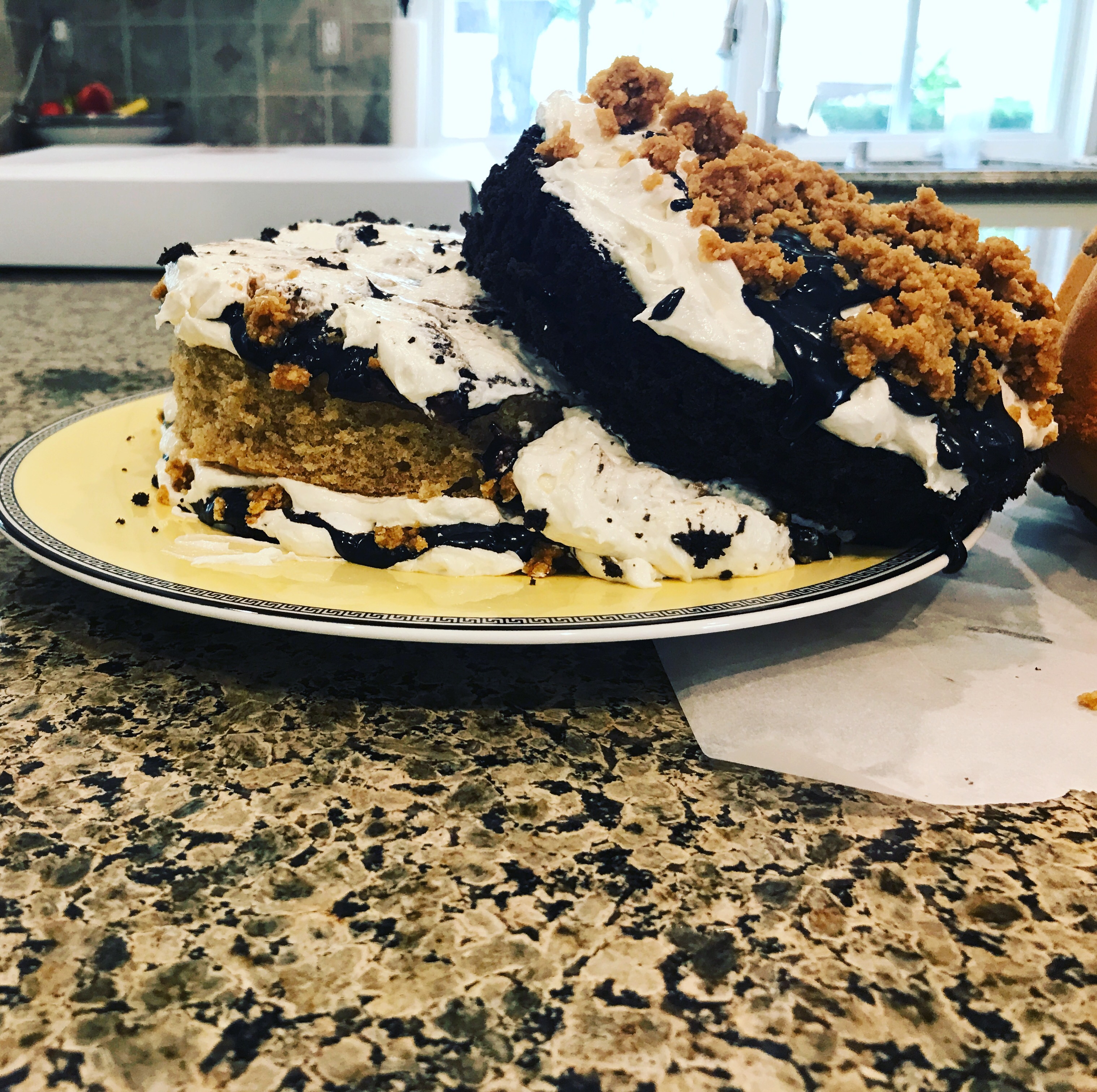
The Practivist is two this week, so I had grand plans to make a cake to celebrate. I also got donuts and baked cookies, because go big or go home. Well, this is how the cake turned out:

S’mores cake with graham cracker and chocolate cake layers, fudge sauce, marshmallow icing and graham cracker crumble

My mom saw it first. I got a text saying “emergency” while reading in my room, and rushed downstairs to find her laughing. “What!” I looked at her expecting something terrible, but she pointed to the cake. The marshmallow frosting was too slippery. “Geez, you scared me!” We both laughed very hard. That’s exactly what this blog is about, I realized. Finding joy in the imperfect, the disastrous. The cake tasted great, by the way. Appearances aren’t everything.

A year ago, I attended the Beyond Walls Spiritual Writing retreat in Gambier, Ohio. 100 religious leaders (of sorts) stayed in the Kenyon College dorms and wrote op-eds, essays, religious commentaries, and stories. It was at that retreat that I committed to posting a blog every week, and I’m happy to share that I made it! 52 posts later, my writing feels more natural. Every week offered an opportunity to reflect on this idea of staying grounded in the daily struggle, whether it was personal or worldly (often both). Since last July, I joined a memoir writing group, started working for an amazing project (the Revolutionary Love Project, founded by Sikh-American activist and filmmaker Valarie Kaur- also a personal hero), and ran a marathon. I quit my job. I got accepted to my dream PhD program in religious studies at Stanford and moved back to California. I finished cataloguing my blessed collection of books, many of which came from my grandmother’s house when she passed away. My sister graduated from medical school and started her residency at home. For the first time in over six years, my family is all in one place.

Though my writing has certainly rambled down different paths, I believe this blog remains true to my original idea of exploring how we, as human beings, demand resilience in ourselves. Suffering grounds me in my religious beliefs because all humans experience it. Yet, we are capable of countering it, and even ending it in certain circumstances. This year I often found that joy presented itself in a form of self-allowance. When we realize we are deserving of the life we are given, the gifts of said life present themselves. I’ll never forget when Valarie spoke to our group of fellows on the phone after the election and she told us we deserved joy especially in a time such as this. “We will never let them take it away,” she said.

My students often gifted me opportunities to learn, which I loved and cherished. I had no idea that my job involved so much learning, often in times I was supposed to be the teacher or coach. I feel much better about admitting my mistakes, even when they have caused someone I love to hurt. Guilt still plagues me, but I am able to name it and even let it go more easily sometimes.

Not every blog post was easy to write, and definitely not all of them turned out the way I envisioned. Some of them make me cringe reading them back, but I’ve decided to leave them as they are to trace the journey and accept the imperfection of where I was when I completed them. Authors speak often about the trajectory of their work and how much their earlier writing influences their current projects because the necessity of reflection and knowing oneself through process makes us better writers.

It’s difficult to imagine a year from now because as life has taught me, plans often meander or even take a sharp turn away from an original intention. That’s why this blog has been so important to me, because the friends and others who have read even one posting and commented or messaged me saying, “I identity with this” have made it worth it to stay up late or carve out time (when I really didn’t have it) to keep going. I plan to keep writing and learning and making mistakes. Here’s to another year and maybe even another cake that resembles the leaning tower of frosting.

Do You Believe in Magic?

You’re a wizard Harry!

tim-trad-248650.jpg
Photo by Tim Trad on Unsplash

One of my friends asked me this question a few days ago. Like the academics we are, I needed to clarify. What kind of magic are we talking about? The kind at Hogwarts? The kind we channel through elements and spells and crystals? In a very general sense? After some back and forth, we decided the kind of magic about which we were inquiring had to do with possibility and perhaps even the belief in something impossible. I’ve always felt like life itself, the concept of humans breathing and interacting for even a moment is kind of magic, if you think about the endless complexities of the body and the Earth. Isn’t it a miracle that we keep existing?

My sister started her surgical residency at Huntington Memorial Hospital two weeks ago. She started on the night shift, meaning she goes to work at 7 pm and comes home at 7 am, simply exhausted from a night of traumas and consults. I can’t say I envy her, but we are in awe of her perseverance and courage. Every morning, my family listens to the cases she handled the night before. Several of the nights involved patients dying. The stories are certainly heartbreaking, and with the utmost respect and reverence for the deceased, I find it unbelievable how a person makes a particular decision that leads to the very instant in which their life ends. The 31-year old man who jumped into a shallow pool head first, broke his spine in two places, and was deemed “incompatible with life.” The woman who began walking down the street in the middle of the night and received a gunshot wound to the upper abdomen- the bullet ricocheted off her back and came back through the same vein in another spot. The motorcyclist who tried to pass between two cars going 90 miles an hour on the freeway, only to make contact with a driver side mirror, fly off the bike, and shatter each spine bone, neck and skull. Let me be clear- I refuse to judge any of these decisions as better or worse than the thousands we all make every day. Blame and judgement prohibits further reflection on the topic and impedes our human connection to compassion.

Death does not feel magical to me, it feels scary, uncertain, and deeply sad. If there is a place where magic exists, I have to imagine it is in the moments in which we make a decision and escape non-existence for one more day. For one more moment, even. I remember a time when an outdoor art fair caught my attention from across the street, and not letting go of the distraction, I took two steps into the crosswalk without waiting for the light. I heard a screech and un-instinctively stepped back just as a massive Ford Explorer blew by, just barely missing my body. This was one of those “if I hadn’t taken that teeny step back, my life would have ended” moments. Of course I feel deep gratitude that my life has continued. Magic is the explanation for the “teeny step”, for all the teeny steps we are given each day. I guess I do believe in magic.

In My Grandmother’s Footsteps

The first road trip I ever took was not by car, but by train. My mom, grandma Mary, and cousin Meghan flew all the way to New Hampshire to help me pack my room after my freshman year at St. Paul’s, and we began our journey. We stopped in Philadelphia, Chicago, Santa Fe, and finally arrived back in Los Angeles, weary but fulfilled. Grandma Mary and I both agreed that Santa Fe was our favorite. Not only was the food unbelievable, but the colors everywhere astounded us. Every building, facade, and even road seemed like a “pow!” to the eyes. We loved the smells and the art and the fantastic desert all around us. To this day, Santa Fe and Tucson are two places I feel completely at home. The last time I was in Tucson, I wrote a letter to my grandma every night, even though she has been gone for a few years now. I told her about the cacti and the dry heat, and the house that we stayed in. The owner described it as “living on the edge of things.”

Teddy Roosevelt National Park

I’ve been on the road for a week now, and every day has felt stunningly long. From Boston to Cleveland to Chicago to Minneapolis, the terrain has changed from city night lights to plains and now forest over the last three days in North Dakota and Wyoming. In Medora, North Dakota, I hiked the vast trails across Teddy Roosevelt National Forest and spent the night in an old west town complete with a saloon. In the evening, the air grew cooler and even fresher. Today I passed through South Dakota and almost immediately ascended a mountain at the Wyoming border, which would eventually lead to the Devil’s Tower National Monument. Devil’s Tower is the first ever national monument, and an extremely sacred place to several American Indian tribes. I watched the sun set over the gigantic volcano remnant as crickets chirped and I read about maps.

Devil’s Tower

Since arriving at the National Forest, I have been feeling a subtle longing for the house in which my grandma Mary lived in Lake Isabella, California. We called it “the lake,” and a few times a year, my family and my mom’s brothers would fill the house for a week or so. The lake house was “on the edge of things.” Everyone ended up sharing beds and only two bathrooms, and during the day we would hike out to the lake and set up chairs, coolers, and life vests. We liked to float in them after we felt too tired from jumping off rocks or swinging from trees into the water. Several moments over the course of the last few days have given me pause, like the taste of the air after a quick and intense rain shower or the sound of running shoes crunching on gravel on a dirt path. “Just like the lake,” I repeat.

If this road trip has taught me anything so far, it is that I find sacred in physical place and space. My senses bring back memories of grandma Mary and I speak to her. “You’d love this view,” I whisper. “This night sky reminds me of you and when we used to sit under it roasting marshmallows.” It’s amazing how much our senses remember and how connected they are to our emotions. I’m glad my grandmother is still with me, even if only in my footsteps.

Saying Thanks to My Parents

It’s been a jetset weekend. On Thursday, I flew to Philly to watch my sister graduate from Drexel School of Medicine (THAT WENT FAST). On Saturday My parents and I jetted all the way back to LA to attend the Honoree Mass at my elementary school, Mayfield Junior School in Pasadena. I was very humbled to receive an award along with two of my favorite teachers- both women that played a significant role in making me stop messing around, and start taking school seriously. Honestly, they don’t look a year older than I remember. 
The mass began at 4 pm on Sunday in the gymnasium- the same gym where we won the 7th grade basketball finals, played tag and graduated. What an experience coming back after 15 years. As the mass closed, the headmaster called me up and offered me a beautiful bouquet of flowers. I knew what I wanted to say. Below is a version of my very brief remarks, and is especially dedicated to my parents. They’ve been the real jet setters and deserve a vacation. 

A photo my science teacher handed me (of me)

Thank you, what an incredible honor to return to MJS after quite a while!. It seems like yesterday I was in Mrs. D’Argenio’s second grade class making my first communion, or Mrs. Hermanson’s fourth grade class building my California mission project. As an avid baker, I built Mission Santa Cruz out of sugar cubes, but didn’t have the foresight to not leave it outside overnight. The next morning, it was clear that raccoons had promptly feasted upon the structure. I remember finishing the eighth grade with Mrs Holtsneider, studying what has come to be the work I love and will devote my life to- bringing people of all and no faiths together to know each other, learn from one another, and most importantly, to find common values and ways to work together. 
I need to address my parents because Mayfield is a school rooted in faith and family as the foundation to education, and they have been my and my sister Mallory’s foundation from the very beginning. Mallory just graduated from medical school, so if anyone needs surgery, she starts her surgical residency at Huntington hospital in less than a month. My parents, Liz and Dennis, taught me two things in the last 29 years, one of which I believe created a monster. You see even when Mallory and I experienced failure or roadblocks which we all do, they wouldn’t stand for it- they never told us “you’re not smart enough, you’re tall enough, you’re not fast enough…you can’t do that.” They asked what we needed, and how they could help. From this, we learned that in our work we should always be asking what we can provide and how we can help. 
My parents believed education would better us and help us achieve our goals, but that if we didn’t acknowledge our deep privilege in receiving an education and attempt to give others the same opportunities, that life would not be full of meaning and thus not worth living. When Mallory wanted to be an actress, my mom drove her to auditions. When I wanted to be a professional basketball player, my dad came to every game with me- all five foot four of me- to watch me play. When we both wanted to live in our education, to attend boarding schools, they found a way. They have read admissions essays and scholarship applications and listened to practice interviews, and helped us pick what to wear- all because they believed in us even if we felt unsure. 
They chose Mayfield because as we know, education is perhaps the greatest gift and right we have as human beings, and they wanted it to intersect with the other values in our family. I’m so honored for this award, and it is dedicated both to the steadfast teachers here at mayfield and everywhere, and to my parents for saying yes to any sentence that began with, “what if I tried…”
Thank you mom and dad. I love you.

We Never Should Have Met

Facebook has been reminding me of memories recently (this must be a new feature- unless I’m only now realizing it. Or old enough to get memories?) and I have been feeling nostalgic. How much has changed in five years- and yet, how much really hasn’t.

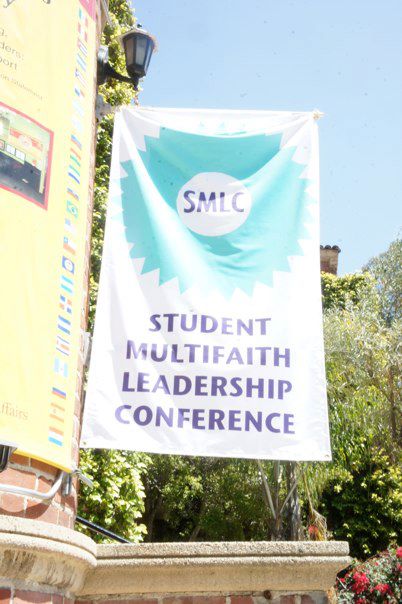
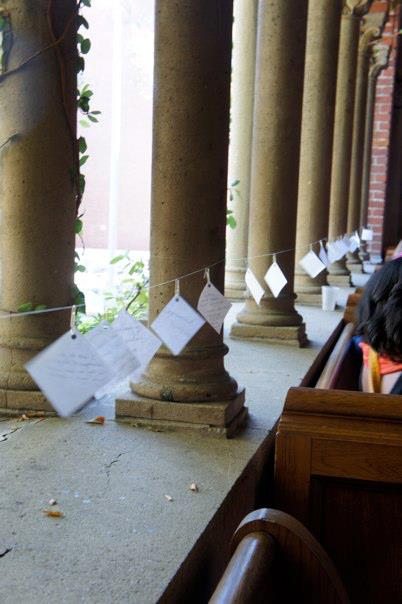
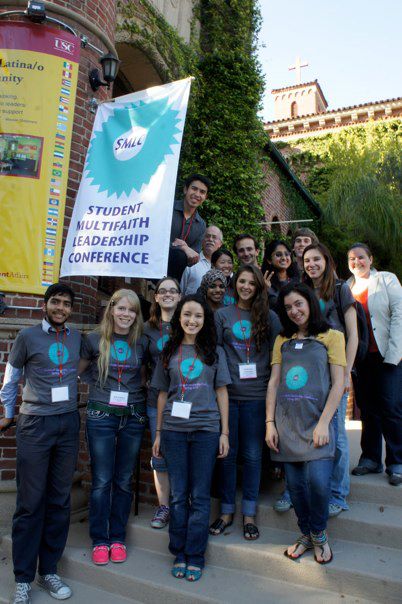
This morning, Facebook informed me that five years ago today, the USC Interfaith Council hosted the first ever Student Multifaith Leadership Conference (SMLC) on campus. I remember planning that conference with the other IFC members. We spent many nights crammed in one of our apartments, working tirelessly to get spread the word and get our logistics in place. It was my last semester at USC, and I recall a distinct feeling of being busy beyond imagination- writing two theses, taking twenty units, still fulfilling my role as IFC president, and finding time to make the most of LA with my friends- and yet experiencing pure joy despite the stress. The IFC really bonded as a team.

580220_3031658753644_1409522558_n

Reflecting on myself five years ago, I can’t help but feel proud of the students I served at Northeastern, and the amazing interfaith leaders I have met around the country since the SMLC. The world is in a different place, sort of- on the whole, these students are much more aware of the role interfaith communities must play in dismantling systems of oppression and including various identities at the table. I see a great success and opportunity in partnership- beyond dialoguing and learning, the young people are showing up for each other to seek racial justice, gender equity, rights for immigrants and the undocumented.

My Senior Ministry Project at UChicago focused on interfaith dialogue as a model for building identity awareness. I think it’s no secret that when we seek to hear convictions that conflict or sometimes even threaten our own, we learn more about ourselves. We are forced to contemplate our own beliefs. One afternoon on the fourth floor of Swift Hall (the home of the Divinity School), I presented my thesis to the Dean of the Divinity School. He asked me to dig deeper on a couple points, and finally, he said, “Tell me honestly- how many students do you really think would participate in this kind of thing? It seems like such a specialized program.” “All of them should,” I responded. He laughed. “You really believe that?”

The idealist in me says yes, I do believe that. I think everyone should participate in interfaith dialogue- even the vehement atheists. Education is about confronting ideas that bring us discomfort. Interfaith dialogue at it’s height is deeply uncomfortable. I have learned over several years of doing this work that humans are pretty particular when it comes to our worldviews. And yet, voicing our particularities is exactly what makes the work together so meaningful.

521979_3031662113728_838276500_n

I remember the day of the SMLC donning my purple and turquoise shirt proudly. There was a typo on it, but that made it our own. At the closing panel, I sat next to my friend Antonia, a pagan writer and anthropologist, feeling a little sad that the experience was over. We had all put such heart into the work. And we never should have met, that group of people. We studied different fields, traveled to different places, called several nations home. The intentionality of the group is what gave me so much life, so much joy. As I continue to reflect on my journey at Northeastern, I believe the days I felt the most joy were the days I saw that intentionality in my students.

529956_3031667153854_1864528299_n.jpg

When there is no reason for us to meet, we are faced with our own truths. We can’t fall back on assumptions that we are friends because we find the same things interesting. Discomfort brings learning. It also helps us build deeper relationships because it helps us dismantle the systemic urge to stay safe in our bubbles. If every person we encounter is meant to teach us, we learn most from those who are most distinct from us. We never should have met. And yet, here we are, finding joy in the world together.

Full Circle

I don’t have to tell you that the world is funny, that life is not linear, that time is sometimes not a helpful tool for us- and sometimes it is.

joey-kyber-115166.jpg
PC: Joey Kyber

Just last week I was writing a short story about stepping outside my comfort zone. I wanted to talk about joining the Interfaith Council at USC after meeting Varun, the Dean of Religious Life. The story of finding Varun is a silly one, it involves pulling a newspaper out of a trash and seeing his name in the headline. “What’s a Dean of Religious Life?” was the first question that popped in my head. The article in the Daily Trojan (our university’s daily paper) described the many experiences Varun lived that led him to this role. Living in Nepal as a Buddhist Monk, finishing both a Master of Theological Studies degree from Harvard University and a law degree from UCLA, hosting a radio show, meeting His Holiness the Dalai Lama, even being an avid sports fan- all of these influenced the person he is today. Reading about them, I thought, “I want to live like this person. I should probably meet him.”

Nine years (!) later, I’m sitting at my desk at Northeastern University in Boston, where I have served in a chaplain role for almost two years. First I see the text messages from my mom and dad: “Did you see the LA Times article about Varun? I think he mentioned you.” Friends are sharing on Facebook. Varun himself emails me a link to a stunning story about his trajectory at USC, as a non-ordained Hindu attorney. It sounds just like the article I read as a lost sophomore at USC, at a time when I knew I loved studying religion, but had no idea what to do about it. This was the article that pushed me to email him in that chilly office on the second floor of the business school, that for the first time showed me I could live a life full of passion like Varun, combining so many different interests. And it’s my last week here, which feels as though a circle has been completed.

I think it’s really important to experience nostalgia sometimes, as a reminder to feel gratitude for the people who have been a constant support in our lives. I was going to post a bunch of vignettes this morning from my time at Northeastern, because there are so many wonderful and hilarious moments from these two years. I only got to tell a handful at my lovely going away party. This morning I took a Lyft to work because I baked too many treats to take on the T, and as we inched along on the 93 toward Roxbury, I looked out at the Boston skyline centered on the Prudential Center, its windows shimmering in the sunlight, and realized today is my last Monday here. Only two years ago, my mom and I attempted to navigate this ridiculous freeway and street system to move me into my tiny apartment in the North End. I remember sending Varun a picture, knowing I had made him proud. The community here has made me proud, especially after so much hardship. On the wall behind me hangs three simple letters that welcomed me on my first day: J-E-M, my name. I’m taking them with me to hang in my new office (if I get an office).

Link to the story: http://www.latimes.com/local/lanow/la-me-usc-chaplain-20170403-story.html

What Love Teaches Me About Rage: Spending the Day with Valarie Kaur

Snow crunched under my boots as I paced the sidewalk. Valarie was finally here! It had been 8 years since I last met her in person and up close. She gave me a great hug before we trekked back to the Curry Student Center to drop off her bag and begin her Master Class as the opening to the New England Interfaith Student Summit.

Valarie captivated everyone’s attention immediately. She also helped participants feel like they could be vulnerable in a group of 35 others-as we learned to tell our own stories for movement building, I witnessed several soul-baring moments. Moments of shame, of fear, of knowing acutely how different one felt from everyone around them because of their queer identity. We learned together how these moments blossomed into activists and teachers and interfaith leaders.

16708655_10103495157637871_6060008837786264158_n.jpg
PC: Valarie Kaur

I fell in love with the students I serve all over again. After a snow day that cancelled our planned Keynote Address with Valarie just the day before, they committed to each other to make the day a success. They treated every participant and staff person with kindness and jumped at opportunities to be helpful. A few students ate their lunch with Valarie, and offered some of the most poignant wisdom and relevant questions for leaders and activists at this time. “What is the boundary I am allowed to set when it comes to engaging with people who do not agree that my humanity is sacred?” “How do we actually take time for self-care, and what does it look like?” “Who are the MLK and Gandhi’s of OUR generation- the folx that understand the context in which we struggle?” I scribbled notes furiously.

After lunch Valarie planned to show snippets of her first film, Divided We Falland take questions. “What if instead, we show the Public Radio International video of Rana and me calling Frank Roque?” She asked me. This is a 30-minute video of Valarie and her Uncle Rana calling the man who murdered Rana’s brother Balbir Singh Sodhi four days after 9/11 in Phoenix, Arizona. This man’s act of violence is what broke Valarie’s heart and made her an activist and filmmaker- the first hate crime against Muslims or Sikhs after the towers fell. Balbir was killed because of the turban he wore on his head, and the beard he kept long as a sign of his faith. The murderer’s name is Frank Roque. He has been sentenced to life in prison.

“I want to know the audience’s reactions. I’ve never seen the video in full.”

I loaded up the video in the crowded workshop room. About 20 of us watched Valarie and Uncle Rana sitting in Rana’s kitchen, speaking to Frank. Valarie holds the cellphone so Rana can listen and respond. I hear Frank say he “couldn’t help” what happened, that he had experienced a mental breakdown. I watch Valarie’s frustration but miraculous ability to stay calm. Rana listens politely, and when he does speak, pours love out from his heart into the phone. He tells Frank that he, Rana, already forgave him, that he sends love to Frank’s wife and daughter, that if he had the power- he would release him from prison. I have watched this video three times, and each time my eyes cannot help but respond to this with tears, in awe of the grace Rana bestows on Frank.

About halfway through the video, Frank tells Rana that he never forgot Balbir’s name. But it isn’t until almost the end that Frank addresses Rana using his name instead of “his brother.” “Rana,” he says, “I am sorry.” Finally, I thought. A tiny transformation. Frank has finally started to humanize the person whose life he destroyed, who still lives in pain and suffering yet loves without chains.

One audience member spoke about feeling dissatisfied with the conversation. “Frank isn’t there,” he said. “He didn’t ask you (Valarie) or Rana any questions, and he didn’t seem to fully admit his harm.” We agreed. In my reflecting on NEISS as a whole, I believe it is necessary that we remain deeply dissatisfied AND recognize the tiny transformations. This is Practivism, the ability to believe our work, our suffering, our struggle is working even when we cannot see it.

Don’t tell us to calm down, for we are angry.

Don’t ignore our rage, for we are outraged.

Let us ask one another and ourselves WHERE the outrage comes from, and understand that the root is love.

As I walked with Valarie back to our office so she could prepare for the closing, with tears in her eyes she stopped to hug one of the participants who watched the video. “My grandfather was killed in a hate crime,” he told us all. “Please write me,” she said. “You are not alone.”


“When you let rage fester in isolation, this is when it becomes violence,” Valarie said as she closed her Keynote Address. “Love is a choice, an act of faith and courage.” I knew at that moment that the dissatisfaction we all felt with Frank’s response is rooted in faith- faith that Frank has more to change, more tiny transformations to experience, and much more love to choose to put out in the world. We all have this capacity. And we are not alone.


Aliveness

I, like almost everyone around me, am a mess.

I feel exhausted.

I feel exasperated.

I feel anxious. SO anxious.

Every morning, I wake up much before I hope to and feel awake. Not awake in a refreshed sense, but in a nervous, jittery, need to run off the energy awake. My stomach feels upset, my neck aches, even my breathing feels shallow. I end up reading or scrolling through Instagram in bed, which only entertains for so long. Sometimes after literal hours of tossing and turning, I get out of bed, rush through my morning ritual, and head to work on a crowded sweaty train.

I remember Thich Nhat Hanh’s wisdom: When you are in a rush, slow down. Seriously, we need to slow down.

In the past couple of weeks as this sleeplessness and anxiety has really started to affect me, I have noticed another feeling creeping up. It directly relates to anxiety: it’s called helplessness.

Helplessness, as if losing agency, power, the ability to control anything in a situation. That causes anxiety. I have been in several situations this year that felt completely out of my control. In these situations, I find myself wishing things, like, “I wish this person wasn’t here.” Or, “I wish I knew more than I do.” I find myself begging. Who, I’m not sure.

In my sleepless mornings I have sped through several books. My “to read” pile is diminishing. This past week I finished Brian McLaren’s We Make the Road by Walking: A Year-Long Quest for Spiritual Formation, Reorientation, and Activation. The book offers 52 chapters of “lessons” for spiritual formation, to be divided up into each week of the year. As an instant gratificationist, of course I couldn’t save the lessons, I wanted them now. So I read the book in 2 days, and learned some fascinating perspectives on biblical narrative and how McLaren defines spirituality, calling it “the quest for aliveness.” I began to think about how I cultivate aliveness- running, writing, reading, and resisting. These activities bring me joy, challenge me, and allow me to see growth in myself. Aliveness. Perhaps the opposite of anxiety.

j4pae7e2_ws-jared-erondu
PC: Jared Erondu

As I continued through the lessons, toward the end of the book I read this:

My anxiety is more dangerous to me than whatever I am anxious about. My own habit of condemning is more dangerous to me than what I condemn in others. My misery is unnecessary because I am truly, truly loved. (McLaren 143)

And suddenly it was clear: I have been my own worst enemy. I have been completely in my own head, and frightened myself to the point of insomnia. I have blamed others. I have felt miserable. I am miserable, and there is absolutely no reason for me to do nothing about this misery.

I am a mess. But I don’t need to sit in filth forever. In fact, I could do one thing today that would make me feel empowered. And celebrate that empowerment. I could be more congratulatory about finishing a run- not just feeling like I had to. I could write for the pure joy of writing, and not worry about it being terrible. And I could start thinking along the lines of what I can control, and focus on those things.

It sounds SO simple and easy, but it’s so easy to feel frozen in anxiety and misery. It’s hard to name for ourselves what we can’t control. I think aliveness is making peace with this, and learning to hold the things that give us our uniqueness. I’m done being a mess, at least, in my own head. It’s time to start assessing what needs to float there, and what can drift away.